
Summarize with AI


The best landing page design agencies for AI automation startups in 2026 are Studio Maydit, BX Studio, SuperSkills, basement.studio, Feels Like, Edgar Allan, Ramotion, Engine Digital, Refokus, and Lighthouse Digital. Studio Maydit and basement.studio lead for this brief, because both have shipped for AI companies whose products are genuinely difficult to explain, and both publish enough about how they work that you can judge them before a call. Lighthouse Digital and Engine Digital are the wrong fit here, since one has no published AI client work and the other is shaped for large enterprise engagements, and neither publishes a starting price.
Selling automation means selling something that is not there.
A design tool has an interface you can show. A database has numbers that go up. Your product's entire value is that a task somebody used to do every Tuesday no longer happens, and there is no screenshot of an absence.
So most pages in this category reach for the technology instead. Agents, orchestration, a platform, an engine. The sentence is accurate and it describes several hundred other companies, and the person reading it cannot tell you apart from any of them.
The buyer makes this harder in a useful way. They are usually not an engineer. They run an operations team, they feel the pain daily and precisely, and they think in terms of a process rather than a capability. They are not looking for automation. They are looking for the thing that eats four hours of Tuesday.
Then, before any of your positioning matters, they check one thing. Whether it connects to the systems they already run. If that answer is not immediate, nothing else on the page gets read, because there is no point evaluating software that cannot reach your data.
The ten studios below are ranked on how well they make an invisible product concrete.

How we picked these agencies
This is an assessment, not a directory, and no studio was contacted for a pitch. Five checks, all verifiable from public sources in an hour:
- Platform depth. Is there one build environment they are genuinely expert in, or a service list with nothing to look at?
- Proof with workflow and automation products. Have they sold software that replaces a process rather than adds a feature, where the value is a job disappearing?
- Pricing. Does a starting figure exist in public, or is a call the only way to learn anything?
- Team shape. How many people, and does the person who writes the page understand the buyer?
- Their own site. Does it say something specific, or is it the same arrangement of sections as everyone else?
The last check is worth more than its reputation. An agency's own website had no client to satisfy, so if it reaches for vague language there, it will reach for vague language on yours, and vague language is precisely the disease this category suffers from.
Everything in the tables comes from public material, mostly each studio's own site. Where a figure is not published, we say so rather than estimating.
What goes wrong when the product removes work instead of adding it
Three failures dominate landing pages in this category, and all three come from describing the machine rather than the day it changes.
The page sells the technology, not the job. The headline announces an AI automation platform for modern teams, which is true, unfalsifiable, and identical to the competition. Nothing in it tells an operations manager whether their particular Tuesday gets better. The fix is uncomfortable because it feels narrow. Name the exact task, in the words the person doing it would use, including the tool they currently do it in. A page that says it takes the invoices out of a shared inbox and into the ledger without anybody rekeying them will lose visitors who have a different problem, and convert the ones who have that one, and that trade is overwhelmingly in your favour.
The before-state is missing. The page starts at the solution, showing a clean dashboard and a confident claim about hours saved. The visitor never recognises themselves in it, because their experience of the problem is not a dashboard, it is a spreadsheet, three browser tabs, and a colleague who has to be chased. Show that first. Describe the current process in enough detail that somebody feels seen, then show what replaces it. The recognition is what creates urgency, and urgency is the thing a beautiful product shot never manages to produce on its own.
Integrations are treated as a detail. They get their own page, linked from the footer, or a logo strip somewhere near the bottom. But this is the first filter an operations buyer applies, ahead of price, ahead of everything, because software that cannot reach their systems is not a candidate. Put the connections where they will be seen immediately, name them plainly, and be honest about what is coming rather than shipped. Buyers are far more forgiving of a gap they were told about than one they discover during a trial.
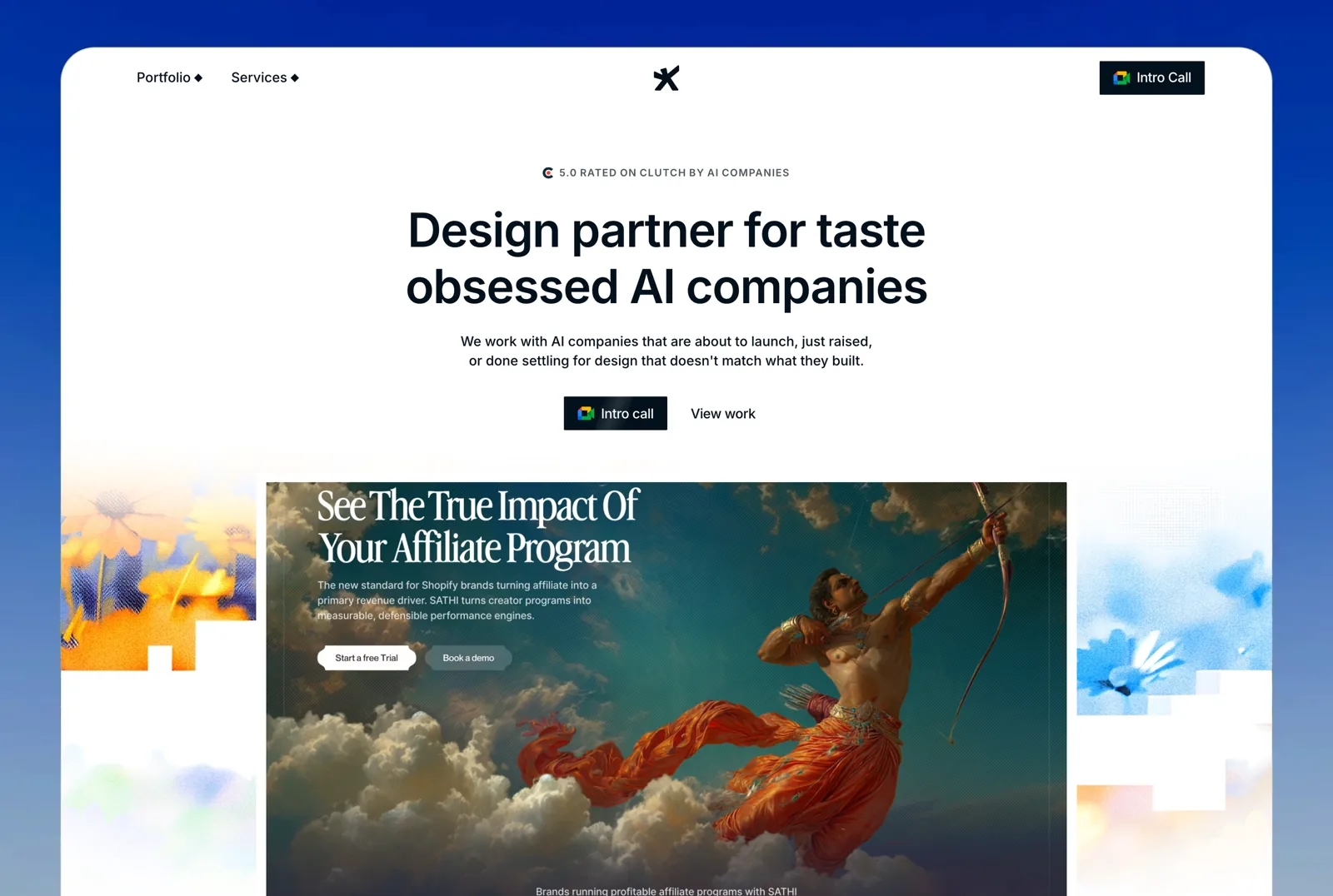
1. Studio Maydit: A Top-Rated Design Agency for AI Founders
The useful thing about Studio Maydit for an automation company is that it does not stop at the page. It is a web and product design studio working with AI founders in the US, UK, and Europe, building in Framer, Webflow, and custom code, and it carries on into product design after the site ships. That matters here because a landing page for automation software makes a promise about a workflow, and the workflow is behind the login.
There is one hard number in its public record. Design work supporting a repositioned ICP took Dualite to 100,000+ users in seven months. Wave, PixelFlow, Mi-VAD, and 15 other AI and SaaS teams round out the recent list.
There are two ways to buy, and for a company still finding its message the difference is practical. Fixed scope runs three to four weeks and fits a launch with a date on it. A monthly retainer suits teams testing several angles, covering new pages, campaigns, and product design, with no long lock-in. Fixed-scope engagements end with a diagnosis of what is leaking in the product rather than a handover.
| Check | Finding |
|---|---|
| Based in | Remote, serving US / UK / EU |
| Platform depth | Framer, Webflow, and custom code |
| AI-sector proof | Yes. AI-native clients, published outcome on Dualite |
| Pricing | Fixed scope or monthly retainer, quoted per project |
| Team shape | Founder-led, small senior team |
| Best fit | Automation teams whose page sounds like everyone else |
Worth a call if visitors read your headline and still ask what you do. Book a 30-minute call.

2. BX Studio
BX Studio is a New York team of 11 to 50 working in Webflow, with a published minimum and Reddit, Headspace, ASAPP, and Verifone named. ASAPP automates work inside customer operations, which is the closest reference on this list to what an automation startup actually sells, and Verifone means they have written for buyers who care about systems connecting properly.
They publish no founding year, and Webflow means anything genuinely custom on the page will need to be negotiated rather than assumed.
| Check | Finding |
|---|---|
| Based in | New York, USA |
| Founded | Not published |
| Team size | 11-50 |
| Primary platform | Webflow |
| AI-sector proof | Yes. Published AI client work |
| Named clients | Reddit, Headspace, ASAPP, Verifone |
| Pricing | Published minimum |
| Best fit | Teams selling automation into operations departments |
3. SuperSkills
SuperSkills is a Walnut Creek team of one to ten working across platforms, with The Cut named. At that size the senior person writes the page personally, and on a product this hard to describe, having one mind hold the whole argument produces a more coherent result than a relay between specialists.
They publish no pricing, no founding year, and only one client, which gives a buyer very little to check before committing.
| Check | Finding |
|---|---|
| Based in | Walnut Creek, USA |
| Founded | Not published |
| Team size | 1-10 |
| Primary platform | Mixed |
| AI-sector proof | Yes. Published AI client work |
| Named clients | The Cut |
| Pricing | Not published |
| Best fit | Teams who want one senior person writing the page |
4. basement.studio
basement.studio works from Mar del Plata and Los Angeles, founded in 2018, a team of 11 to 50 writing custom code, with a published minimum and Vercel, Cursor, ElevenLabs, Harvey AI, and Scale AI named. Harvey and Scale both sell automation into professional workflows, so the studio has repeatedly had to make an abstract capability feel like a specific job.
Custom code costs more to change later, and a page that needs a developer for copy edits is a poor fit for a team still testing messages weekly.
| Check | Finding |
|---|---|
| Based in | Mar del Plata, Argentina and Los Angeles, USA |
| Founded | 2018 |
| Team size | 11-50 |
| Primary platform | Custom code |
| AI-sector proof | Yes. Published AI client work |
| Named clients | Vercel, Cursor, ElevenLabs, Harvey AI, Scale AI |
| Pricing | Published minimum |
| Best fit | Funded AI teams who want a technically ambitious page |
5. Feels Like
Feels Like is a Los Angeles studio founded in 2023 working in custom code, with Google, Nike, LVMH, and Suno AI named. They design and build together, so an interactive explanation of a workflow does not have to survive a handover between two companies before it reaches the page.
They publish no pricing and no team size, and a studio founded in 2023 has a short record for a buyer who wants to see how the work has held up.
| Check | Finding |
|---|---|
| Based in | Los Angeles, USA |
| Founded | 2023 |
| Team size | Not published |
| Primary platform | Custom code |
| AI-sector proof | Yes. Published AI client work |
| Named clients | Google, Nike, LVMH, Suno AI |
| Pricing | Not published |
| Best fit | Teams who want the workflow shown, not described |
6. Edgar Allan
Edgar Allan is an Atlanta team of 51 to 200, founded in 2014, working in Webflow, with Porsche, Duracell, and NCR named. They treat writing as part of design rather than a later stage, which is the single most valuable trait for this category, since the difficulty here is almost entirely a language problem.
They publish no pricing, their AI-sector proof is partial, and a firm that size assigns account contacts, so the writer who understood your buyer may not stay on the project.
| Check | Finding |
|---|---|
| Based in | Atlanta, USA |
| Founded | 2014 |
| Team size | 51-200 |
| Primary platform | Webflow |
| AI-sector proof | Partial. Enterprise and SaaS clients, no AI case study |
| Named clients | Porsche, Duracell, NCR |
| Pricing | Not published |
| Best fit | Teams whose problem is describing the product clearly |
7. Ramotion
Ramotion is a San Francisco team of 11 to 50, founded in 2009, working across platforms, with a published minimum and Mozilla, Okta, Netflix, Adobe, and Xero named. Xero sells software into finance operations and Okta into IT, so they have written for the exact departments that buy automation tools.
Their AI-sector proof is partial, and their centre of gravity is brand and identity work rather than a page built to convert a specific operations buyer next quarter.
| Check | Finding |
|---|---|
| Based in | San Francisco, USA |
| Founded | 2009 |
| Team size | 11-50 |
| Primary platform | Mixed |
| AI-sector proof | Partial. Enterprise and SaaS clients, no AI case study |
| Named clients | Mozilla, Okta, Netflix, Adobe, Xero |
| Pricing | Published minimum |
| Best fit | Teams whose brand needs work as much as the page |
8. Engine Digital
Engine Digital works from Vancouver and New York, founded in 2002, in custom code, with Adidas, Autodesk, Goldman Sachs, and HP named. Goldman Sachs and HP are organisations where internal process is the product, so the team has spent years understanding how large operations actually run.
They publish no pricing and no team size, their AI-sector proof is partial, and their engagement model is built for enterprise budgets and timelines rather than a startup shipping a page this month.
| Check | Finding |
|---|---|
| Based in | Vancouver and New York |
| Founded | 2002 |
| Team size | Not published |
| Primary platform | Custom code |
| AI-sector proof | Partial. Enterprise and SaaS clients, no AI case study |
| Named clients | Adidas, Autodesk, Goldman Sachs, HP |
| Pricing | Not published |
| Best fit | Companies selling automation to large enterprises |
9. Refokus
Refokus is a remote German team of 11 to 50, founded in 2021, working in Webflow, with Mural, BASF, Spotify, Yahoo, and BCG named. BASF runs industrial operations at enormous scale, and a studio that has communicated for that kind of client understands process-driven buyers rather than consumer impulse.
They publish no pricing, their AI-sector proof is partial, and their strong visual signature can pull a page towards looking impressive when what it needs is to be unmistakably specific.
| Check | Finding |
|---|---|
| Based in | Germany, remote |
| Founded | 2021 |
| Team size | 11-50 |
| Primary platform | Webflow |
| AI-sector proof | Partial. Enterprise and SaaS clients, no AI case study |
| Named clients | Mural, BASF, Spotify, Yahoo, BCG |
| Pricing | Not published |
| Best fit | European teams who want a distinctive looking page |
10. Lighthouse Digital
Lighthouse Digital is a London studio working in Webflow, with a published minimum and HelloSelf, Freetrade, and IGN named. The published minimum is genuinely useful for a team comparing options quickly, and Freetrade is a product built to explain something complicated to people who are not experts.
They have no published AI client work, no founding year, and no team size, so on a brief that turns on understanding an unfamiliar category, there is little evidence to go on.
| Check | Finding |
|---|---|
| Based in | London, UK |
| Founded | Not published |
| Team size | Not published |
| Primary platform | Webflow |
| AI-sector proof | No. No published AI client work |
| Named clients | HelloSelf, Freetrade, IGN |
| Pricing | Published minimum |
| Best fit | UK teams who want a clear price and a fast build |
How to choose between them
Sort by which part of the page is failing.
The words do not distinguish you. Studio Maydit or Edgar Allan.
You need to show the workflow, not describe it. basement.studio or Feels Like.
Your buyer sits in operations or finance. BX Studio or Ramotion.
You want a known price and speed. Lighthouse Digital or SuperSkills.
If you would rather fix the page yourself before hiring anyone, our walkthrough of the layouts that win clients on an AI automation agency site covers the section order and what to put in the proof block when every client is under NDA.
One test before you hire. Ask a candidate to describe your product without using the words AI, automation, platform, or workflow. A studio that understands this category will reach for the specific task, the person who does it, and the tool it currently happens in. A studio that stalls has just shown you what your page will sound like, which is the same as everybody else's, and sounding like everybody else is the only failure in this category that costs you every visitor rather than some of them.