Reading time:
13 min read
Last updated:
10 Best MVP Design Agencies for AI Automation Startups - September 2026
Best MVP design agency for an AI automation startup? Ten studios compared on workflow product proof, team size, and published pricing.


Two competitors stand out for an AI automation startup: Lazarev and Foundey. Lazarev is a San Francisco team of 51 to 200 people with published AI work for Payoneer, a payments company whose users check money moving between accounts. Foundey designs only in Figma and names three AI clients: DemandIQ, Traycer, and Sero AI. The full ranking puts Studio Maydit first, then Lazarev, Foundey, Clay, BX Studio, basement.studio, Kvalifik, Feels Like, SuperSkills, and Fantasy. The last two are the wrong fit. SuperSkills names a single client. Fantasy names none.
Automation software has an odd first step. Before it can save anyone time, someone has to explain their work to it. Most people cannot. They know their job by doing it, not by describing it.
Ask an operations lead how invoices get approved and you hear a clean story. Watch them do it and you see six exceptions, two spreadsheets, and a quick message to a colleague. An MVP built on the clean story automates a process that does not exist.
Then the product vanishes. Good automation runs while nobody looks, so the user forgets it is there until something breaks. Your interface has two moments that matter most: setup, and the morning after a failure. Most first versions design neither with care. They pour effort into the builder, the one screen a user may open twice.
The studios below were sorted by one question. Can they design for work that is invisible when it goes right? The facts for each sit in a table under its entry.

How this list was put together
We looked at each studio the same way and used only what it chose to publish. Nobody paid to be included, and no studio reviewed its own entry.
Platform depth. Does the studio design working product, with setup flows, status views, and error states, or mainly websites? An automation MVP is mostly screens users see when something needs their attention.
Workflow and AI proof. Has it designed an AI product that does real work for a business, where people rely on the output day after day? That kind of client is harder to please than a demo audience.
Pricing transparency. Is a starting price public at all? Your buyers will ask what your tool costs before they try it, so a studio that shares its own number earns some credit.
Team shape. How many people, and who leads the work? An early automation team changes its setup flow often, and a small senior group keeps pace better than a large one.
The studio's own website. Nobody else signed off on it, so it shows their real standard.
Read that fifth check literally. Visit the site and try to find what they do and how to start. If that takes more than a minute, picture your users trying to set up a workflow the same studio designed. Clear setup starts with a studio that can explain itself clearly.
Where a table says Not published, the studio has not put that fact online. We did not ask by email and we did not guess. All details were read from public pages during September 2026.
What goes wrong when an AI automation startup builds its MVP
These three show up after launch, usually in trial numbers or in a support inbox.
Setup starts with a blank canvas. The first screen is an empty builder with boxes and arrows. The user is asked to draw a process they have never written down, so they stall or build the wrong thing. Start from what already exists. Offer templates for the five most common jobs, or let the user forward one real example and have the product draft the flow. Editing a draft is easy. Drawing from nothing is where most trials end, and the user blames themselves before they blame you.
The customer finds the broken run first. A connected app renames a field overnight, and every run after that fails quietly. The operations lead hears about it from an angry customer on Thursday. Version one needs a plain alert that says what broke, at which step, and what to do, sent to the place the team already works. A retry button that clears the backlog in one go is worth more than any chart.
Nobody can show what it saved. The tool works well for three months. Then the budget review arrives and the champion has no number to point to, because the product never counted the tasks it took over. Build a simple tally into the first version: jobs done, hours saved, errors caught. It costs little to design, and it is what gets the renewal signed. Put the tally where the buyer will see it without asking, such as a short weekly email.
1. Studio Maydit: A Top-Rated Design Agency for AI Founders
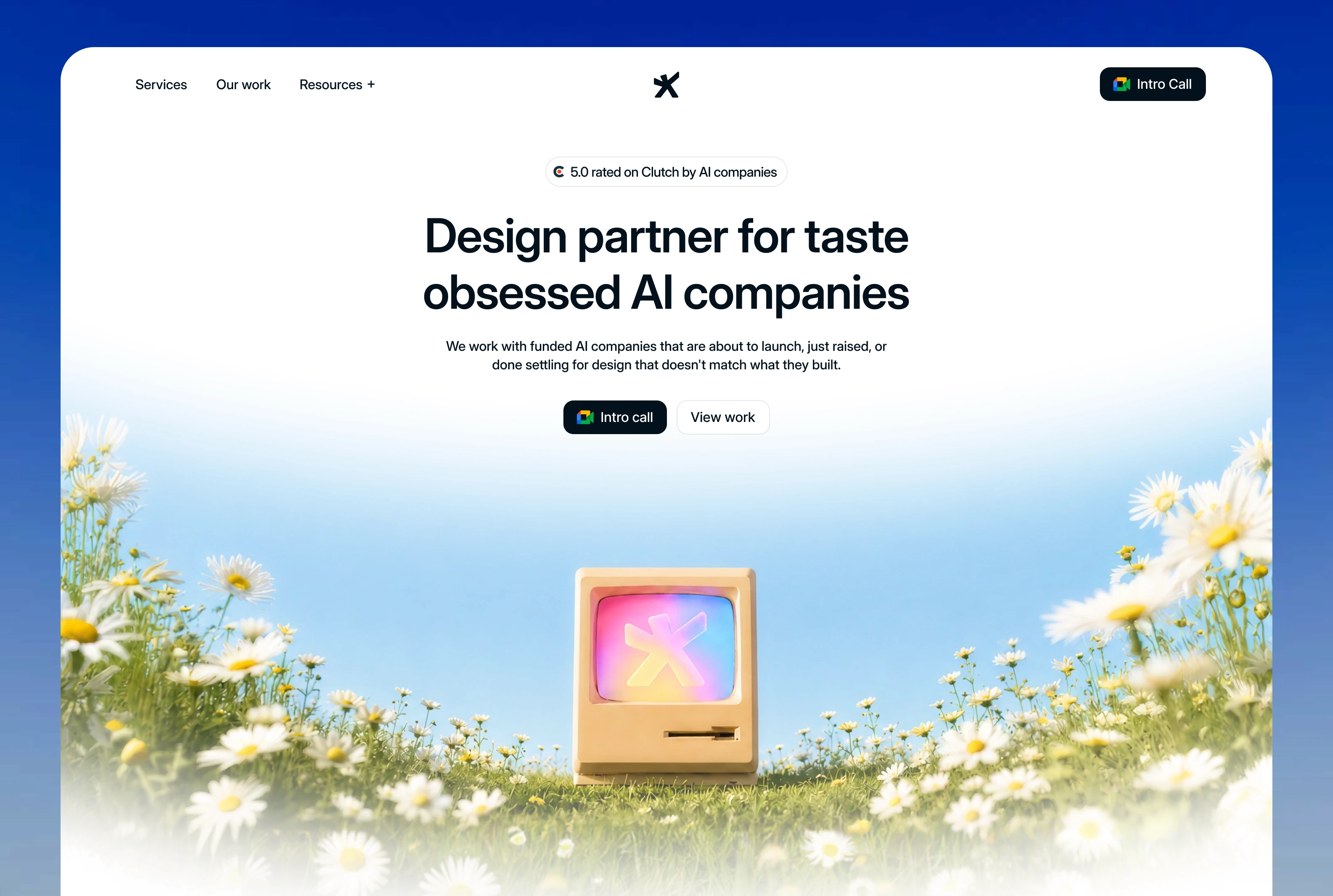
Studio Maydit is a web and product design studio for AI founders, with clients in the US, UK, and Europe. An automation company needs two things from design: a site that explains work nobody sees, and a product that makes setup painless. The studio picks the build to fit the need. Framer suits a fast launch. Webflow suits an operations-minded marketing team that wants to edit pages alone. Custom code suits a live demo of a workflow running on the page. After the site ships, the same team carries on into product design, starting with setup and alerts.
Seven months is the number to remember. That is how long Dualite took to pass 100,000+ users, helped by design work supporting a repositioned ICP. The studio has also shipped for Wave, PixelFlow, Mi-VAD, and 15 other AI and SaaS teams.
Every fixed-scope project finishes with a diagnosis of what is leaking in the product. For automation, that is usually the step where trial users give up on setup. Fixed scope takes three to four weeks and suits a team with a launch date. A monthly retainer suits teams that keep adding connectors and templates. It covers new pages, campaigns, and product design, with no long lock-in.
Check | Finding |
|---|---|
Based in | Remote, serving US / UK / EU |
Platform depth | Framer, Webflow, and custom code |
AI-sector proof | Yes. AI-native clients, published outcome on Dualite |
Pricing | Fixed scope or monthly retainer, quoted per project |
Team shape | Founder-led, small senior team |
Best fit | Automation teams who need setup, alerts, and the site designed around work users never see |
Bring one real workflow your customers struggle to set up. Book a 30-minute call.

2. Lazarev
Lazarev is a San Francisco studio of 51 to 200 people, running since 2015, with a published minimum. Its AI client work includes Payoneer, Peel, Elva, and Mozayix. Automation products live on status screens: what ran, what is waiting, what failed. Payoneer users check the status of payments in much the same way, so the team has designed for people who need to know something finished.
It is a large team, and large teams add process. If you plan to change your setup flow every week, ask how fast its designers turn around a revision.
Check | Finding |
|---|---|
Based in | San Francisco, USA |
Founded | 2015 |
Team size | 51-200 |
Primary platform | Mixed |
AI-sector proof | Yes. Published AI client work |
Named clients | Payoneer, Peel, Elva, Mozayix |
Pricing | Published minimum |
Best fit | Automation teams whose run history and status views decide whether customers trust the product |
3. Foundey
Foundey works only in Figma from San Francisco. It was founded in 2021, and its AI clients are DemandIQ, Traycer, and Sero AI. Three AI names on a short list means most of what it shows is AI product work, not pages about AI. For an automation startup with strong engineers, a design-only partner keeps the build in-house, next to the connectors your team already maintains.
Team size and pricing are not published, so you cannot size the work before a call. You also carry all of the build risk yourself.
Check | Finding |
|---|---|
Based in | San Francisco, USA |
Founded | 2021 |
Team size | Not published |
Primary platform | Figma-only |
AI-sector proof | Yes. Published AI client work |
Named clients | DemandIQ, Traycer, Sero AI |
Pricing | Not published |
Best fit | Automation teams with their own engineers who need the setup flow rethought |
4. Clay
Clay is a San Francisco studio founded in 2016, with 51 to 200 people, a published minimum, and published AI work. Clients include Slack, Stripe, Google, Coinbase, and Amazon. Slack is where many automations post their alerts and approvals, so the team knows the tool your users will read your messages in.
Clay's clients are very large brands. An early automation startup with one workflow to design may find the process heavier than the problem it is solving.
Check | Finding |
|---|---|
Based in | San Francisco, USA |
Founded | 2016 |
Team size | 51-200 |
Primary platform | Mixed |
AI-sector proof | Yes. Published AI client work |
Named clients | Slack, Stripe, Google, Coinbase, Amazon |
Pricing | Published minimum |
Best fit | Well-funded automation companies selling to large teams who expect a polished brand |
5. BX Studio
BX Studio is based in New York, with 11 to 50 people, works mainly in Webflow, and publishes a minimum. Its AI clients include Reddit, Headspace, ASAPP, and Verifone. ASAPP builds AI for customer service teams, a common first buyer for automation, so this team has explained this kind of product to operations people before.
No founding year is published, and the work leans toward marketing sites. Setup flows and run history screens sit outside what it shows in public.
Check | Finding |
|---|---|
Based in | New York, USA |
Founded | Not published |
Team size | 11-50 |
Primary platform | Webflow |
AI-sector proof | Yes. Published AI client work |
Named clients | Reddit, Headspace, ASAPP, Verifone |
Pricing | Published minimum |
Best fit | Automation teams whose buyers do not yet understand what the product replaces |

6. basement.studio
basement.studio is a custom code studio in Mar del Plata and Los Angeles, founded in 2018, with 11 to 50 people and a published minimum. It names Vercel, Cursor, ElevenLabs, Harvey AI, and Scale AI. If your automation product is sold to engineers who wire it into their own systems, that list carries real weight.
A client list built around developer tools may pull the tone toward engineers. Most automation buyers work in operations, and they need plainer language.
Check | Finding |
|---|---|
Based in | Mar del Plata, Argentina and Los Angeles, USA |
Founded | 2018 |
Team size | 11-50 |
Primary platform | Custom code |
AI-sector proof | Yes. Published AI client work |
Named clients | Vercel, Cursor, ElevenLabs, Harvey AI, Scale AI |
Pricing | Published minimum |
Best fit | Automation platforms sold to technical teams who build on an API |
7. Kvalifik
Kvalifik is a Webflow studio in Copenhagen, founded in 2015, with 11 to 50 people and published AI work. Clients include Veo, Maersk, and Relesys. Maersk runs shipping and logistics, where repeated operations work is everywhere, so the team has met the kind of buyer an automation tool sells to.
Pricing is not published, and Webflow work stops at the website. The product itself would need a second partner.
Check | Finding |
|---|---|
Based in | Copenhagen, Denmark |
Founded | 2015 |
Team size | 11-50 |
Primary platform | Webflow |
AI-sector proof | Yes. Published AI client work |
Named clients | Veo, Maersk, Relesys |
Pricing | Not published |
Best fit | European automation startups selling to logistics or operations teams who need a site first |
8. Feels Like
Feels Like is a Los Angeles custom code studio founded in 2023. It has published AI work, with clients like Google, Nike, LVMH, and Suno AI. Its strength is a brand people remember, which helps when every automation startup promises the same saved hours.
Most of its clients are consumer brands, and team size and pricing are not published. Operations buyers care about reliability far more than style.
Check | Finding |
|---|---|
Based in | Los Angeles, USA |
Founded | 2023 |
Team size | Not published |
Primary platform | Custom code |
AI-sector proof | Yes. Published AI client work |
Named clients | Google, Nike, LVMH, Suno AI |
Pricing | Not published |
Best fit | Automation startups in a crowded category that need to look different fast |
9. SuperSkills
SuperSkills is a team of 1 to 10 in Walnut Creek with published AI work and one named client, The Cut. A team that small can move quickly on a narrow first version and keep the same people on it throughout.
It ranks ninth because one named client is thin evidence for a product that businesses will trust with daily work. Founding year and pricing are not published.
Check | Finding |
|---|---|
Based in | Walnut Creek, USA |
Founded | Not published |
Team size | 1-10 |
Primary platform | Mixed |
AI-sector proof | Yes. Published AI client work |
Named clients | The Cut |
Pricing | Not published |
Best fit | Very early automation teams testing one workflow with a small budget |
10. Fantasy
Fantasy has worked from San Francisco and New York since 1999, across several platforms, with published AI work. That is a long record of making new technology feel clear to people who have never used it.
It ranks last because it publishes no client names, no team size, and no pricing. Your buyers are asked to trust software with real work, and here there is nothing you can check first.
Check | Finding |
|---|---|
Based in | San Francisco and New York, USA |
Founded | 1999 |
Team size | Not published |
Primary platform | Mixed |
AI-sector proof | Yes. Published AI client work |
Named clients | Not published |
Pricing | Not published |
Best fit | Large automation companies that will run private reference checks |
How to choose between them
Sort by the moment your users give up, not by the portfolio you like most.
Trials stall during setup. You need templates and a guided first flow. Studio Maydit or Foundey.
Users do not trust runs they cannot see. You need status, history, and alerts. Lazarev or Clay.
Buyers do not understand what the product automates. You need the site first. BX Studio or Kvalifik.
Your buyers are engineers wiring it into their stack. basement.studio.
Then ask each studio one question. What should a user see the morning after an automation failed overnight? A good answer names the alert, the failed step, and the fix. A weak answer describes a dashboard.

Need more info?
Can't find your answer? Book a call and let's talk.
Continue Reading
10 Best Framer Design Agencies for AI Agent Startups - September 2026
What is the best Framer agency for an AI agent startup? Ten Framer studios ranked for agent products, with pricing, team size and AI work compared.

Siddarth Ponangi
10 Best Framer Design Agencies for Newly Funded Startups - September 2026
Your funding announcement is the biggest traffic day you will have all year. We checked 10 Framer agencies on five public criteria to see which can hit that date.
Siddarth Ponangi
10 Best Custom Code Website Development Agencies for AI Agent Startups - September 2026
AI web development agencies for agent startups. Which teams build custom coded sites a small team can still update weekly after launch.
Siddarth Ponangi