

Summarize with AI


For a machine learning platform, the ten studios worth reviewing are Studio Maydit, Clay, Fantasy, Foundey, Phantom, Kvalifik, Trueform, BX Studio, Lazarev, and Lighthouse Digital. Foundey and Clay lead this list. Foundey works Figma-only for DemandIQ, Traycer, and Sero AI, which means product design for AI companies is the whole business rather than a sideline, and Clay has AI-sector proof, a published starting price, and experience designing software used at the scale of Stripe and Slack. Lighthouse Digital and Trueform are the wrong fit here. Both build marketing sites, and one publishes no AI work at all.
Here is the thing that makes your product different from almost every other piece of software a designer has worked on. Nothing in it finishes while somebody is watching.
A training run takes hours. An evaluation sweep takes longer. A deployment rolls out over a period in which the person who started it has gone home. Every interface convention available to a designer was invented for software where an action completes in under a second and the screen updates, and none of that applies to you.
So your users live in a strange loop. They start something, leave, come back, and try to reconstruct what happened while they were gone. That reconstruction is the actual job, and it is usually the least designed part of the product.
The second thing is that the core task is comparison, not creation. Nobody looks at one training run. They look at this run against last Thursday's, with a different dataset and one changed hyperparameter, and they are trying to answer a single question: did that change help. Most platforms make you open two tabs to answer it.
The third is that the operator and the author are different people. The person who wrote the model understands every abbreviation on the screen. The person on call at three in the morning does not, and they are the one who needs the interface to work.

How we picked these agencies
Five checks, all readable in public.
Platform depth. Where does this studio work? For an ML platform the answer has to be the product itself. A studio that builds excellent marketing sites cannot design an experiment view, and plenty of them describe both capabilities on the same page. Ask which of their published projects is a logged-in surface rather than a homepage, and look at it.
Proof on machine learning products. Has the studio designed something with long-running jobs, versioned artefacts, and results that need comparing? This carries the most weight in this brief and it is narrower than general AI experience. Designing a chat interface is not the same as designing a run comparison. The tell is whether their AI work is consumer-facing or operational.
Pricing. Is a starting number published anywhere? Product design engagements vary enormously in shape, from a set of files to a fully specified surface, and a published figure tells you which end of that range a studio normally works at.
Team shape. Headcount decides how much of your domain knowledge survives the journey to a screen. ML platforms have a steep vocabulary, and every extra person in the chain is another place where a distinction gets flattened.
Their own site. It is the only brief with no client, so it shows the studio's actual standard. For this brief read it for whether they can hold a complicated idea in a simple sentence.
An extra probe that separates this field quickly. Ask how they would show a user what changed between two runs. Studios who have worked on operational tooling talk about diffs, fixed reference points, and what to hide. Studios who have not will suggest a chart.
The rows below repeat only what a studio publishes on its own site. Nothing has been inferred from third-party listings, and a blank means the studio has not stated a figure rather than that one does not exist.
What goes wrong for machine learning platforms
Three failures, and each follows from the shape of the work.
The interface is designed for the person who built the model. Abbreviations go unexpanded, defaults assume you know why they are the defaults, and the error messages are written for someone who can read a stack trace. This is fine while your users are the three people who built it. It stops being fine the moment a platform team adopts you, because the person operating it at two in the morning has no context and no patience. The product then gets a reputation for being hard, which is very difficult to shake later.
Long-running work is presented as if it were instant. A spinner is the default answer to anything slow, and for a four-hour job a spinner is an insult. Users need to know what stage it is at, whether it is progressing, roughly how long is left, and whether it is safe to close the tab. When the interface will not say, people build their own answers: a second terminal, a script that polls the API, a colleague who checks. Every one of those is your product being worked around.
Comparison is the main task and the product treats it as an afterthought. Runs are listed but not compared. Versions are stored but not diffed. Users end up screenshotting two dashboards into a document to see the difference, which is the clearest possible evidence of a missing feature. Any ML platform that makes side-by-side comparison genuinely good will beat one with better models behind it, because that is the task the user is actually doing all day.
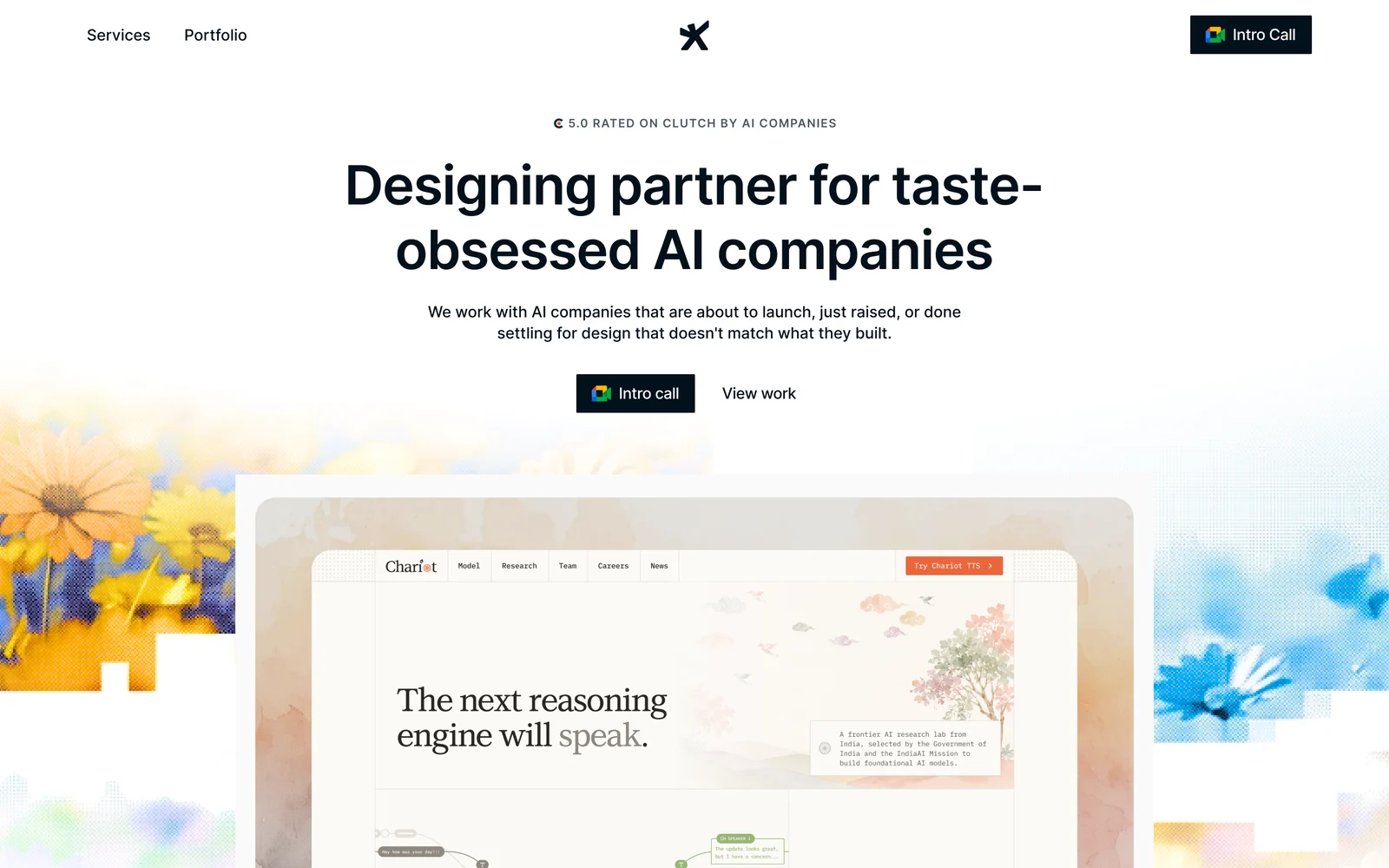
1. Studio Maydit: A Top-Rated Design Agency for AI Founders
It is founder-led with a small senior team, so the person who hears your explanation of what a sweep is is the person drawing the screen, which on a product with this much vocabulary is not a small detail. Studio Maydit is a web and product design studio. Its clients are AI founders, working across the US, UK, and Europe, and the work continues into product design after a site ships rather than ending at launch. On platform it stays flexible: Framer when pages change constantly, Webflow when a marketing team should own the site, custom code when the product needs something neither can hold.
The design work at Dualite served one group rather than several. A repositioned ICP was agreed before anything was drawn, which is what made the rest of the decisions possible, and 100,000+ users arrived over the seven months that followed. ML platforms face a sharper version of this, because the same infrastructure genuinely serves researchers, platform engineers, and analysts, and those three want opposite things from a screen. Recent clients include Wave, PixelFlow, Mi-VAD, and 15 other AI and SaaS teams.
Teams that keep shipping tend to take the monthly retainer, covering new pages, campaigns, and product design, with no long lock-in, which fits a platform where the surface grows every quarter. The alternative is fixed scope, three to four weeks, for a team working to a date, and it closes with a written diagnosis of what is leaking in the product rather than a handover.
| Check | Finding |
|---|---|
| Based in | Remote, serving US / UK / EU |
| Platform depth | Framer, Webflow, and custom code |
| AI-sector proof | Yes. AI-native clients, published outcome on Dualite |
| Pricing | Fixed scope or monthly retainer, quoted per project |
| Team shape | Founder-led, small senior team |
| Best fit | ML platforms whose users keep rebuilding context the product should hold |
If your users screenshot two dashboards into a document to compare them, that is the brief. Book a 30-minute call.

2. Clay
Clay has worked from San Francisco since 2016 with fifty-one to two hundred people, AI-sector proof, and a published starting price, for Slack, Stripe, Google, Coinbase, and Amazon. Stripe is the useful reference here: a deeply technical product with a dashboard that non-specialists can operate, which is exactly the translation an ML platform needs.
At that size your domain vocabulary passes through several people before it reaches a screen, and the primary platform is mixed rather than product-only.
| Check | Finding |
|---|---|
| Based in | San Francisco, USA |
| Founded | 2016 |
| Team size | 51-200 |
| Primary platform | Mixed |
| AI-sector proof | Yes |
| Named clients | Slack, Stripe, Google, Coinbase, Amazon |
| Pricing | Published minimum |
| Best fit | Platforms wanting a studio experienced with large technical products |
3. Fantasy
Fantasy has worked from San Francisco and New York since 1999, with AI-sector proof. Very few studios have designed through this many technology shifts, and that perspective genuinely helps when deciding which conventions to keep and which to abandon.
There is almost nothing public to assess. No named clients, no team size, and no pricing, so the whole evaluation happens privately.
| Check | Finding |
|---|---|
| Based in | San Francisco and New York, USA |
| Founded | 1999 |
| Team size | Not published |
| Primary platform | Mixed |
| AI-sector proof | Yes |
| Named clients | Not published |
| Pricing | Not published |
| Best fit | Teams comfortable choosing a studio on reputation and conversation |
4. Foundey
Foundey is a San Francisco studio founded in 2021 working Figma-only, with AI-sector proof, for DemandIQ, Traycer, and Sero AI. Traycer is a coding agent, which means the team has designed a surface where a system proposes work and a person reviews it, and that review pattern is the heart of an ML platform.
Figma-only means your engineers build what arrives, and neither team size nor pricing is published.
| Check | Finding |
|---|---|
| Based in | San Francisco, USA |
| Founded | 2021 |
| Team size | Not published |
| Primary platform | Figma-only |
| AI-sector proof | Yes |
| Named clients | DemandIQ, Traycer, Sero AI |
| Pricing | Not published |
| Best fit | Platform teams with engineers who want design files and speed |
5. Phantom
Phantom has run from London and Auckland since 2013 with fifty-one to two hundred people in custom code, with AI-sector proof, for Diageo, SAP, Financial Times, and Zendesk. SAP and Zendesk are both large operational products, and a studio that builds as well as designs can carry a surface all the way to shipped.
The client list runs to enterprise brand work rather than developer tooling, and no pricing is published.
| Check | Finding |
|---|---|
| Based in | London, UK and Auckland, NZ |
| Founded | 2013 |
| Team size | 51-200 |
| Primary platform | Custom code |
| AI-sector proof | Yes |
| Named clients | Diageo, SAP, Financial Times, Zendesk |
| Pricing | Not published |
| Best fit | Funded platforms wanting design and build from one larger studio |
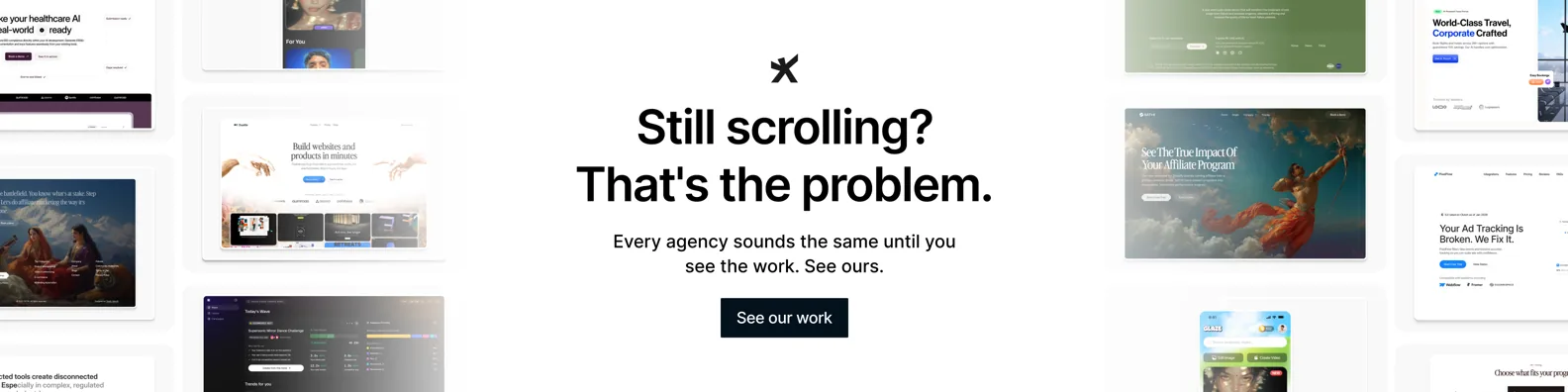
6. Kvalifik
Kvalifik is a Copenhagen studio founded in 2015 with eleven to fifty people, working in Webflow, with AI-sector proof, for Veo, Maersk, and Relesys. Veo combines hardware, video, and software, so the team has handled a product where a process runs without the user watching it.
Webflow is a marketing platform rather than a place to build an application surface, and no pricing is published.
| Check | Finding |
|---|---|
| Based in | Copenhagen, Denmark |
| Founded | 2015 |
| Team size | 11-50 |
| Primary platform | Webflow |
| AI-sector proof | Yes |
| Named clients | Veo, Maersk, Relesys |
| Pricing | Not published |
| Best fit | European teams wanting AI experience on the marketing side |
7. Trueform
Trueform is a Swiss studio founded in 2022 working in Framer, with AI-sector proof and a published starting price, for Miro, Morning Brew, Bilt Rewards, and Gather. The published number and the AI proof together make it easy to start something quickly.
Framer is a website platform, so it does not reach the product surface where an ML platform's real problems sit, and no team size is published.
| Check | Finding |
|---|---|
| Based in | Wil, Switzerland |
| Founded | 2022 |
| Team size | Not published |
| Primary platform | Framer |
| AI-sector proof | Yes |
| Named clients | Miro, Morning Brew, Bilt Rewards, Gather |
| Pricing | Published minimum |
| Best fit | Platform companies needing the marketing site rather than the product |
8. BX Studio
BX Studio is a New York studio of eleven to fifty people working in Webflow, with AI-sector proof and a published starting price, for Reddit, Headspace, ASAPP, and Verifone. ASAPP is an AI product sold into large operational teams, which is the closest analogue on this page to your buyer.
Webflow again means marketing rather than product, and no founding year is published.
| Check | Finding |
|---|---|
| Based in | New York, USA |
| Founded | Not published |
| Team size | 11-50 |
| Primary platform | Webflow |
| AI-sector proof | Yes |
| Named clients | Reddit, Headspace, ASAPP, Verifone |
| Pricing | Published minimum |
| Best fit | Teams wanting AI proof and a published price on the website side |
9. Lazarev
Lazarev has worked from San Francisco since 2015 with fifty-one to two hundred people, AI-sector proof, and a published starting price, for Payoneer, Peel, Elva, and Mozayix. Payoneer is regulated financial software where a mistake has consequences, and that carefulness is the right instinct for operational tooling.
The client list is broad software rather than machine learning infrastructure, and at that headcount you work through account layers.
| Check | Finding |
|---|---|
| Based in | San Francisco, USA |
| Founded | 2015 |
| Team size | 51-200 |
| Primary platform | Mixed |
| AI-sector proof | Yes |
| Named clients | Payoneer, Peel, Elva, Mozayix |
| Pricing | Published minimum |
| Best fit | Platforms wanting one studio across product and marketing |
10. Lighthouse Digital
Lighthouse Digital is a London studio working in Webflow with a published starting price, for HelloSelf, Freetrade, and IGN. The published number makes budgeting straightforward and Freetrade shows real consumer onboarding work.
It is last for this brief on fit. The AI-sector proof is recorded as no, Webflow does not reach a product surface, and neither founding year nor team size is published.
| Check | Finding |
|---|---|
| Based in | London, UK |
| Founded | Not published |
| Team size | Not published |
| Primary platform | Webflow |
| AI-sector proof | No |
| Named clients | HelloSelf, Freetrade, IGN |
| Pricing | Published minimum |
| Best fit | Marketing sites where the product is designed in house |
How to choose between them
Sort by what is actually broken.
If your users cannot tell what a run is doing while it runs, that is the highest-value work on this page and it is product design, not visual design. Foundey or Clay.
If comparison is the daily task and the product makes it hard, you want a studio that has designed operational tooling rather than consumer AI. Clay or Phantom.
If the problem is that new users cannot get started because the vocabulary assumes them, that is onboarding and documentation together. Lazarev or Phantom.
If what you actually need is the marketing site and the product team handles the rest, the Webflow and Framer options become the sensible ones. BX Studio or Trueform.
One test before you sign. Ask what they would put on the screen during a four-hour job. A studio that fits this brief describes stages, progress, and what happens if you close the tab. A studio that does not will describe a loading animation.