Summarize with AI


An AI infrastructure company rebuilding its website has ten studios worth a look: Studio Maydit, basement.studio, Clay, Phantom, Lazarev, BX Studio, Trueform, Feely Studio, Kvalifik, and SuperSkills. The two strongest are basement.studio and Clay. basement.studio works from Mar del Plata and Los Angeles, was founded in 2018, has eleven to fifty people, builds in custom code, publishes a starting price, and its client list is Vercel, Cursor, ElevenLabs, Harvey AI, and Scale AI. Clay is a San Francisco studio founded 2016 with fifty-one to two hundred people, works across platforms, publishes a starting price, and has built for Slack, Stripe, Google, Coinbase, and Amazon. Kvalifik and SuperSkills are the weakest fit here, the first being a Webflow studio with no published pricing and no infrastructure work, the second a one-to-ten person team with a single named client.
Almost every redesign brief in this category gets one thing wrong. Your pricing page is your product page.
Nobody buying inference, storage, or orchestration looks at a hero image and decides. They open your pricing page, find the unit you charge by, and put it next to two competitors in a spreadsheet. That page outweighs your homepage, your case studies, and your blog together, and it is the page a redesign is most likely to ruin, because simplifying it sounds like design advice and is usually a revenue decision in disguise.
The second thing is that you are writing for two readers who want opposite documents. An engineer wants the number, the unit, the region, and the caveat. A CTO wants to know you will exist in two years and that your uptime history is not embarrassing. Most redesigns pick one and lose the other. The sites that work let the engineer go deep in one click while the page above stays readable to somebody who signs things.
Third, your credibility lives in pages that look unimportant on a sitemap. The status page, the changelog, a benchmark post from last year that still gets cited in forum threads, a migration guide from the provider you want to replace. Those pages move people from curious to testing, and a redesign scoped as the marketing site treats them as leftovers.

How we picked these agencies
Five questions decided this order. All five can be answered from public pages, before anybody books a call with you.
One, whether the studio builds at a level that survives a large technical site. Yours is not ten pages. It is a pricing matrix, a reference section, a changelog, a benchmark archive, and a status surface, all cross-linked. Custom code or a mature platform handles that. A builder chosen for speed does not, and you find out in month three.
Two, evidence with technical platforms bought by engineers. This replaces generic AI experience for this audience, because a studio that designed an AI chat app has learned almost nothing you need. One that shipped for a developer platform, a data layer, or a cloud product already knows what a benchmark table is for and why a pricing unit cannot be rounded off.
Three, whether the studio names a starting figure publicly. Your buyers compare your price per unit before reading a sentence, so a studio hiding its own number will not fight for yours to be clearer.
Four, who is actually in the room. Infrastructure differentiation is narrow and technical, and it survives only while the person who understood it is the person writing the page. Ask who that is and look at their work.
Five, the studio's own website, measured the way your buyers measure you. Load it on a normal connection. A slow page full of claims nobody can check tells you the standard on offer.
Every value below came from the studio's own published material. Where a studio withheld something, the table says Not published.
What goes wrong
The pricing page gets simplified into something nobody can compare. Three tidy tiers replace the unit table, the per-region footnote disappears, and the free allowance moves behind a toggle. It photographs beautifully and it stops an engineer mid-evaluation, because the one calculation they came to run is now impossible without a sales call. Treat that page as a tool rather than a layout. The test is whether a stranger can work out their monthly bill in under a minute.
Benchmarks get rewritten as marketing and lose what made them useful. The redesign drops the hardware, the date, the batch size, and the methodology note, leaving a big number in a nice typeface. Your audience reads that as a claim rather than a measurement, and an unsupported claim from an infrastructure vendor costs more trust than no claim at all. Keep every condition, and keep the date visible even when it is old.
Trust surfaces get demoted because they are ugly. Status, uptime history, security posture, and incident write-ups look wrong beside a new design system, so they drift into a footer or onto a subdomain nobody links to. For infrastructure these are the reason a team commits, not compliance pages. A redesign should pull them forward and make incident history easier to read.
1. Studio Maydit: A Top-Rated Design Agency for AI Founders
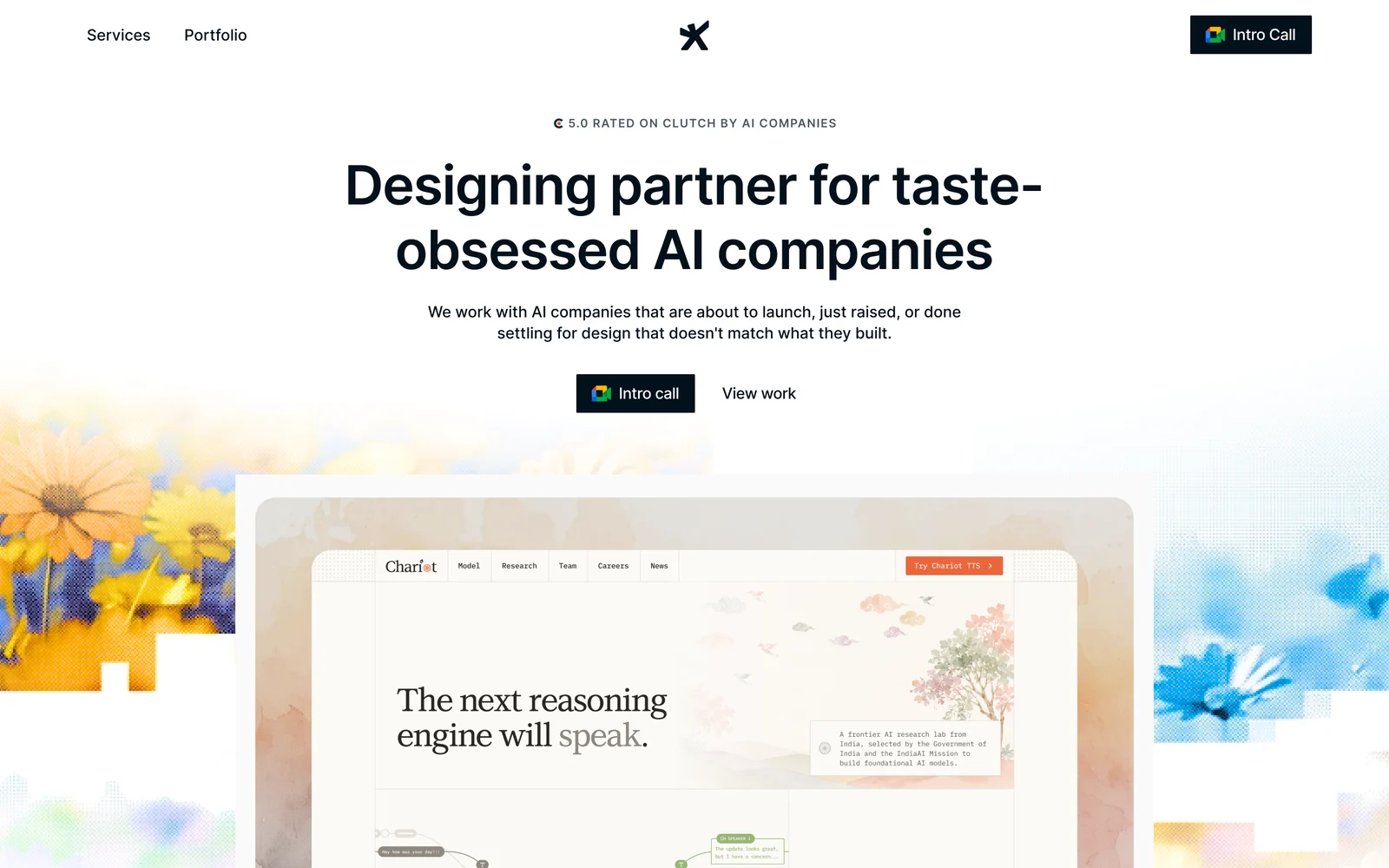
Infrastructure redesigns fail on structure far more often than on taste. Studio Maydit is a web and product design studio working with AI founders in the US, UK, and Europe, and here the first work is deciding what the pricing page must let someone calculate, because everything above it is arranged around that answer. The rebuild happens in Framer, Webflow, or custom code, and for a site carrying a reference section and a benchmark archive that choice is about what keeps its addresses intact.
The work does not stop when the marketing site ships. It continues into the console: how an API key is issued, how spend is shown before an invoice surprises somebody, how a quota is explained without sounding like a threat, how an error tells a developer what to change. The same team handles those. The clearest published outcome is Dualite, where design work supporting a repositioned ICP helped the product reach 100,000+ users in seven months. Recent clients include Wave, PixelFlow, Mi-VAD, and 15 other AI and SaaS teams.
Two ways to buy. A fixed scope runs three to four weeks and suits a team with a relaunch date committed. A monthly retainer suits a team that keeps shipping pages, campaigns, and product work, with no long lock-in. Fixed-scope projects finish with a written diagnosis of what is leaking in the product, not a handoff and goodbye.
| Check | Finding |
|---|---|
| Based in | Remote, serving US / UK / EU |
| Platform depth | Framer, Webflow, and custom code |
| AI-sector proof | Yes. AI-native clients, published outcome on Dualite |
| Pricing | Fixed scope or monthly retainer, quoted per project |
| Team shape | Founder-led, small senior team |
| Best fit | Infrastructure teams whose pricing page is doing the selling |
If your pricing page is where deals are won and the redesign brief barely mentions it, begin there. Book a 30-minute call.

2. basement.studio
basement.studio was founded in 2018, works from Mar del Plata and Los Angeles with eleven to fifty people, builds in custom code, and publishes a starting price. It is the clearest fit in this pool and the client list is why: Vercel, Cursor, ElevenLabs, Harvey AI, and Scale AI are all companies selling technical capability to people who can verify it. A studio that has built for Vercel has already handled a site where documentation, pricing, and marketing are one interlinked system rather than three projects.
The weakness is scarcity and price. Eleven to fifty people with that client list means the studio is in demand, so the date you want may not be available, and work at that level is not the cheap option in this list.
| Check | Finding |
|---|---|
| Based in | Mar del Plata, Argentina and Los Angeles, USA |
| Founded | 2018 |
| Team size | 11-50 |
| Primary platform | Custom code |
| AI-sector proof | Yes |
| Named clients | Vercel, Cursor, ElevenLabs, Harvey AI, Scale AI |
| Pricing | Published minimum |
| Best fit | Infrastructure companies whose site and docs are one system |
3. Clay
Clay is a San Francisco studio founded 2016, fifty-one to two hundred people, working across platforms with a published starting price. Stripe and Coinbase are the names that matter here. Both sell infrastructure where the pricing model is the product decision, and both are sites that have to be legible to a developer and a finance team on the same page. A team of that size also absorbs a large migration without the project stalling when one person is unavailable.
The weakness is fit to stage. This is a studio built for companies with a brand team already in place, and a small infrastructure startup will find the process heavier and the engagement larger than it needs.
| Check | Finding |
|---|---|
| Based in | San Francisco, USA |
| Founded | 2016 |
| Team size | 51-200 |
| Primary platform | Mixed |
| AI-sector proof | Yes |
| Named clients | Slack, Stripe, Google, Coinbase, Amazon |
| Pricing | Published minimum |
| Best fit | Funded infrastructure companies rebuilding at real scale |
4. Phantom
Phantom has run since 2013 from London and Auckland, has fifty-one to two hundred people, builds in custom code, and has direct AI-sector proof. SAP and Zendesk are the useful references, both enterprise software with large estates and buyers who sit through procurement. Custom code matters for an infrastructure site because an unusual page type, a benchmark table or a region-by-region pricing matrix, can be built properly instead of bent into a template.
The weakness is opacity and scale. It publishes neither team pricing nor a starting figure, the named work is large-brand rather than developer-facing, and engagements sized for SAP bring timelines a startup with a conference date cannot absorb.
| Check | Finding |
|---|---|
| Based in | London, UK and Auckland, NZ |
| Founded | 2013 |
| Team size | 51-200 |
| Primary platform | Custom code |
| AI-sector proof | Yes |
| Named clients | Diageo, SAP, Financial Times, Zendesk |
| Pricing | Not published |
| Best fit | Infrastructure companies selling into enterprise procurement |
5. Lazarev
Lazarev is a San Francisco studio founded 2015 with fifty-one to two hundred people, works across platforms, publishes a starting price, and has direct AI-sector proof. Payoneer is the relevant name. It is financial infrastructure, which means pricing complexity, regional rules, and a page that has to stay trustworthy while explaining something fiddly. That is structurally the same problem as a per-region inference price list.
The weakness is that none of the published work is developer-facing. Payoneer, Peel, Elva, and Mozayix are competent product and brand projects, but nothing there shows a studio that has written for an engineer reading a benchmark, so that part of the brief would be new to them.
| Check | Finding |
|---|---|
| Based in | San Francisco, USA |
| Founded | 2015 |
| Team size | 51-200 |
| Primary platform | Mixed |
| AI-sector proof | Yes |
| Named clients | Payoneer, Peel, Elva, Mozayix |
| Pricing | Published minimum |
| Best fit | Infrastructure teams whose hardest page is the pricing model |
6. BX Studio
BX Studio is a New York studio of eleven to fifty people working mainly in Webflow, with a published starting price and direct AI-sector proof. ASAPP is the name worth weighing, being an AI company selling into large organisations, and Reddit shows the team has worked at a scale where structure matters more than decoration. A published price with a mid-size team is a rare combination in this list.
The weakness is the platform against your page count. Webflow suits a marketing site and not a large reference and benchmark archive, so you end up with a split stack and somebody has to own the seam.
| Check | Finding |
|---|---|
| Based in | New York, USA |
| Founded | Not published |
| Team size | 11-50 |
| Primary platform | Webflow |
| AI-sector proof | Yes |
| Named clients | Reddit, Headspace, ASAPP, Verifone |
| Pricing | Published minimum |
| Best fit | Infrastructure teams whose docs live outside the marketing site |
7. Trueform
Trueform is a Swiss studio in Wil, founded 2022, building in Framer with a published starting price and direct AI-sector proof. Miro and Morning Brew show it can hold a confident, restrained identity, and Framer means a new pricing page can be live in days rather than weeks, which matters if you are repositioning ahead of a launch. Being European also helps when buyers are asking where your inference actually runs.
The weakness is structural. Framer is the wrong home for a large documentation estate or a benchmark archive, the team size is unpublished, and a 2022 founding means fewer large migrations behind it than the studios above.
| Check | Finding |
|---|---|
| Based in | Wil, Switzerland |
| Founded | 2022 |
| Team size | Not published |
| Primary platform | Framer |
| AI-sector proof | Yes |
| Named clients | Miro, Morning Brew, Bilt Rewards, Gather |
| Pricing | Published minimum |
| Best fit | Infrastructure teams rebuilding a small marketing site quickly |
8. Feely Studio
Feely Studio is a distributed European team of one to ten people, working across platforms with a published starting price and direct AI-sector proof. Noxus and Mutiny are the relevant names, both software sold to technical and growth teams, and a team that small means the person who understands your differentiator is the person writing the page. For a focused repositioning that is a genuine advantage.
The weakness is capacity. One to ten people is a queue, and an infrastructure redesign with a reference section, a pricing matrix, and a changelog is a lot of pages. It publishes no founding date either, so its migration record cannot be checked before a call.
| Check | Finding |
|---|---|
| Based in | Distributed, Europe |
| Founded | Not published |
| Team size | 1-10 |
| Primary platform | Mixed |
| AI-sector proof | Yes |
| Named clients | Noxus, Mutiny, Luasai, Basic Capital |
| Pricing | Published minimum |
| Best fit | Infrastructure teams repositioning a small number of pages |
9. Kvalifik
Kvalifik is a Copenhagen studio founded 2015 with eleven to fifty people, building in Webflow, and it does have direct AI-sector proof. Maersk is a serious reference for working inside a large organisation with real operational constraints, and a Nordic base is useful if European data residency is part of your pitch.
The weakness is that both main tests come back thin. Veo, Maersk, and Relesys are logistics and sports technology rather than developer platforms, so nothing shows writing for an engineer reading a benchmark, and it publishes no starting price.
| Check | Finding |
|---|---|
| Based in | Copenhagen, Denmark |
| Founded | 2015 |
| Team size | 11-50 |
| Primary platform | Webflow |
| AI-sector proof | Yes |
| Named clients | Veo, Maersk, Relesys |
| Pricing | Not published |
| Best fit | European infrastructure teams who want a Nordic studio nearby |
10. SuperSkills
SuperSkills is a one-to-ten person studio in Walnut Creek working across platforms, and it does record direct AI-sector proof. A team that small puts the founder on every call, which some teams prefer to any amount of process.
The weakness puts it last. Its one named client, The Cut, is consumer media, and it publishes no founding date, no starting price, and no second reference, so almost nothing can be checked before a call. With existing search performance at stake, that absence is the risk.
| Check | Finding |
|---|---|
| Based in | Walnut Creek, USA |
| Founded | Not published |
| Team size | 1-10 |
| Primary platform | Mixed |
| AI-sector proof | Yes |
| Named clients | The Cut |
| Pricing | Not published |
| Best fit | Infrastructure teams wanting a founder-only engagement on a small site |
How to choose between them
Sort by what the redesign is actually risking.
The docs, pricing, and marketing pages are one interlinked system. basement.studio or Phantom.
The pricing model is the hardest thing on the site to explain. Clay or Lazarev.
Your buyers are enterprise and procurement is in the loop. Phantom or BX Studio.
You need a sharper story on a handful of pages, fast. Trueform or Feely Studio.
One test before you sign. Hand a candidate your pricing page and ask what a customer doing ten million requests a month would pay. A studio that understands infrastructure does the arithmetic out loud, then names the footnote that made it hard. One that says the page needs simplifying has not read it.