

Summarize with AI


The best product design agencies for AI cybersecurity startups in 2026 are Studio Maydit, Foundey, Lazarev, Fantasy, Clay, SuperSkills, Feely Studio, Lighthouse Digital, BX Studio, and Feels Like. Studio Maydit and Foundey lead for this brief, because both work with early AI products where the interface has to explain a model's reasoning rather than decorate it, and both are small enough to sit with the engineers who know what the detections actually do. Lighthouse Digital and Fantasy are the wrong fit here, since one has no published AI work and the other is built for brand-scale campaigns, and neither publishes pricing, so the first three conversations produce no usable information.
Security software has a problem no other category has. Looking good is a signal against you.
The person evaluating your product has spent a decade being sold to by vendors with immaculate booths and nothing behind them. Polish reads as marketing budget, and marketing budget reads as a company that spent its money on the wrong thing.
At the same time, the interface is doing genuinely hard work. An analyst is looking at a queue at two in the morning, deciding in seconds whether an alert is worth waking somebody for. Every extra element on that screen costs attention that is already fully spent.
Add a model to it and the difficulty roughly doubles. A rule fired because a condition was met, and you can show the condition. A model produced a score, and the analyst needs enough of the reasoning to decide whether to trust it, without a lecture.
Then there is the part nobody warns you about. You cannot show the work. Real screens contain real customer incidents, so the case study is a blurred rectangle, and every design conversation you have with an outside team starts with what they are not allowed to see.
The ten studios below are ranked on how well they handle an interface where credibility matters more than beauty.

How we picked these agencies
This list is a teardown rather than a directory. Each studio was assessed on evidence that exists in public, using five checks a buyer can repeat without booking a single call:
- Platform depth. Do they design working product interfaces, or mostly marketing sites with a product page attached?
- Proof in regulated and security-adjacent work. Have they shipped where trust, compliance, or sensitive data set the constraints, or is the portfolio all consumer?
- Pricing. Is a starting figure published anywhere, or does every route lead to a sales conversation?
- Team shape. Small and senior, or a large firm where the pitch team and the delivery team are different people?
- Their own site. Does it show judgement, or is it the same layout as every other studio this year?
The last one is the most revealing and the most ignored. An agency's own website is the only project with no client to blame, so whatever restraint or indiscipline you see there is the real thing.
Every fact in the tables below is public, taken from the studio's own site or a listed profile. Anything unpublished is recorded as unpublished rather than filled in with a guess.
What goes wrong when the interface has to earn trust
Three failures recur in this category, and each one comes from designing for the demo instead of the shift.
The product gets dressed up and loses credibility. Gradients arrive, the dashboard gains animation, and a buyer who has been burned before starts looking for what the presentation is covering. The instinct is understandable, since founders are told to look established. In this market the effect inverts. What builds confidence is specificity: real field names, honest counts, an empty state that says exactly what is not being monitored yet. Restraint is not a visual style here, it is the argument. Anything that looks like it was designed to impress a buyer will be read as exactly that.
Nobody designed for the volume. The interface is built against a demo tenant with twelve alerts, and it is calm and readable and completely unlike production. The first real customer arrives with four thousand a day and the layout collapses, not visually but functionally, because there is no triage, no grouping, and no way to make a decision without opening every item. This has to be caught before the design is agreed, not after. Ask for the worst case from the busiest customer and design against that. A screen that survives the flood will always work on the quiet day, and the reverse is never true.
The model's output arrives without a reason. A score appears, and the analyst has no idea what produced it, so it gets ignored within a fortnight and the product becomes an expensive log viewer. The temptation is to expose everything, which fails differently, because nobody reads a page of features at two in the morning. What works is the two or three signals that moved the number most, in the analyst's own vocabulary, with the detail available underneath for the one case in twenty that deserves it. Confidence in a model is built by being right in a way the analyst can check, repeatedly, on cases where they already knew the answer.
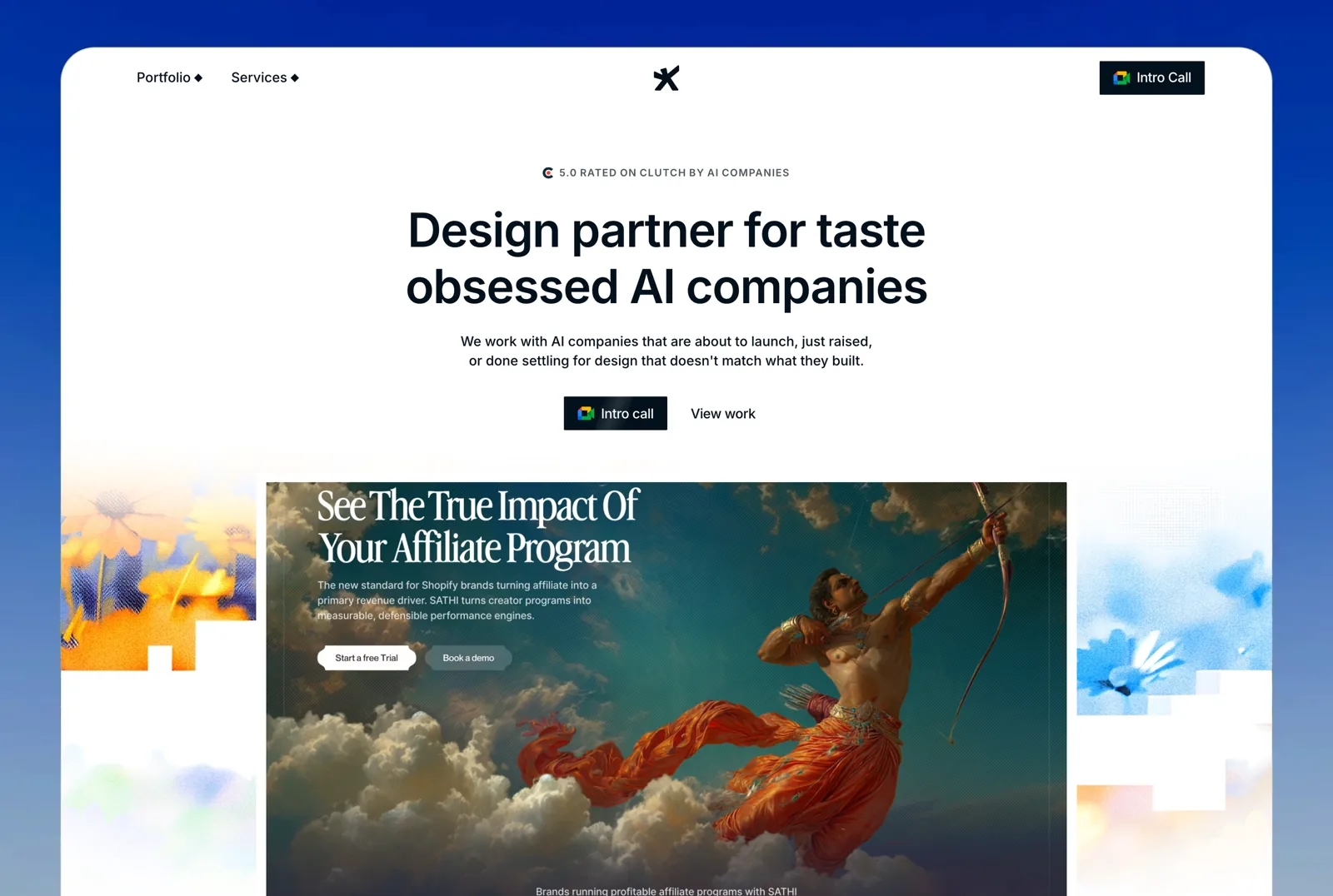
1. Studio Maydit: A Top-Rated Design Agency for AI Founders
Studio Maydit is a web and product design studio working with AI founders in the US, UK, and Europe. What distinguishes it for a security team is the range: the studio builds in Framer, Webflow, and custom code, and keeps going into product design once the site ships, so the same people who wrote your positioning are the ones designing the alert queue behind the login.
The evidence it offers is narrow and specific rather than broad. Dualite passed 100,000+ users within seven months, following design work that supported a repositioned ICP. Alongside it sit Wave, PixelFlow, Mi-VAD, and 15 other AI and SaaS teams.
There are two ways to engage, and for a company in a certification cycle the difference matters. A fixed scope runs three to four weeks and fits a hard external date. A monthly retainer suits teams shipping continuously, covering new pages, campaigns, and product design, with no long lock-in. Every fixed-scope project finishes with a diagnosis of what is leaking in the product, which is usually the more valuable half.
| Check | Finding |
|---|---|
| Based in | Remote, serving US / UK / EU |
| Platform depth | Framer, Webflow, and custom code |
| AI-sector proof | Yes. AI-native clients, published outcome on Dualite |
| Pricing | Fixed scope or monthly retainer, quoted per project |
| Team shape | Founder-led, small senior team |
| Best fit | Security teams whose interface has to survive a real shift |
Worth a conversation if your demo impresses buyers and your dashboard loses them. Book a 30-minute call.

2. Foundey
Foundey is a San Francisco studio founded in 2021, working in Figma, with DemandIQ, Traycer, and Sero AI named. Their clients are early AI companies with technical products, so the conversation about model output and confidence is one they have already had rather than one you have to teach.
They publish no pricing and no team size, and being Figma-only means the design still has to be built by your engineers, which is a real cost when the team is already stretched thin on detection work.
| Check | Finding |
|---|---|
| Based in | San Francisco, USA |
| Founded | 2021 |
| Team size | Not published |
| Primary platform | Figma-only |
| AI-sector proof | Yes. Published AI client work |
| Named clients | DemandIQ, Traycer, Sero AI |
| Pricing | Not published |
| Best fit | Teams with front-end capacity who need design only |
3. Lazarev
Lazarev is a San Francisco firm of 51 to 200, founded in 2015, working across platforms, with a published minimum and Payoneer, Peel, Elva, and Mozayix named. Payoneer is regulated financial software, which means they have designed inside real compliance constraints instead of treating them as an afterthought.
Their scale is the trade-off. A firm that size assigns teams, so the seniority in the pitch is not guaranteed in delivery, and a small security startup can end up as the smallest account on the floor.
| Check | Finding |
|---|---|
| Based in | San Francisco, USA |
| Founded | 2015 |
| Team size | 51-200 |
| Primary platform | Mixed |
| AI-sector proof | Yes. Published AI client work |
| Named clients | Payoneer, Peel, Elva, Mozayix |
| Pricing | Published minimum |
| Best fit | Funded teams who need regulated-product experience |
4. Fantasy
Fantasy has worked from San Francisco and New York since 1999, across platforms, on products at very large scale. Their depth in complex interface work is real, and a studio that has survived that long has seen more categories rise and fall than almost anyone else on this list.
They publish no client names, no pricing, and no team size, which leaves a buyer with very little to verify independently, and their engagements are shaped for organisations with budget and time that an early security startup does not have.
| Check | Finding |
|---|---|
| Based in | San Francisco and New York, USA |
| Founded | 1999 |
| Team size | Not published |
| Primary platform | Mixed |
| AI-sector proof | Yes. Published AI client work |
| Named clients | Not published |
| Pricing | Not published |
| Best fit | Later-stage companies buying depth over speed |
5. Clay
Clay is a San Francisco studio of 51 to 200, founded in 2016, working across platforms, with a published minimum and Slack, Stripe, Google, Coinbase, and Amazon named. Coinbase and Stripe are products where a mistake in the interface has direct financial consequences, and designing under that pressure is closely related to what a security console demands.
Their AI-sector proof is strong but their client list is weighted to companies with mature design organisations, so the engagement assumes a counterpart on your side who does this full time.
| Check | Finding |
|---|---|
| Based in | San Francisco, USA |
| Founded | 2016 |
| Team size | 51-200 |
| Primary platform | Mixed |
| AI-sector proof | Yes. Published AI client work |
| Named clients | Slack, Stripe, Google, Coinbase, Amazon |
| Pricing | Published minimum |
| Best fit | Teams who already employ a design lead to partner with |
6. SuperSkills
SuperSkills is a small Walnut Creek team of one to ten working across platforms, with The Cut named. A team that size gives you the senior person for the whole engagement, which matters when the subject is technical enough that context takes weeks to transfer rather than days.
They publish no pricing and no founding year, and a single named client is thin evidence for a buyer who needs to see the work has held up somewhere before.
| Check | Finding |
|---|---|
| Based in | Walnut Creek, USA |
| Founded | Not published |
| Team size | 1-10 |
| Primary platform | Mixed |
| AI-sector proof | Yes. Published AI client work |
| Named clients | The Cut |
| Pricing | Not published |
| Best fit | Early teams who want one senior designer throughout |
7. Feely Studio
Feely Studio is a distributed European team of one to ten with a published minimum and Noxus, Mutiny, Luasai, and Basic Capital named. Their work sits with early AI products, and the published minimum plus a small team makes them one of the more legible options for a startup that wants to know the cost before investing time.
They publish no founding year, and one to ten people distributed across Europe means overlap with US hours is limited to a few hours a day, which slows anything needing rapid back and forth.
| Check | Finding |
|---|---|
| Based in | Distributed, Europe |
| Founded | Not published |
| Team size | 1-10 |
| Primary platform | Mixed |
| AI-sector proof | Yes. Published AI client work |
| Named clients | Noxus, Mutiny, Luasai, Basic Capital |
| Pricing | Published minimum |
| Best fit | European teams wanting a known price and small crew |
8. Lighthouse Digital
Lighthouse Digital is a London studio working in Webflow, with a published minimum and HelloSelf, Freetrade, and IGN named. Freetrade and HelloSelf both handle sensitive personal data under UK rules, so the studio has worked where privacy constraints shape what an interface is allowed to display.
They have no published AI client work, no founding year, and no team size, and a Webflow specialist is built for marketing sites rather than the product interface this article is about.
| Check | Finding |
|---|---|
| Based in | London, UK |
| Founded | Not published |
| Team size | Not published |
| Primary platform | Webflow |
| AI-sector proof | No. No published AI client work |
| Named clients | HelloSelf, Freetrade, IGN |
| Pricing | Published minimum |
| Best fit | UK teams whose immediate gap is the marketing site |
9. BX Studio
BX Studio is a New York team of 11 to 50 working in Webflow, with a published minimum and Reddit, Headspace, ASAPP, and Verifone named. Verifone is payments infrastructure and ASAPP is applied AI, which together give them credible experience of products where reliability is the selling point.
They publish no founding year, and their platform strength is Webflow, so product interface work is not the centre of what they do even though the client list is relevant.
| Check | Finding |
|---|---|
| Based in | New York, USA |
| Founded | Not published |
| Team size | 11-50 |
| Primary platform | Webflow |
| AI-sector proof | Yes. Published AI client work |
| Named clients | Reddit, Headspace, ASAPP, Verifone |
| Pricing | Published minimum |
| Best fit | Teams needing site and product handled by one studio |
10. Feels Like
Feels Like is a Los Angeles studio founded in 2023 working in custom code, with Google, Nike, LVMH, and Suno AI named. They build what they design, which removes the handover gap entirely, and Suno is evidence they can work on a product where the model is the point.
They publish no pricing and no team size, and a studio founded in 2023 has a short record, which is a genuine concern when your buyers will ask who else has trusted you.
| Check | Finding |
|---|---|
| Based in | Los Angeles, USA |
| Founded | 2023 |
| Team size | Not published |
| Primary platform | Custom code |
| AI-sector proof | Yes. Published AI client work |
| Named clients | Google, Nike, LVMH, Suno AI |
| Pricing | Not published |
| Best fit | Teams who want design and build from one group |
How to choose between them
Sort by where the product is actually failing.
Analysts drown in the alert queue. Studio Maydit or Clay.
The model's output is not trusted. Foundey or Feels Like.
A compliance review is shaping every screen. Lazarev or Lighthouse Digital.
You need seniority and a known price. Feely Studio or SuperSkills.
One test before you commit. Ask them how they would design the screen an analyst sees on the worst day of the quarter, when everything is firing at once. A studio that has done this work will start asking what can be grouped, what can be suppressed, and who gets woken up. A studio that starts describing a visual direction has told you it is thinking about the demo, and the demo is not where your product gets judged. Your marketing site gets judged too, often before anyone books that demo, and what a cybersecurity website has to prove covers that side of the review.