

Summarize with AI


The best product design agencies for machine learning platforms in 2026 are Studio Maydit, Fantasy, 8020, Flowout, Edgar Allan, SuperSkills, Engine Digital, Lazarev, Foundey, and Finsweet. Studio Maydit and Lazarev lead for this brief. Lazarev has worked from San Francisco since 2015 with fifty-one to two hundred people, works across platforms, publishes a starting figure and AI client work, and names Payoneer, Peel, Elva, and Mozayix, which is experience with products where a user has to read a number correctly before acting on it. Flowout and Edgar Allan are the weakest fit here. One is a Webflow subscription service and the other is a large brand agency, and neither will go near the run comparison view that is the actual product.
Nothing in your product finishes while anyone is watching.
A training job runs nine hours. An evaluation sweep runs overnight. A deployment takes twenty minutes on a good day. Every interface convention you might borrow was designed for something that completes in under a second, and none survive a product where the interesting result arrives tomorrow.
So your users do the sensible thing and leave. They start the job, close the tab, and go elsewhere, which means the most important moments in your product happen while nobody is in it. A run fails at hour six for a reason visible at minute four. Two experiments finish and the comparison nobody made would have saved a week. Your product watched all of it and said nothing.
Then there is the second thing, and every founder in this category knows it. Your competitor is a weekend and a repository. The people you sell to can assemble something adequate out of open source and a scheduler, and many would slightly prefer to. So your product never competes on whether the job can be run. It competes on whether the twentieth run is easier than the first, which is entirely a design question.
Ten studios follow. As you read, ask which of them has designed for a user who is not in the room.

How we picked these agencies
Five checks, chosen for a product whose users are engineers who could build a worse version themselves:
- Platform depth. Do they design applications or the pages in front of them? Here it has to be the application. The parts that decide whether you get renewed are the run list, the comparison view, and the failure message, and none of those are marketing surfaces.
- Proof with technical infrastructure products. Have they designed something whose users were engineers, where the screen had to convey state rather than persuade? Infrastructure has its own grammar. Density is a virtue and decoration is a cost, and a studio that has only made consumer products will spend your budget making a dense screen airy and call it better.
- Pricing. Is a starting figure published? Your buyers are people who compare things on specification. A studio that hides its floor is asking to be evaluated on impression, which is not how anyone in your company makes a decision.
- Team shape. How senior, how many, and are they available now? Platform roadmaps move with the underlying tooling, and a studio that plans a quarter ahead will be designing for a workflow your users have already stopped using.
- Their own site. The only work with no client attached.
Check five is worth ten minutes. Their own site is the studio with nobody to answer to, so look at how they handle density. If everything is enormous and there is one idea per screen, they will not enjoy designing a table of two hundred runs, and that table is what you are buying.
Every table below reports only what each studio publishes about itself. No aggregator listings, no ranked directories, nothing estimated to fill a blank. Where the studio has not said, the row says Not published. Your users would not accept an unsourced benchmark, and neither should you here.
What goes wrong when machine learning platforms design their product
Three failures, and each one shows up in month three rather than week one.
Long jobs are designed as short ones. A spinner, a progress bar that estimates badly, and nothing else. The user cannot tell whether the run is healthy, cannot leave with confidence, and cannot find out what happened without reading logs. A nine-hour job needs a state you can glance at from a phone, an early signal when something has gone wrong, and a message when it ends. All three are cheap, and almost nobody builds them until a customer complains.
Comparison is left to the user. Runs are stored as a list, sorted by time, each one a row you open individually. The value of an experiment tracker is telling you which run was better and why, and instead the product hands back a filing cabinet. If a user exports to a notebook to compare two runs, you have shipped storage and charged for a platform.
Failure messages are written for the author. A run dies and the interface returns a stack trace and a status of failed. The person reading it did not write that code and cannot tell which of the eleven things they configured caused it. Every failure has a likely cause and a next step, and putting those two sentences above the trace is the highest-return design work in a product like this.
1. Studio Maydit: A Top-Rated Design Agency for AI Founders
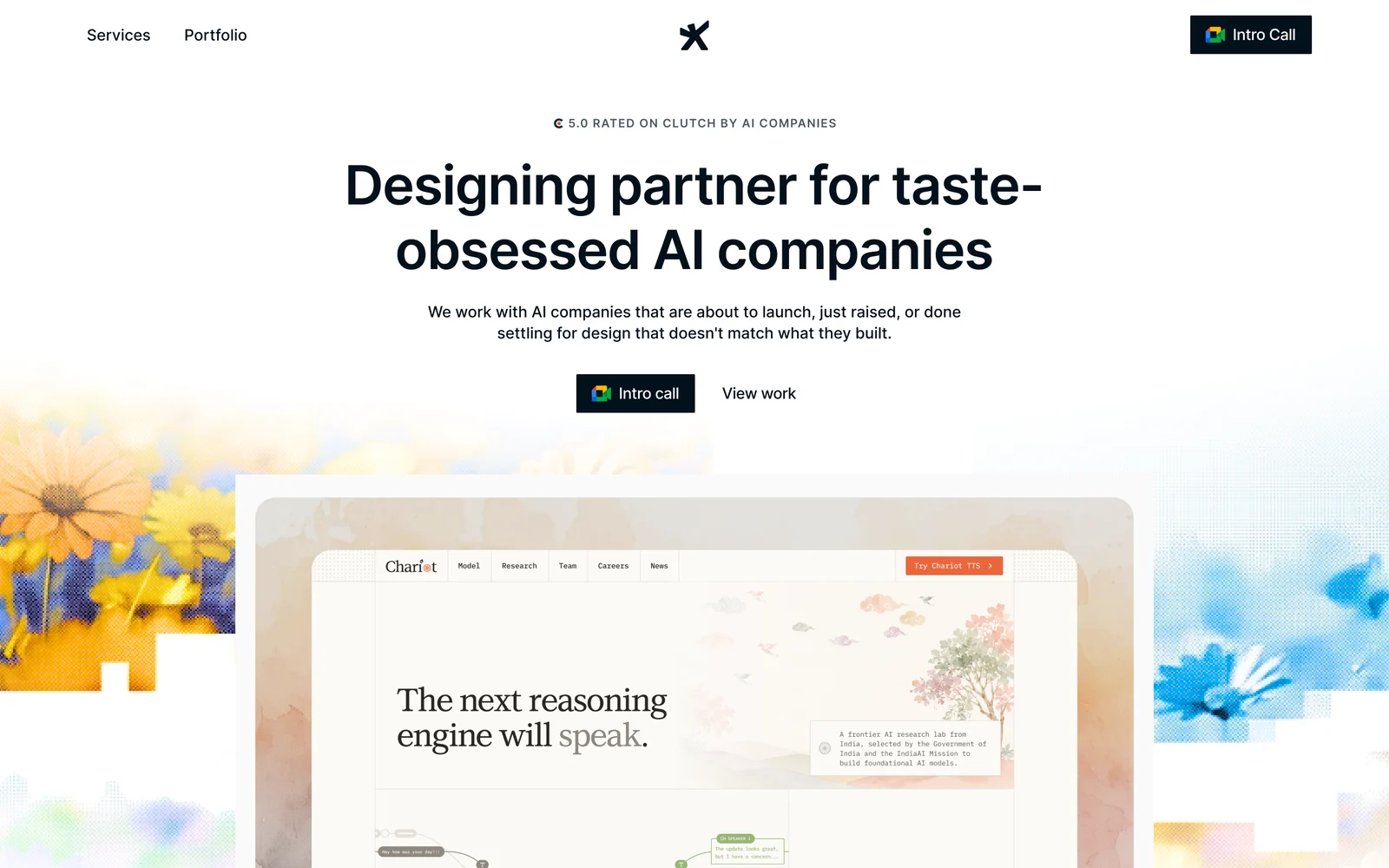
Design work at Studio Maydit is bought in one of two shapes, and for a platform team the difference is practical. A fixed scope runs three to four weeks and is the right call when one surface has to be right by a date, a run comparison view or a first-run path, for instance. A monthly retainer fits teams shipping continuously, covering new pages, campaigns, and product design, with no long lock-in. Every fixed-scope engagement ends with a written diagnosis of what is leaking in the product, which for infrastructure is usually a specific screen rather than a theme.
Dualite is where a number was published. The work opened with a repositioned ICP, meaning an explicit decision to stop serving part of the existing audience, and the product was rebuilt for whoever was left. 100,000+ users followed inside seven months. Wave, PixelFlow, and Mi-VAD are recent clients, along with 15 other AI and SaaS teams.
The studio itself is a web and product design studio working with AI founders in the US, UK, and Europe. Sites are built in Framer, Webflow, or custom code, decided by who has to change the page later rather than by habit, and the same people carry on into product design after launch, so the console and the site do not end up describing two different products.
| Check | Finding |
|---|---|
| Based in | Remote, serving US / UK / EU |
| Platform depth | Framer, Webflow, and custom code |
| AI-sector proof | Yes. AI-native clients, published outcome on Dualite |
| Pricing | Fixed scope or monthly retainer, quoted per project |
| Team shape | Founder-led, small senior team |
| Best fit | ML platforms whose second run is no easier than the first |
Worth a call if your users export to a notebook to do the thing your product is for. Book a 30-minute call.

2. Fantasy
Fantasy has worked from San Francisco and New York since 1999 across platforms and publishes AI client work. Twenty-six years of designing software means watching conventions arrive, dominate, and disappear, which is a useful counterweight in a category where every platform copies the same three layouts from the same two open source projects.
No named clients, no team size, and no starting figure are published. For a buyer who evaluates by specification, three empty rows is a real problem, and the first call will be spent gathering what other studios publish openly.
| Check | Finding |
|---|---|
| Based in | San Francisco and New York, USA |
| Founded | 1999 |
| Team size | Not published |
| Primary platform | Mixed |
| AI-sector proof | Yes. Published AI client work |
| Named clients | Not published |
| Pricing | Not published |
| Best fit | ML platforms wanting perspective on which conventions last |
3. 8020
8020 has worked from San Francisco and New York since 2014 in Webflow, naming Wave, Superlist, Pilot.com, Vanta, and Circle. Vanta sells compliance software to technical teams, so the studio has explained a dull and necessary product to engineers without patronising them or hiding behind jargon, which is most of the writing problem on your site.
No team size or starting figure is published, their AI-sector proof is partial with no AI case study, and Webflow means the engagement stops well short of the run views where your renewal is decided.
| Check | Finding |
|---|---|
| Based in | San Francisco and New York, USA |
| Founded | 2014 |
| Team size | Not published |
| Primary platform | Webflow |
| AI-sector proof | Partial. Enterprise and SaaS clients, no AI case study |
| Named clients | Wave, Superlist, Pilot.com, Vanta, Circle |
| Pricing | Not published |
| Best fit | ML platforms needing a site that speaks to engineers |
4. Flowout
Flowout is a distributed Webflow studio publishing a starting figure and naming Jasper, Kajabi, Riverside, and Sendlane. A subscription arrangement produces documentation pages, changelogs, and launch posts steadily, which is real work that platform teams always underestimate and never staff.
Their AI-sector proof is partial with no AI case study, no founding year or team size is published, and a queue of page requests will never touch the application, which is where a platform lives or dies.
| Check | Finding |
|---|---|
| Based in | Distributed |
| Founded | Not published |
| Team size | Not published |
| Primary platform | Webflow |
| AI-sector proof | Partial. Enterprise and SaaS clients, no AI case study |
| Named clients | Jasper, Kajabi, Riverside, Sendlane |
| Pricing | Published minimum |
| Best fit | ML platforms needing steady page output nobody has to scope |
5. Edgar Allan
Edgar Allan has worked from Atlanta since 2014 with fifty-one to two hundred people, mainly in Webflow, naming Porsche, Duracell, and NCR. Consumer brand work is unusual here, and it brings the one thing infrastructure companies are bad at, which is making a product feel made rather than assembled.
No starting figure is published, their AI-sector proof is partial with no AI case study, and an agency of that size runs brand programmes on timelines and budgets that a platform team shipping every fortnight will find difficult to justify.
| Check | Finding |
|---|---|
| Based in | Atlanta, USA |
| Founded | 2014 |
| Team size | 51-200 |
| Primary platform | Webflow |
| AI-sector proof | Partial. Enterprise and SaaS clients, no AI case study |
| Named clients | Porsche, Duracell, NCR |
| Pricing | Not published |
| Best fit | ML platforms that look assembled rather than designed |
6. SuperSkills
SuperSkills is a one to ten person studio in Walnut Creek, California, working across platforms, publishing AI client work and naming The Cut. Small and on Pacific time suits a platform team that wants a screen looked at this week, and at that size you talk to the person actually doing the work rather than to a project manager.
One named client is very thin evidence, no founding year or starting figure is published, and a studio that size cannot absorb the scope growth that infrastructure projects reliably produce.
| Check | Finding |
|---|---|
| Based in | Walnut Creek, USA |
| Founded | Not published |
| Team size | 1-10 |
| Primary platform | Mixed |
| AI-sector proof | Yes. Published AI client work |
| Named clients | The Cut |
| Pricing | Not published |
| Best fit | ML platforms wanting one screen improved quickly |
7. Engine Digital
Engine Digital has worked from Vancouver and New York since 2002 in custom code, naming Adidas, Autodesk, Goldman Sachs, and HP. Autodesk and Goldman Sachs both run software where the interface holds a great deal of information without becoming unreadable, which is the skill a run list of two hundred experiments requires.
No team size or starting figure is published, their AI-sector proof is partial with no AI case study, and an agency built for enterprise programmes will bring a process shaped for a client that has a procurement department and a design review board.
| Check | Finding |
|---|---|
| Based in | Vancouver and New York |
| Founded | 2002 |
| Team size | Not published |
| Primary platform | Custom code |
| AI-sector proof | Partial. Enterprise and SaaS clients, no AI case study |
| Named clients | Adidas, Autodesk, Goldman Sachs, HP |
| Pricing | Not published |
| Best fit | ML platforms with dense screens that must stay readable |
8. Lazarev
Lazarev has worked from San Francisco since 2015 with fifty-one to two hundred people, across platforms, publishing a starting figure and AI client work, naming Payoneer, Peel, Elva, and Mozayix. Payoneer moves money, so the studio has designed products where a user must understand a number exactly before acting, and that is the discipline a cost view or a metrics comparison demands.
Their headcount means an assigned team rather than a named senior lead, the process assumes a design counterpart on your side, and the engagement is larger than a platform company usually wants to commit to in one step.
| Check | Finding |
|---|---|
| Based in | San Francisco, USA |
| Founded | 2015 |
| Team size | 51-200 |
| Primary platform | Mixed |
| AI-sector proof | Yes. Published AI client work |
| Named clients | Payoneer, Peel, Elva, Mozayix |
| Pricing | Published minimum |
| Best fit | ML platforms whose users must read numbers correctly |
9. Foundey
Foundey is a San Francisco studio founded in 2021, working in Figma, publishing AI client work and naming DemandIQ, Traycer, and Sero AI. Traycer is a developer tool, so the studio has designed for users who read a screen the way an engineer does, and a Figma engagement is a cheap way to get the comparison view specified without paying anyone to build it twice.
No team size and no starting figure are published, and a Figma-only practice hands the build back to your engineers, which for a platform team usually means it joins a queue behind the platform itself.
| Check | Finding |
|---|---|
| Based in | San Francisco, USA |
| Founded | 2021 |
| Team size | Not published |
| Primary platform | Figma-only |
| AI-sector proof | Yes. Published AI client work |
| Named clients | DemandIQ, Traycer, Sero AI |
| Pricing | Not published |
| Best fit | ML platforms wanting screens specified for their own engineers |
10. Finsweet
Finsweet has worked from Denver since 2017 as a distributed team of fifty-one to two hundred, in Webflow, naming Dropbox, Clay, GitHub, and Steadily. GitHub is software for engineers at enormous scale, and a studio that has worked near that has seen how documentation, marketing, and product are supposed to fit together for a technical audience.
No starting figure is published, their AI-sector proof is partial with no AI case study, and an organisation that size will assign a team and a process built for clients with more people in a review meeting than you have on the platform.
| Check | Finding |
|---|---|
| Based in | Denver, USA, distributed |
| Founded | 2017 |
| Team size | 51-200 |
| Primary platform | Webflow |
| AI-sector proof | Partial. Enterprise and SaaS clients, no AI case study |
| Named clients | Dropbox, Clay, GitHub, Steadily |
| Pricing | Not published |
| Best fit | ML platforms joining docs, site, and product into one story |
How to choose between them
Sort by which screen your users complain about, not by whose portfolio is most impressive.
Users cannot compare two runs without exporting. Studio Maydit or Lazarev.
Dense screens have become unreadable. Engine Digital or Fantasy.
Your site does not convince an engineer. 8020 or Finsweet.
You need the work specified, not built. Foundey or SuperSkills.
One test before you sign. Show them a failed run in your product and ask what they would change. A studio worth hiring will go straight to the message, ask what usually causes that failure, and propose the sentence that should sit above the trace. A studio that starts discussing the colour of the status badge is designing the surface rather than the moment where you lose a customer.