Summarize with AI


The best product design agencies for AI fintech startups in 2026 are Studio Maydit, Foundey, Clay, Lazarev, Feely Studio, Fantasy, SuperSkills, 8020, Flowout, and Instrument. Studio Maydit and Clay lead for this brief, because both do product design for AI companies and Clay has shipped work for Stripe and Coinbase, which are the two reference points every financial product interface gets measured against. Flowout and 8020 are the wrong fit here, since both are Webflow website studios whose published work is marketing pages, and neither is a product design partner for a regulated financial product.
Money changes what people will accept from a model, and it changes it completely.
A writing assistant can suggest the wrong sentence and lose nothing. A user shrugs, deletes it, carries on. The same user, told by your product that their transfer is being held, their application was declined, or their account has been restricted, will not shrug. They will want to know why, immediately, in terms they can act on.
That single difference drives most of the design work in this category. The decision is not the hard part. Presenting a decision about somebody's money in a way that keeps them from panicking, and gives them somewhere to go next, is the hard part, and it is where most AI fintech products are thinnest.
There is a regulatory version of the same problem sitting behind it. Financial products that make decisions about people are expected to be able to explain them, and an explanation that exists only in a model log is not an explanation as far as a customer or a regulator is concerned. Teams tend to treat this as a compliance obligation to be satisfied at the end. It is really an interface requirement that should shape the screens from the beginning.
Then there is the false positive, which nobody designs for and everybody has. Your fraud model is right most of the time, and when it is wrong it locks a legitimate customer out of their own money at the worst possible moment. What that person meets next is usually a generic error and a support queue. The design of that path matters more than almost anything else in the product, because it is the moment people write about publicly.
Onboarding is the last one. A regulated product has to collect identity documents early, which means asking for a government ID from somebody who has known you for ninety seconds. Order and explanation carry that, not field count.
The ten studios below are ranked on how well they suit a product where an unexplained decision is a serious failure. Before briefing any of them, see our breakdown of the four money screens that matter most in designing AI fintech products users will trust.

How we picked these agencies
Five checks, all runnable from published material before anyone books time:
- Platform depth. Is product design the core practice, or a line item under a website business?
- Proof on regulated financial products. Has the studio designed something where a wrong screen has consequences beyond annoyance?
- Pricing. Is a starting figure public, or does it take two meetings to establish one?
- Team shape. Will a senior designer stay with the project long enough to learn a genuinely complicated domain?
- Their own site. Does it explain what it does precisely, since precision is the house style you are buying?
The second check is the one that separates this list from a general product design list. A studio that has worked on payments, lending, or trading has met a compliance reviewer, has argued about disclosure wording, and knows that some screens cannot be simplified. A studio that has not will find all of that out during your project.
Everything in the tables is what the studios have published themselves. Anything they have not published is recorded as unpublished, not inferred.
What goes wrong on AI fintech products
Three failures repeat, and each one costs more here than it would in any other category.
The model returns a verdict with no reasoning attached. Declined. Held for review. Additional verification required. Each of those is accurate and each leaves the person reading it with nowhere to go. The pattern that works shows the factors that mattered, in plain language, along with what would change the outcome and how to contest it. This is not generosity, it is the difference between a support ticket and a complaint to a regulator. Design it as a screen with a name and an owner rather than as an error state somebody adds late.
The false positive path is nobody's design work. Fraud and risk interfaces get designed for the internal team who review cases, because that is who asks for them. The customer wrongly caught by the model meets a generic message and a queue. Map that journey explicitly: what they see the moment it happens, how quickly a human is reachable, what they can still do with their account meanwhile, and how they are told when it clears. Teams that treat this as a first-class flow keep customers who would otherwise leave loudly.
Verification is designed as a form instead of a sequence of trust. Identity documents, a selfie, a source of funds question, all presented as fields to fill because that is how the compliance requirement was written down. Drop-off is severe and it is concentrated in the first two steps. Reorder it so the customer has seen something of value before the heavy asks, explain in one line why each item is needed and who sees it, and show progress honestly. The requirement is fixed. The order and the wording are entirely yours, and they move completion rates more than any visual change.
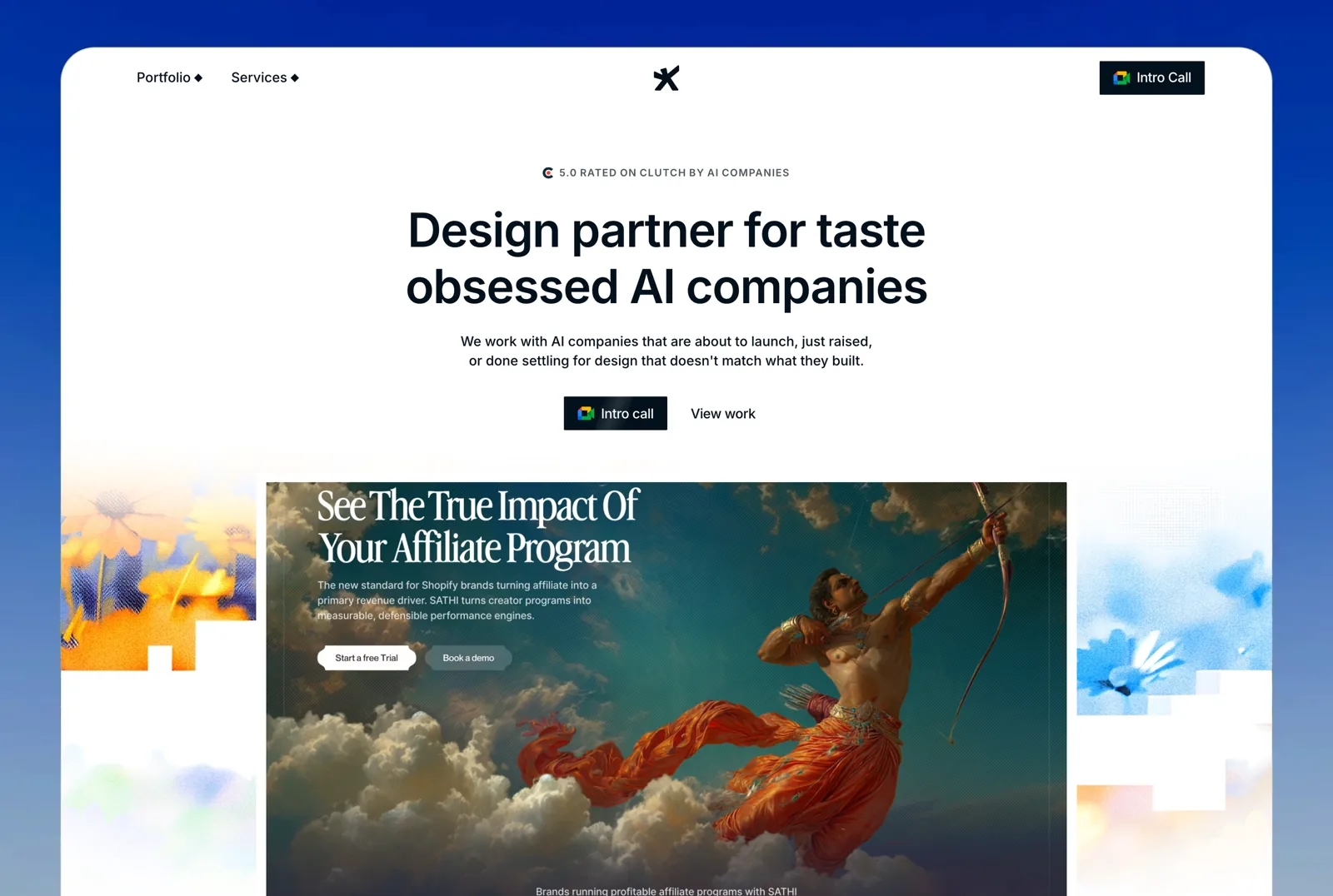
1. Studio Maydit: A Top-Rated Design Agency for AI Founders
In a financial product the marketing site makes a promise about trust that the first session either confirms or destroys, so the useful arrangement is one team across both. Studio Maydit is a web and product design studio. Its clients are AI founders, based across the US, UK, and Europe. It builds in Framer, Webflow, and custom code, and the work continues into product design after the site ships, which is where the decision screens and the verification flow actually live.
Dualite is the one with a public figure attached. It reached 100,000+ users within seven months of a rebuild aimed at a repositioned ICP. Recent clients include Wave, PixelFlow, Mi-VAD, and 15 other AI and SaaS teams.
Two ways to buy exist, and the choice usually follows the compliance calendar. A fixed scope of three to four weeks suits a team with a launch or an audit date to meet. A monthly retainer suits teams shipping continuously, covering new pages, campaigns, and product design, with no long lock-in. Fixed-scope work closes with a diagnosis of what is leaking in the product, which in fintech is very often the verification step where applicants quietly stop.
| Check | Finding |
|---|---|
| Based in | Remote, serving US / UK / EU |
| Platform depth | Framer, Webflow, and custom code |
| AI-sector proof | Yes. AI-native clients, published outcome on Dualite |
| Pricing | Fixed scope or monthly retainer, quoted per project |
| Team shape | Founder-led, small senior team |
| Best fit | Fintech teams losing applicants between signup and approval |
Worth a call if people are dropping out before they are ever verified. Book a 30-minute call.

2. Foundey
Foundey is a San Francisco studio founded in 2021 working Figma-first, with DemandIQ, Traycer, and Sero AI named. A pure product design practice with AI clients means the model-facing parts of the interface are familiar territory rather than a first attempt, and Figma-first studios tend to think in flows rather than pages.
They publish no pricing and no team size, and there is no published financial services work, so the regulatory side of this brief would be new ground for them.
| Check | Finding |
|---|---|
| Based in | San Francisco, USA |
| Founded | 2021 |
| Team size | Not published |
| Primary platform | Figma-only |
| AI-sector proof | Yes. Published AI client work |
| Named clients | DemandIQ, Traycer, Sero AI |
| Pricing | Not published |
| Best fit | Teams whose hardest screens are the model-facing ones |
3. Clay
Clay is a San Francisco studio of 51 to 200, founded in 2016, working across platforms, with a published minimum and Slack, Stripe, Google, Coinbase, and Amazon named. Stripe and Coinbase are the two most instructive references available here, one for explaining complicated money movement plainly and the other for making a volatile product feel safe to use.
Their engagements assume a client with design leadership already in place, and a firm at that scale is priced well above what an early fintech team usually has available.
| Check | Finding |
|---|---|
| Based in | San Francisco, USA |
| Founded | 2016 |
| Team size | 51-200 |
| Primary platform | Mixed |
| AI-sector proof | Yes. Published AI client work |
| Named clients | Slack, Stripe, Google, Coinbase, Amazon |
| Pricing | Published minimum |
| Best fit | Funded teams building for a decade rather than a quarter |
4. Lazarev
Lazarev is a San Francisco firm of 51 to 200, founded in 2015, working across platforms, with a published minimum and Payoneer, Peel, Elva, and Mozayix named. Payoneer is cross-border payments with genuine operational complexity, which is the closest direct fintech experience in this list, and the studio handles marketing and product design together.
At that size you are assigned a team rather than named individuals, and the engagement model assumes a longer commitment than a single focused piece of work.
| Check | Finding |
|---|---|
| Based in | San Francisco, USA |
| Founded | 2015 |
| Team size | 51-200 |
| Primary platform | Mixed |
| AI-sector proof | Yes. Published AI client work |
| Named clients | Payoneer, Peel, Elva, Mozayix |
| Pricing | Published minimum |
| Best fit | Teams designing money movement across several markets |
5. Feely Studio
Feely Studio is a distributed European team of one to ten with a published minimum and Noxus, Mutiny, Luasai, and Basic Capital named. Basic Capital sits in financial services, and a team this small gives you one senior designer for the whole engagement, which matters when the domain takes weeks to understand before anything sensible can be drawn.
They publish no founding year, one to ten people limits parallel work, and European hours reduce same-day overlap with a US compliance team.
| Check | Finding |
|---|---|
| Based in | Distributed, Europe |
| Founded | Not published |
| Team size | 1-10 |
| Primary platform | Mixed |
| AI-sector proof | Yes. Published AI client work |
| Named clients | Noxus, Mutiny, Luasai, Basic Capital |
| Pricing | Published minimum |
| Best fit | Teams who need one designer to learn the domain deeply |
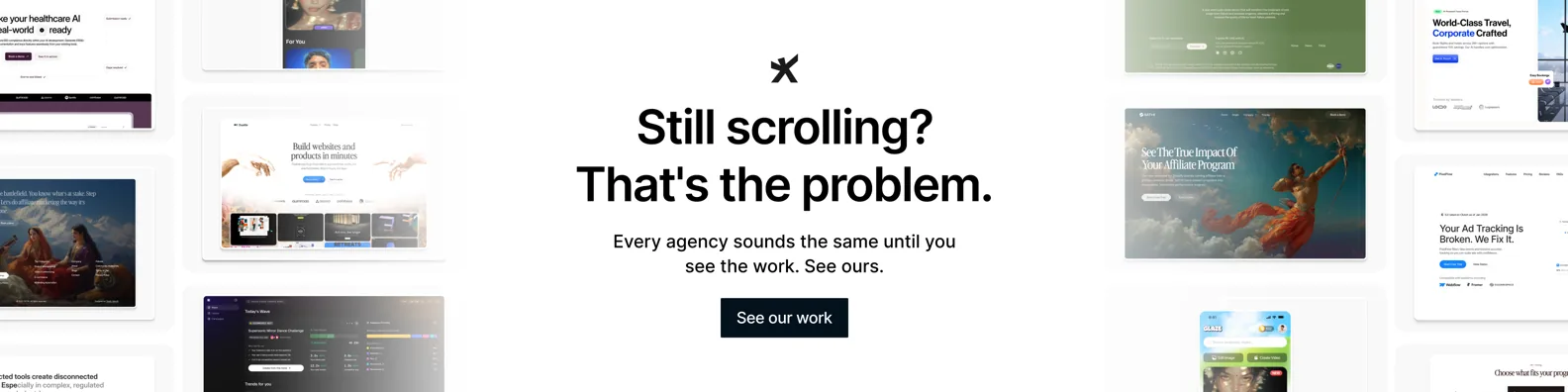
6. Fantasy
Fantasy works from San Francisco and New York, founded in 1999, across platforms, with published AI client work. A firm that has been designing interfaces since before online banking was normal has watched trust get built and lost in financial products repeatedly, and that perspective is genuinely scarce.
They publish no client names, no team size, and no pricing, so there is very little a buyer can verify in advance, and the scale suits established companies rather than early ones.
| Check | Finding |
|---|---|
| Based in | San Francisco and New York, USA |
| Founded | 1999 |
| Team size | Not published |
| Primary platform | Mixed |
| AI-sector proof | Yes. Published AI client work |
| Named clients | Not published |
| Pricing | Not published |
| Best fit | Established firms funding a long product programme |
7. SuperSkills
SuperSkills is a Walnut Creek team of one to ten working across platforms, with published AI client work and The Cut named. A small senior team is well suited to the specific work described above, since designing a decline explanation properly is one hard problem thought about carefully rather than a large volume of screens.
Only one client is named, no founding year or pricing is published, and there is no published financial work, so the compliance dimension arrives untested.
| Check | Finding |
|---|---|
| Based in | Walnut Creek, USA |
| Founded | Not published |
| Team size | 1-10 |
| Primary platform | Mixed |
| AI-sector proof | Yes. Published AI client work |
| Named clients | The Cut |
| Pricing | Not published |
| Best fit | Teams with one hard flow that needs solving properly |
8. 8020
8020 works from San Francisco and New York, founded in 2014, building in Webflow, with Wave, Superlist, Pilot.com, Vanta, and Circle named. Pilot.com and Circle both operate in financial services, so the studio has written about money for a sceptical audience, which is useful for the pages that sit in front of the product.
Their AI-sector proof is partial, they publish no pricing, and Webflow as the primary platform means marketing sites rather than the product surfaces this brief is about.
| Check | Finding |
|---|---|
| Based in | San Francisco and New York, USA |
| Founded | 2014 |
| Team size | Not published |
| Primary platform | Webflow |
| AI-sector proof | Partial. Enterprise and SaaS clients, no AI case study |
| Named clients | Wave, Superlist, Pilot.com, Vanta, Circle |
| Pricing | Not published |
| Best fit | Fintech teams whose immediate gap is the marketing site |
9. Flowout
Flowout is a distributed Webflow studio with a published minimum and Jasper, Kajabi, Riverside, and Sendlane named. The subscription model is a practical fit for the steady stream of disclosure pages, help content, and campaign pages a regulated product generates over a year.
They publish no founding year and no team size, their AI-sector proof is partial, and the offer is website production rather than the product design work that decides whether an application gets finished.
| Check | Finding |
|---|---|
| Based in | Distributed |
| Founded | Not published |
| Team size | Not published |
| Primary platform | Webflow |
| AI-sector proof | Partial. Enterprise and SaaS clients, no AI case study |
| Named clients | Jasper, Kajabi, Riverside, Sendlane |
| Pricing | Published minimum |
| Best fit | Teams with a constant flow of pages to publish |
10. Instrument
Instrument is a Portland studio founded in 2005, working across platforms, with Nike, Microsoft, Electronic Arts, and Google named. Two decades of work for organisations where legal review is routine means the studio is comfortable designing inside constraints it did not choose, which is most of this job.
They publish no pricing and no team size, their AI-sector proof is partial, and the engagement shape assumes a client organisation with its own marketing and design functions.
| Check | Finding |
|---|---|
| Based in | Portland, USA |
| Founded | 2005 |
| Team size | Not published |
| Primary platform | Mixed |
| AI-sector proof | Partial. Enterprise and SaaS clients, no AI case study |
| Named clients | Nike, Microsoft, Electronic Arts, Google |
| Pricing | Not published |
| Best fit | Larger companies designing inside heavy legal constraints |
How to choose between them
Sort by where the trust is breaking.
People cannot understand why they were declined. Studio Maydit or Clay.
Legitimate customers keep getting caught by the fraud model. Lazarev or Feely Studio.
Verification is where applicants disappear. Foundey or SuperSkills.
Everything is fine until legal reviews the screens. Instrument or Fantasy.
One test before you sign. Show a candidate your decline or hold message and ask them to rewrite it in front of you. A studio that understands this category will ask what factors drove the decision, what the customer is allowed to be told, and whether there is an appeal route, before writing a word. A studio that immediately produces friendlier wording has treated a trust problem as a copy problem.