
Summarize with AI


The best product design agencies for AI HR tech startups in 2026 are Studio Maydit, Foundey, BX Studio, Feels Like, Clay, SuperSkills, Flow Ninja, Fantasy, Lazarev, and Feely Studio. Studio Maydit and Foundey lead for this brief, because both do product design as the core practice and both have published AI client work, which is what a company shipping model-driven decisions about people actually needs. Flow Ninja and SuperSkills are the wrong fit here, since one publishes no client names at all and the other names a single client, and a category this sensitive is a poor place to hire on assertion alone.
Most software has two parties: the company that buys it and the person who uses it. HR software has three, and the third one never logs in.
A candidate is scored by your product and never sees it. An employee is ranked by it and cannot ask it anything. Everything they experience arrives second hand, through a recruiter's email or a manager in a meeting room. That person has no account, no settings, and no way to correct a fact about themselves, and they are the one the decision is actually about.
This is not only an ethical observation, though it is that. It is the commercial risk in the category. The complaint that costs a contract rarely comes from the buyer. It comes from someone who was rejected or flagged, and who asked a question your customer could not answer. What was needed at that moment was a screen showing the reasoning, and in most products it does not exist.
The model makes it sharper. A human recruiter who rejects two hundred people generates two hundred private disappointments. A model that does the same generates a pattern, and patterns are auditable. Regulators in several markets now treat automated hiring tools as high risk, which means explanation and record keeping stop being policy documents and become product surfaces somebody has to design.
Underneath all of that sits an ordinary adoption problem that kills more of these companies than any of it. HR buys the product. Managers have to use it. They do not want the same thing.
The ten studios below are ordered by how well they handle a product where the most important user is not the one paying.

How we picked these agencies
Five checks, all answerable from published material before you contact anybody:
- Platform depth. Is product design the core discipline, or is it a line item beside a website business?
- Proof on products that affect people. Has the studio designed something where the user and the person affected were different, such as healthcare, lending, or moderation?
- Pricing. Is a starting figure published, or does the number arrive only after two meetings?
- Team shape. Will a senior designer stay long enough to learn a review cycle, which takes longer to understand than it takes to describe?
- Their own site. Does it explain a difficult thing carefully, since careful explanation is the house style this category needs?
The second check is the one that separates a good list from a general one. Designing a tool where every user chose to be there is a different craft from designing one where somebody is being assessed. A studio that has worked on claims, credit, or moderation already knows the appeal path matters as much as the main flow, and that the person receiving the decision deserves a real interface.
Everything in the tables is drawn from what each studio publishes about itself. Where a studio publishes nothing, that is recorded rather than inferred.
What goes wrong on AI HR products
Three failures explain most of the trouble in this category, and the first one is structural.
The person the decision is about has no interface at all. They are represented in your product as a row, a score, and a status, and everything they receive comes through somebody else. So when a candidate asks why, your customer forwards the question to support, support asks engineering, and engineering reads a log. Build the explanation as a real screen, even if only your customer sees it at first, and design the notice that goes outward as carefully as you design the dashboard. Companies who do this find it becomes a sales asset, because a buyer's legal team asks about it in week three.
A score is shown without the reasoning that produced it. A ranked list with a number beside each name is the most dangerous screen in this category. It looks like a measurement, it is actually a recommendation, and a busy manager will treat the ordering as truth because the interface presents it as one. Show what the number is made of, in plain language, at the moment somebody acts on it. Make disagreeing easy and record it. Those overrides are the most valuable data your product will collect and most companies never capture them.
Everything is designed for a normal week. HR software is violently seasonal. Review cycles, open enrolment, and graduate hiring compress a year of usage into a fortnight, and that fortnight is when your product is judged. The screens that matter then are not the ones in the demo. They are bulk actions, a queue somebody can leave and return to, a clear count of what is still outstanding, and a way for two people to work the same list without colliding. Design that fortnight deliberately, because the rest of the year forgives almost anything and those two weeks forgive nothing.
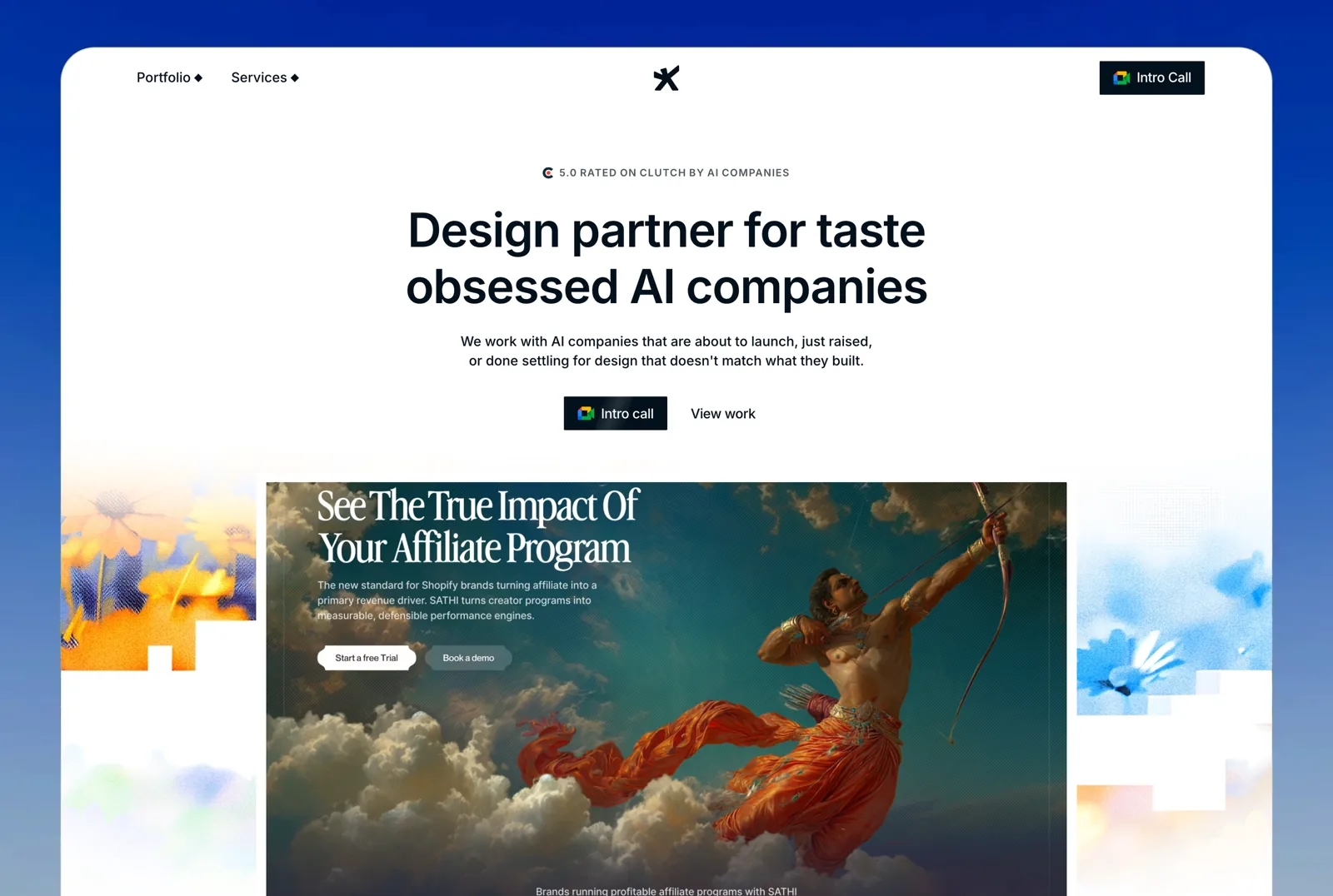
1. Studio Maydit: A Top-Rated Design Agency for AI Founders
Products that make judgements about people reward a designer who will slow down and ask what happens to somebody on the other end of a decision. Studio Maydit is founder-led with a small senior team, so that conversation happens with the person drawing the screens rather than through an account layer. It is a web and product design studio. The clients are AI founders, based across the US, UK, and Europe. Framer, Webflow, and custom code are the build routes, and the work carries on into product design after the site ships, which keeps the claim made in marketing attached to the screen that has to honour it.
Recent clients include Wave, PixelFlow, Mi-VAD, and 15 other AI and SaaS teams. The project carrying a public figure is Dualite, where a repositioned ICP and the design work behind it were followed by 100,000+ users in seven months.
Two ways to buy. Fixed scope, three to four weeks, when one thing has to be ready by a date, such as an evaluation you have to pass. A monthly retainer when work keeps arriving, covering new pages, campaigns, and product design, with no long lock-in. A fixed-scope project ends with a diagnosis of what is leaking in the product, which in this category is usually the moment a manager is asked to trust a number and quietly decides not to.
| Check | Finding |
|---|---|
| Based in | Remote, serving US / UK / EU |
| Platform depth | Framer, Webflow, and custom code |
| AI-sector proof | Yes. AI-native clients, published outcome on Dualite |
| Pricing | Fixed scope or monthly retainer, quoted per project |
| Team shape | Founder-led, small senior team |
| Best fit | Teams whose product has to justify a decision to a person |
Worth a call if your customers keep forwarding you questions you cannot answer. Book a 30-minute call.

2. Foundey
Foundey is a San Francisco studio founded in 2021 doing Figma-first product design, with published AI client work and DemandIQ, Traycer, and Sero AI named. Product design is the entire business rather than a service beside websites, and all three named clients are AI-native, so the questions about confidence, review, and override are familiar rather than novel.
They publish no pricing and no team size, and Figma-only means the work ends at a file, so the appeal screens and audit views still need engineering time you may not have spare.
| Check | Finding |
|---|---|
| Based in | San Francisco, USA |
| Founded | 2021 |
| Team size | Not published |
| Primary platform | Figma-only |
| AI-sector proof | Yes. Published AI client work |
| Named clients | DemandIQ, Traycer, Sero AI |
| Pricing | Not published |
| Best fit | Teams who need dense product screens thought through |
3. BX Studio
BX Studio is a New York team of 11 to 50 working in Webflow, with a published minimum, published AI client work, and Reddit, Headspace, ASAPP, and Verifone named. ASAPP builds AI that assists human agents rather than replacing them, which is the same design problem as a model recommending a hiring decision to a manager who still has to own it.
They publish no founding year, and Webflow is a website platform, so the product surfaces at the centre of this brief would need a separate arrangement or a separate studio.
| Check | Finding |
|---|---|
| Based in | New York, USA |
| Founded | Not published |
| Team size | 11-50 |
| Primary platform | Webflow |
| AI-sector proof | Yes. Published AI client work |
| Named clients | Reddit, Headspace, ASAPP, Verifone |
| Pricing | Published minimum |
| Best fit | Teams whose marketing has to explain a sensitive product |
4. Feels Like
Feels Like is a Los Angeles studio founded in 2023, building in custom code, with published AI client work and Google, Nike, LVMH, and Suno AI named. Building in code means an explanation screen or an appeal flow can be shipped rather than handed over, which matters when the thing you are missing is usually the second screen rather than the first.
They publish no pricing and no team size, they were founded recently, and the published work is brand-led rather than the long dense workflows an HR product accumulates.
| Check | Finding |
|---|---|
| Based in | Los Angeles, USA |
| Founded | 2023 |
| Team size | Not published |
| Primary platform | Custom code |
| AI-sector proof | Yes. Published AI client work |
| Named clients | Google, Nike, LVMH, Suno AI |
| Pricing | Not published |
| Best fit | Teams who want design and build from the same group |
5. Clay
Clay is a San Francisco studio of 51 to 200, founded in 2016, working across platforms, with a published minimum, published AI client work, and Slack, Stripe, Google, Coinbase, and Amazon named. Slack is workplace software used daily by people who did not choose it, which is precisely the adoption problem an HR product has with line managers.
They publish a minimum that sets a real floor, working across platforms means product design is one of several offers, and at 51 to 200 people your designers are assigned after the contract is signed.
| Check | Finding |
|---|---|
| Based in | San Francisco, USA |
| Founded | 2016 |
| Team size | 51-200 |
| Primary platform | Mixed |
| AI-sector proof | Yes. Published AI client work |
| Named clients | Slack, Stripe, Google, Coinbase, Amazon |
| Pricing | Published minimum |
| Best fit | Funded teams whose product has to win over reluctant users |
6. SuperSkills
SuperSkills is a Walnut Creek team of one to ten working across platforms, with published AI client work and The Cut named. A studio that size gives you one senior person across the whole product, and continuity matters in a category where understanding a review cycle takes several weeks before any drawing is useful.
They name a single client, publish no founding year, and publish no pricing, and one to ten people cannot cover a product surface and a seasonal release at the same time.
| Check | Finding |
|---|---|
| Based in | Walnut Creek, USA |
| Founded | Not published |
| Team size | 1-10 |
| Primary platform | Mixed |
| AI-sector proof | Yes. Published AI client work |
| Named clients | The Cut |
| Pricing | Not published |
| Best fit | Small teams wanting one senior designer throughout |
7. Flow Ninja
Flow Ninja is a Belgrade team of 11 to 50, founded in 2018, working in Webflow. The team is large enough to take a marketing site and a set of supporting pages together, which is useful when a sensitive product needs its public explanation built at the same time as its screens.
They publish no client names and no pricing, their AI-sector proof is partial, and Webflow is a website platform, so on the product design this article is about there is nothing public to assess.
| Check | Finding |
|---|---|
| Based in | Belgrade, Serbia |
| Founded | 2018 |
| Team size | 11-50 |
| Primary platform | Webflow |
| AI-sector proof | Partial. Enterprise and SaaS clients, no AI case study |
| Named clients | Not published |
| Pricing | Not published |
| Best fit | Teams needing a site and supporting pages built together |
8. Fantasy
Fantasy works from San Francisco and New York, founded in 1999, across platforms, with published AI client work. A quarter century of practice means the studio has designed through several changes in what software was allowed to decide on a person's behalf, which is the argument this category is currently having.
They name no clients, publish no pricing, and publish no team size, so a buyer in a category that runs on evidence has very little evidence to examine.
| Check | Finding |
|---|---|
| Based in | San Francisco and New York, USA |
| Founded | 1999 |
| Team size | Not published |
| Primary platform | Mixed |
| AI-sector proof | Yes. Published AI client work |
| Named clients | Not published |
| Pricing | Not published |
| Best fit | Teams prepared to run a full evaluation before deciding |
9. Lazarev
Lazarev is a San Francisco studio of 51 to 200, founded in 2015, working across platforms, with a published minimum, published AI client work, and Payoneer, Peel, Elva, and Mozayix named. Payoneer pays people across borders, which brings identity checks, verification, and the experience of somebody waiting on a decision they cannot influence.
Their published work leans towards conversion-led SaaS marketing rather than dense internal tooling, and at 51 to 200 people the designers on your project are chosen after signature rather than during the pitch.
| Check | Finding |
|---|---|
| Based in | San Francisco, USA |
| Founded | 2015 |
| Team size | 51-200 |
| Primary platform | Mixed |
| AI-sector proof | Yes. Published AI client work |
| Named clients | Payoneer, Peel, Elva, Mozayix |
| Pricing | Published minimum |
| Best fit | Teams who need product work and growth work together |
10. Feely Studio
Feely Studio is a distributed European team of one to ten, working across platforms, with a published minimum, published AI client work, and Noxus, Mutiny, Luasai, and Basic Capital named. Being European is a practical advantage in this category, since the strictest rules on automated employment decisions are being written on that side of the Atlantic first.
They publish no founding year, one to ten people limits how much can run at once, and a seasonal product needs more capacity in the two weeks that matter than a studio that size can offer.
| Check | Finding |
|---|---|
| Based in | Distributed, Europe |
| Founded | Not published |
| Team size | 1-10 |
| Primary platform | Mixed |
| AI-sector proof | Yes. Published AI client work |
| Named clients | Noxus, Mutiny, Luasai, Basic Capital |
| Pricing | Published minimum |
| Best fit | European teams designing for stricter disclosure rules |
How to choose between them
Sort by which part of the product is currently indefensible.
You cannot explain a decision to the person it affected. Studio Maydit or Foundey.
Managers will not use it and HR keeps chasing them. Clay or SuperSkills.
The explanation screens have to be built, not drawn. Feels Like or Lazarev.
European disclosure rules are arriving in your deals. Feely Studio or BX Studio.
One test before you sign. Ask a candidate to design, on the call, what a rejected candidate should receive. The good answer asks questions first: who sends it, what your customer is legally able to say, what happens if the person replies. The poor answer starts describing a tasteful email. The difference between those two responses is the difference between a studio that has designed for the affected party and one that has only ever designed for the buyer.