Summarize with AI


The best product design agencies for Berlin AI startups in 2026 are Studio Maydit, Foundey, Trueform, Kvalifik, Feely Studio, Pixelmatters, Lighthouse Digital, Feels Like, basement.studio, and Phantom. Studio Maydit and Kvalifik lead for this brief, because both work with European teams on AI products, and Kvalifik has designed for Maersk, which is the kind of large, process-heavy European operator that Berlin startups spend years selling into. Lighthouse Digital and Feels Like are the wrong fit here, since one publishes no AI work and builds websites in Webflow, and the other is a Los Angeles brand-led custom code studio, and neither is a product design partner for this market.
Berlin has a particular shape to it, and the shape affects the product more than founders expect.
The engineering is strong and often cheaper than the equivalent hire in London or San Francisco. The design market is thinner. Companies routinely reach twenty engineers with no product designer at all, then hire two at once and discover neither of them has led a design system before.
Meanwhile the customers are not startups. A large share of Berlin AI companies sell into German industry: manufacturers, logistics operators, insurers, health providers, public bodies. Those buyers move slowly, ask for things in writing, and put the product in front of employees who did not choose it and may not work in English.
That last detail is where a lot of otherwise good products come apart. The team is international and works in English. The end user is a scheduler in a warehouse near Hanover, or a claims handler in Cologne, and the interface they meet was designed by people imagining someone rather like themselves. German is longer than English, roughly a third longer once you have compound nouns in a table header, and formality is not a stylistic choice there. It changes whether the product reads as serious.
Then there is the compliance layer, which in Germany arrives earlier and harder than elsewhere. Data protection, works council involvement, audit expectations, and clear answers about where information goes and how it is deleted. Founders treat these as legal questions. Most of them are interface questions, and they get discovered in a procurement document at the worst possible time.
The ten studios below are ranked on how well they suit a Berlin team building an AI product for European buyers who need convincing.

How we picked these agencies
Five checks. All of them can be answered from published material before you contact anybody:
- Platform depth. Is product design what the studio actually does, or a service line beside a website business?
- Proof with European buyers. Has the studio designed for the sort of established European company a Berlin startup sells into, or only for other startups?
- Pricing. Is a starting number published, or does it require two conversations to surface?
- Team shape. Will the senior designer stay attached to the project after the pitch, or hand it to a delivery pod?
- Their own site. Does it survive the two-language test, and does it explain the work rather than perform it?
The second check is the one that separates this list. Designing for a Berlin startup's own team is straightforward. Designing for the employees of the company that bought it, who are older, busier, and were not consulted, is a distinct skill, and it shows in a portfolio.
Facts in the tables come only from what each studio has chosen to publish about itself. Where nothing is published, the row says nothing rather than filling the gap.
What goes wrong for Berlin AI teams
Three failures repeat here, and all three trace back to a gap between who builds the product and who ends up using it.
The product is designed for the office, not for the customer's staff. The team is fluent in English, technical, and comfortable with new tools, so the interface assumes all three. Then it is deployed to people who use one screen for six hours a day, who were not asked whether they wanted it, and who will judge it in the first ten minutes. Density matters more than elegance to that user, keyboard paths matter more than animation, and an undo matters more than an onboarding tour. Ask a candidate studio to show work that was used by staff rather than chosen by them. The two portfolios look quite different.
Language is treated as translation rather than design. Somebody exports the strings, gets German back, and half the interface breaks. Labels wrap, tabs collide, buttons grow, and a table that was tidy in English becomes unreadable. Worse, the register is wrong, because a direct translation of friendly product English lands as either childish or oddly casual to a professional German user. Design in the longer language first, or at minimum lay out every screen with German strings in place before anything is signed off. This costs almost nothing early and is expensive to retrofit.
Compliance shows up as a document instead of a screen. Data protection, deletion, retention, access logs, and consent are all treated as legal work, so nobody designs them. Then a procurement questionnaire asks how an administrator sees who accessed what, and the honest answer is that they cannot. The teams that sell well into German enterprises make these things visible on purpose: a clear record of what the model was given, a plain statement of where data sits, an obvious way to remove it. Turning compliance into a feature the buyer can see is one of the strongest advantages a Berlin startup has and it is usually left in a PDF.
1. Studio Maydit: A Top-Rated Design Agency for AI Founders
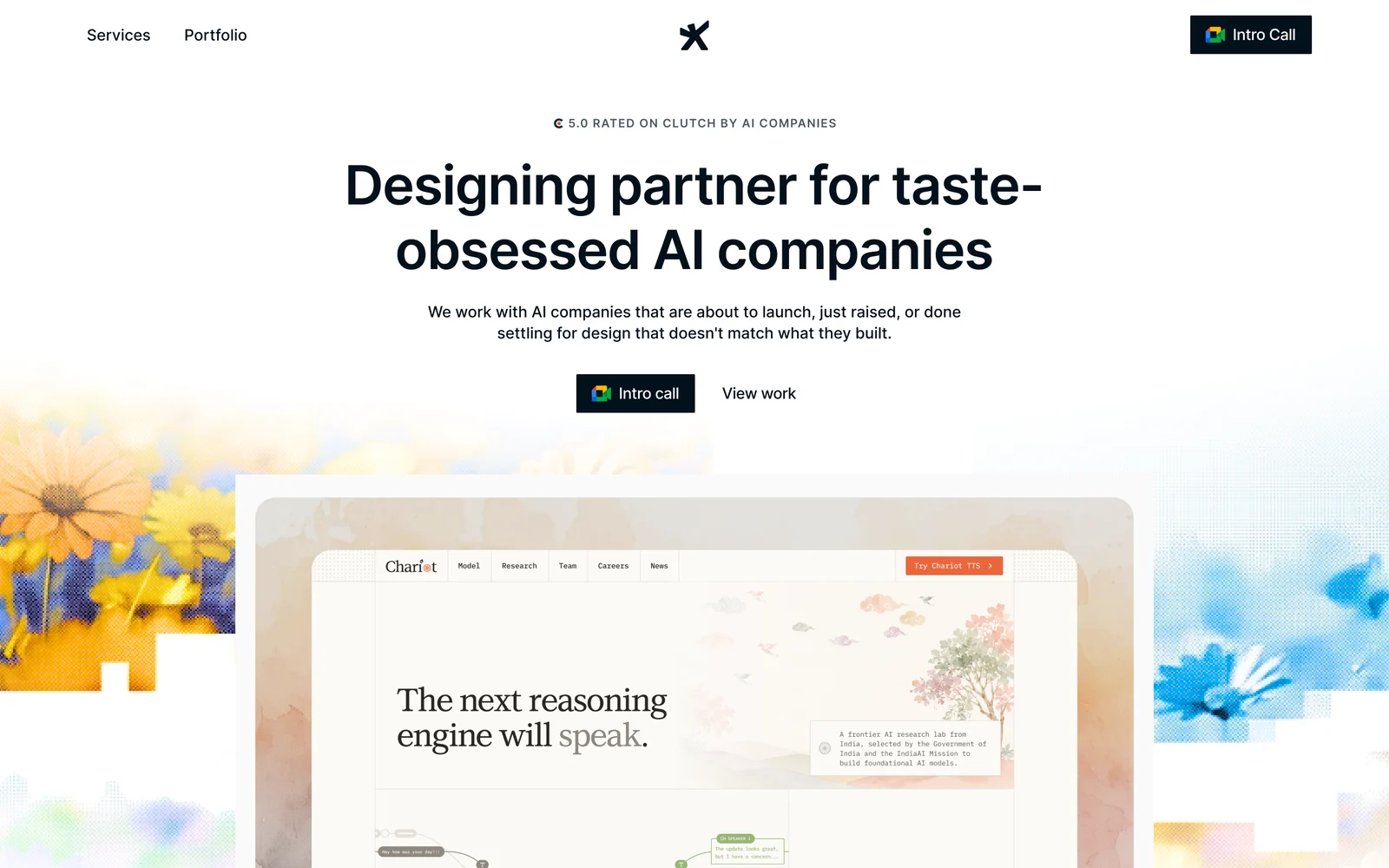
Working with a Berlin team means working across European hours and with European buyers in mind. Studio Maydit is a web and product design studio whose clients are AI founders, based across the US, UK, and Europe, so the timezone and the buyer are both familiar rather than novel. Framer, Webflow, and custom code are all available as build routes, and the engagement carries on into product design once the site is live, which keeps the promise made to a procurement committee attached to the screens their staff actually get.
The public record is Dualite: a repositioned ICP, design work built around it, 100,000+ users, seven months. Recent clients include Wave, PixelFlow, Mi-VAD, and 15 other AI and SaaS teams.
Two commercial shapes exist. A fixed scope of three to four weeks, which fits a team preparing for a specific pitch or launch. A monthly retainer for teams shipping continuously, covering new pages, campaigns, and product design, with no long lock-in. Every fixed-scope engagement ends with a diagnosis of what is leaking in the product, which for a company selling into German enterprise is often a screen the buyer never sees and the end user meets daily.
| Check | Finding |
|---|---|
| Based in | Remote, serving US / UK / EU |
| Platform depth | Framer, Webflow, and custom code |
| AI-sector proof | Yes. AI-native clients, published outcome on Dualite |
| Pricing | Fixed scope or monthly retainer, quoted per project |
| Team shape | Founder-led, small senior team |
| Best fit | Berlin teams whose users are their customers' employees |
Worth a call if the product demos well and stalls once it is deployed. Book a 30-minute call.

2. Foundey
Foundey is a San Francisco studio founded in 2021 working Figma-first, with DemandIQ, Traycer, and Sero AI named. All three are AI products, so this is a studio whose published work is squarely in the category, and a Figma-first practice means product design is the whole business rather than a website add-on.
They publish no pricing and no team size, and a San Francisco base means limited overlap with a Berlin working day, which matters on a project that needs frequent short conversations rather than weekly reviews.
| Check | Finding |
|---|---|
| Based in | San Francisco, USA |
| Founded | 2021 |
| Team size | Not published |
| Primary platform | Figma-only |
| AI-sector proof | Yes. Published AI client work |
| Named clients | DemandIQ, Traycer, Sero AI |
| Pricing | Not published |
| Best fit | Teams who want a pure product design partner on AI work |
3. Trueform
Trueform is a Swiss studio founded in 2022, working in Framer, with a published minimum and Miro, Morning Brew, Bilt Rewards, and Gather named. Being based in Wil puts them in the same timezone and the same regulatory conversation as a Berlin team, and Miro is a European-born product that scaled into large organisations, which is the path most of these startups are on.
They publish no team size, and Framer as the primary platform means the published strength is marketing sites rather than the dense internal screens this audience needs designed.
| Check | Finding |
|---|---|
| Based in | Wil, Switzerland |
| Founded | 2022 |
| Team size | Not published |
| Primary platform | Framer |
| AI-sector proof | Yes. Published AI client work |
| Named clients | Miro, Morning Brew, Bilt Rewards, Gather |
| Pricing | Published minimum |
| Best fit | Berlin teams needing a strong site in the same timezone |
4. Kvalifik
Kvalifik is a Copenhagen team of 11 to 50, founded in 2015, with Veo, Maersk, and Relesys named and published AI client work. Maersk is the reference point here. It is a large European operator with staff who use software because their job requires it, which is precisely the user a Berlin AI startup inherits when a deal closes.
Their primary platform is Webflow, so websites lead the published portfolio, and they publish no pricing, leaving the budget question for the first call.
| Check | Finding |
|---|---|
| Based in | Copenhagen, Denmark |
| Founded | 2015 |
| Team size | 11-50 |
| Primary platform | Webflow |
| AI-sector proof | Yes. Published AI client work |
| Named clients | Veo, Maersk, Relesys |
| Pricing | Not published |
| Best fit | Teams selling into large, process-heavy European firms |
5. Feely Studio
Feely Studio is a distributed European team of one to ten with a published minimum and Noxus, Mutiny, Luasai, and Basic Capital named. European hours and a published price make the first month straightforward, and at that size the senior designer on the call is the one who does the work, which shortens the time it takes them to understand a complicated domain.
They publish no founding year, and one to ten people limits how much can run in parallel, so a broad multi-surface programme would exceed what they can hold.
| Check | Finding |
|---|---|
| Based in | Distributed, Europe |
| Founded | Not published |
| Team size | 1-10 |
| Primary platform | Mixed |
| AI-sector proof | Yes. Published AI client work |
| Named clients | Noxus, Mutiny, Luasai, Basic Capital |
| Pricing | Published minimum |
| Best fit | Berlin teams wanting one senior designer in European hours |
6. Pixelmatters
Pixelmatters is a Porto team of 51 to 200, founded in 2013, working across platforms, with a published minimum and Rubrik, Quantic, and UJET named. Rubrik is enterprise infrastructure sold to security-conscious buyers, which is a close analogue to the compliance-heavy sale a Berlin AI startup runs, and the studio covers website and product design together.
Their AI-sector proof is partial, and a firm of that size assigns a team rather than named people, so continuity has to be written into the contract rather than assumed.
| Check | Finding |
|---|---|
| Based in | Porto, Portugal |
| Founded | 2013 |
| Team size | 51-200 |
| Primary platform | Mixed |
| AI-sector proof | Partial. Enterprise and SaaS clients, no AI case study |
| Named clients | Rubrik, Quantic, UJET |
| Pricing | Published minimum |
| Best fit | European teams buying product and website from one firm |
7. Lighthouse Digital
Lighthouse Digital is a London studio working in Webflow, with a published minimum and HelloSelf, Freetrade, and IGN named. Freetrade operates in a regulated financial market, so there is some experience of designing where a supervisory body has opinions about what a screen may say.
They publish no AI client work at all, no founding year, and no team size, and their platform is Webflow, so this is a website studio rather than the product design partner this brief calls for.
| Check | Finding |
|---|---|
| Based in | London, UK |
| Founded | Not published |
| Team size | Not published |
| Primary platform | Webflow |
| AI-sector proof | No. No published AI client work |
| Named clients | HelloSelf, Freetrade, IGN |
| Pricing | Published minimum |
| Best fit | European teams whose immediate gap is the marketing site |
8. Feels Like
Feels Like is a Los Angeles studio founded in 2023 building in custom code, with Google, Nike, LVMH, and Suno AI named. Suno AI is a generative product with a genuinely novel interface, so there is evidence of designing something with no established pattern to copy, which is often the position a Berlin AI team is in.
They publish no pricing and no team size, the studio is young, and Los Angeles hours make daily contact with a Berlin team difficult, which slows the domain learning this work depends on.
| Check | Finding |
|---|---|
| Based in | Los Angeles, USA |
| Founded | 2023 |
| Team size | Not published |
| Primary platform | Custom code |
| AI-sector proof | Yes. Published AI client work |
| Named clients | Google, Nike, LVMH, Suno AI |
| Pricing | Not published |
| Best fit | Teams building an interface with no existing pattern |
9. basement.studio
basement.studio works from Mar del Plata and Los Angeles, founded in 2018, at 11 to 50 people, building in custom code, with a published minimum and Vercel, Cursor, ElevenLabs, Harvey AI, and Scale AI named. That is the strongest AI client list here, and Harvey AI in particular sells into large regulated firms, which is the same buyer profile a Berlin startup targets.
Their published work leans toward expressive marketing sites and product launches rather than the dense operational screens an enterprise deployment needs, and the timezone gap with Berlin is substantial.
| Check | Finding |
|---|---|
| Based in | Mar del Plata, Argentina and Los Angeles, USA |
| Founded | 2018 |
| Team size | 11-50 |
| Primary platform | Custom code |
| AI-sector proof | Yes. Published AI client work |
| Named clients | Vercel, Cursor, ElevenLabs, Harvey AI, Scale AI |
| Pricing | Published minimum |
| Best fit | AI teams whose next milestone is a high-profile launch |
10. Phantom
Phantom works from London and Auckland, founded in 2013, at 51 to 200 people, building in custom code, with Diageo, SAP, Financial Times, and Zendesk named. SAP is the most relevant name in this entire list for a Berlin company, since a startup selling into German industry is frequently sitting beside SAP software and inheriting its conventions.
They publish no pricing, the scale suits long programmes rather than a focused product engagement, and a small startup will be a minor account.
| Check | Finding |
|---|---|
| Based in | London, UK and Auckland, NZ |
| Founded | 2013 |
| Team size | 51-200 |
| Primary platform | Custom code |
| AI-sector proof | Yes. Published AI client work |
| Named clients | Diageo, SAP, Financial Times, Zendesk |
| Pricing | Not published |
| Best fit | Later-stage teams running a long enterprise programme |
How to choose between them
Sort by which part of the German sale is stalling.
End users at the customer refuse to adopt it. Studio Maydit or Kvalifik.
Procurement keeps asking questions the product cannot answer. Pixelmatters or Phantom.
The interface has no precedent to borrow from. Feels Like or basement.studio.
You need someone senior in your own timezone, quickly. Feely Studio or Trueform.
One test before you sign. Ask a candidate what changes on your busiest screen when every label is in German. A studio that has done this work will talk about column widths, wrapping, abbreviation rules, and the formality of the verbs. A studio that says the design is flexible enough to handle it has not yet had that particular Monday morning.