

Summarize with AI


The best subscription design agencies for seed-stage AI startups in 2026 are Studio Maydit, Flowout, Flow Ninja, Edgar Allan, Refokus, 8020, Push Refresh, Finsweet, Fantasy, and Lighthouse Digital. Studio Maydit and Flowout lead for this brief, because both sell an ongoing monthly arrangement rather than only one-off projects, and both make the terms clear before you commit. Fantasy and Lighthouse Digital are the wrong fit here, since one is built for large organisations and publishes nothing about clients or price, and the other has no published AI client work at all.
At seed stage the design need is constant, small, and completely unpredictable.
This week it is a landing page because a partner wants to announce something. Next week it is four product screens because a customer asked for a feature and engineering is already building it. The week after it is a deck, then an ad set, then a pricing page nobody has ever designed properly, then the onboarding flow because half the trial users never reach the second screen.
None of those is big enough to be a project. Every one of them is urgent. And a company of eleven people cannot justify a full-time designer yet, or often cannot attract one, because a senior designer at this stage wants equity and a seat at the table rather than a queue of requests.
That gap is what monthly design subscriptions exist to fill. You pay a fixed amount, you send work, it comes back. No scoping call for every task, no statement of work, no negotiation over whether a change is in scope. For a company shipping weekly, that is genuinely the right shape.
But the model has failure modes of its own, and they are not the ones people expect. It is not usually quality that goes wrong. It is utilisation, ownership, and who is actually doing the work behind the subscription page. Teams sign up in a busy month, coast through a quiet one, and cancel in month three having received about half of what they paid for.
The ten studios below are ranked on how well they suit a seed-stage AI company that needs design continuously and cannot predict what it will need next.

How we picked these agencies
Every studio was judged on what a founder can check without booking a call, against five questions:
- Platform depth. Can they cover both the marketing surface and the product, or only one of them?
- Proof with seed-stage AI companies. Does the portfolio contain early AI-native teams, or established brands with in-house departments?
- Pricing. Is a monthly figure published, which is the whole promise of this model, or is it still behind a call?
- Team shape. Who does the work each month, and is it the same person twice?
- Their own site. Does it read like the work of the people who would be assigned to you?
The last one matters more in a subscription than in a project. You are not buying a designed outcome, you are buying somebody's ongoing judgement, and their own site is where that judgement is visible without a client in the way.
Every entry in the tables comes from something the studio has published, typically on its own website. Where a studio publishes nothing on a point, the table leaves it as not published instead of filling it in.
What goes wrong with design subscriptions at seed stage
Three failures explain most cancelled subscriptions, and all three are about how the buyer used it rather than how the studio performed.
You start the subscription with nothing queued behind the first request. Month one is full because a backlog of obvious work had built up. Month two arrives, the obvious work is done, and somebody has to invent tasks by Thursday. Month three is quiet and the invoice suddenly looks enormous. The fix is unglamorous and works: write down twenty things you want designed before you start, and only begin when the list is real. If you cannot find twenty, you do not have a subscription need yet, you have two projects, and you should buy those instead and save the difference.
Your side becomes the bottleneck, not theirs. These arrangements usually run one active request at a time, which is fine until requests arrive as a single Slack line with no context, come back needing three rounds because nobody agreed what was wanted, and stall for four days waiting on a founder who is fundraising. The queue empties slowly and it looks like the studio is slow. Give one person on your team responsibility for writing briefs and reviewing within a day. That single change is worth more than any difference between the studios in this list.
You do not check who is actually doing the work. A monthly price implies volume, and volume is usually achieved by having less experienced people execute against templates, with a senior reviewer somewhere behind them. Sometimes that is exactly the right trade for a seed-stage company, because most of the queue is genuinely routine. It is the wrong trade when what you need is a hard positioning decision or a difficult product flow. Ask who will open your file, ask whether it is the same person each month, and ask what happens when a request needs judgement rather than execution.
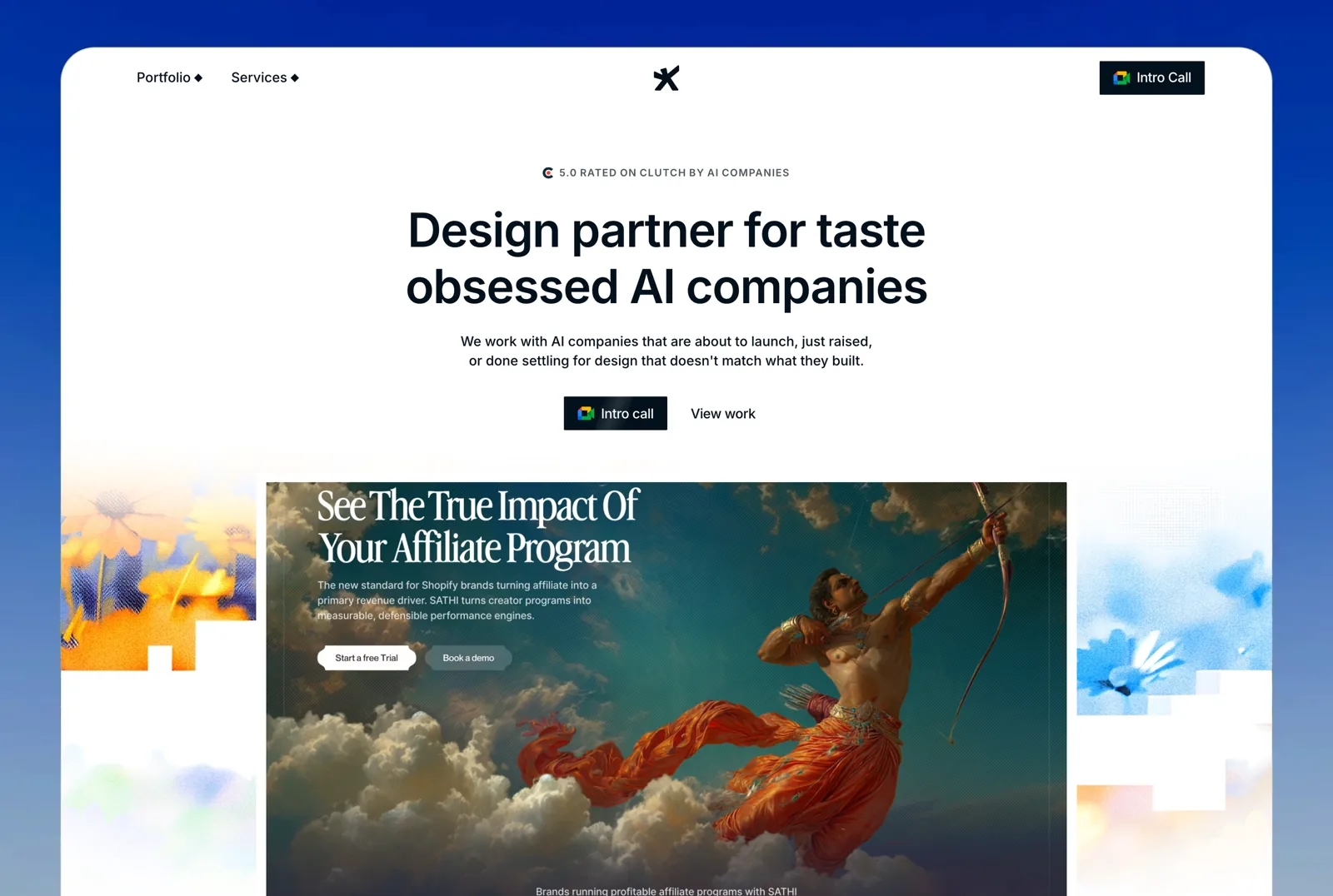
1. Studio Maydit: A Top-Rated Design Agency for AI Founders
The ongoing arrangement is the relevant product here. A monthly retainer at Studio Maydit covers new pages, campaigns, and product design, with no long lock-in, which is the shape a seed-stage team needs when nobody can say what next month's request will be. The alternative is a fixed scope of three to four weeks, which is the better purchase when there is one clear thing to ship and then a pause.
Behind both is a web and product design studio, founder-led with a small senior team, whose clients are AI founders in the US, UK, and Europe. Work is built in Framer, Webflow, and custom code, and the same people continue into product design after the site ships, so a request about the site and a request about the app do not go to two different companies. Fixed-scope engagements finish with a diagnosis of what is leaking in the product.
The evidence is deliberately narrow. Dualite went from a repositioned ICP, supported by design work, to 100,000+ users in seven months. Alongside it sit Wave, PixelFlow, Mi-VAD, and 15 other AI and SaaS teams.
| Check | Finding |
|---|---|
| Based in | Remote, serving US / UK / EU |
| Platform depth | Framer, Webflow, and custom code |
| AI-sector proof | Yes. AI-native clients, published outcome on Dualite |
| Pricing | Fixed scope or monthly retainer, quoted per project |
| Team shape | Founder-led, small senior team |
| Best fit | Seed teams whose requests span the site and the product |
Worth a call if your design queue is half marketing and half product. Book a 30-minute call.

2. Flowout
Flowout is a distributed Webflow studio with a published minimum and Jasper, Kajabi, Riverside, and Sendlane named. The productised model is the closest match in this list to what a subscription buyer is shopping for, the price is public, and Jasper is an AI company that shipped at speed.
They publish no founding year and no team size, their AI-sector proof is partial, and a Webflow-only offer means product design requests have to go somewhere else.
| Check | Finding |
|---|---|
| Based in | Distributed |
| Founded | Not published |
| Team size | Not published |
| Primary platform | Webflow |
| AI-sector proof | Partial. Enterprise and SaaS clients, no AI case study |
| Named clients | Jasper, Kajabi, Riverside, Sendlane |
| Pricing | Published minimum |
| Best fit | Teams whose queue is mostly marketing pages |
3. Flow Ninja
Flow Ninja is a Belgrade team of 11 to 50, founded in 2018, working in Webflow. A team of that size in that market usually costs less per month than a US equivalent, which matters when the whole point is a bill you can carry for a year on seed money.
They publish no client names, no pricing, and their AI-sector proof is partial, so a buyer has very little to check before committing to a recurring cost.
| Check | Finding |
|---|---|
| Based in | Belgrade, Serbia |
| Founded | 2018 |
| Team size | 11-50 |
| Primary platform | Webflow |
| AI-sector proof | Partial. Enterprise and SaaS clients, no AI case study |
| Named clients | Not published |
| Pricing | Not published |
| Best fit | Cost-sensitive teams with a steady website queue |
4. Edgar Allan
Edgar Allan is an Atlanta studio of 51 to 200, founded in 2014, working in Webflow, with Porsche, Duracell, and NCR named. A firm that size can absorb an unpredictable queue without stalling, which is exactly the risk with a small studio when three requests land in one week.
They publish no pricing, their AI-sector proof is partial, and a company of that scale is set up for programmes rather than for a rolling monthly arrangement with an eleven person startup.
| Check | Finding |
|---|---|
| Based in | Atlanta, USA |
| Founded | 2014 |
| Team size | 51-200 |
| Primary platform | Webflow |
| AI-sector proof | Partial. Enterprise and SaaS clients, no AI case study |
| Named clients | Porsche, Duracell, NCR |
| Pricing | Not published |
| Best fit | Teams whose monthly volume is genuinely high |
5. Refokus
Refokus is a remote German team of 11 to 50, founded in 2021, working in Webflow, with Mural, BASF, Spotify, Yahoo, and BCG named. The visual standard is high, so an ongoing arrangement here produces campaign pages that look considered rather than assembled.
They publish no pricing, their AI-sector proof is partial, and a studio known for ambitious one-off work is not an obvious fit for a queue of small routine requests.
| Check | Finding |
|---|---|
| Based in | Germany, remote |
| Founded | 2021 |
| Team size | 11-50 |
| Primary platform | Webflow |
| AI-sector proof | Partial. Enterprise and SaaS clients, no AI case study |
| Named clients | Mural, BASF, Spotify, Yahoo, BCG |
| Pricing | Not published |
| Best fit | Teams who want every campaign page to look premium |
6. 8020
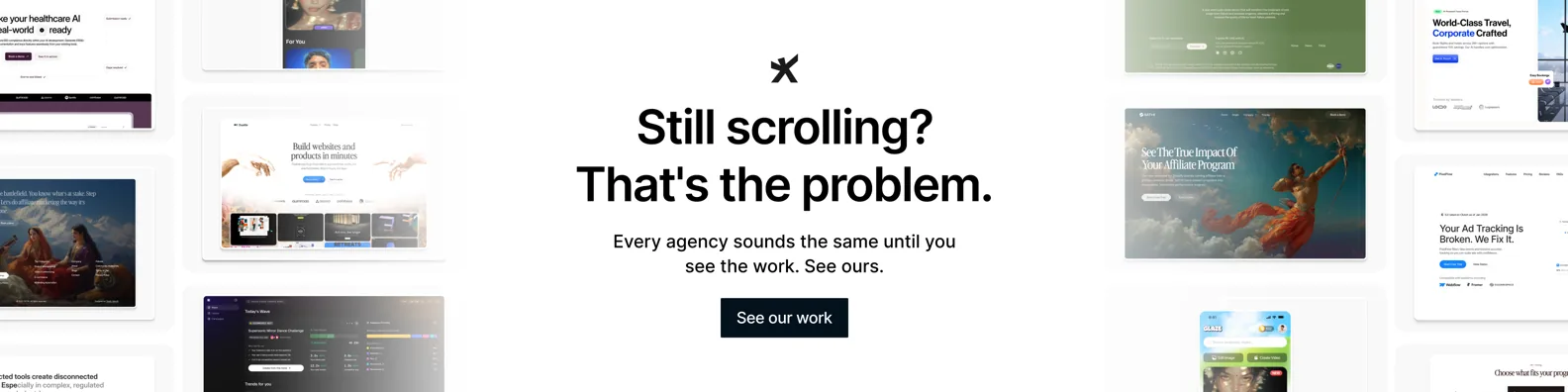
8020 works from San Francisco and New York, founded in 2014, in Webflow, with Wave, Superlist, Pilot.com, Vanta, and Circle named. That is a run of well-known startup sites, and a studio used to venture-backed clients will recognise the rhythm of a seed-stage queue immediately.
They publish no pricing and no team size, and their AI-sector proof is partial, which leaves the two questions a subscription buyer most wants answered up front.
| Check | Finding |
|---|---|
| Based in | San Francisco and New York, USA |
| Founded | 2014 |
| Team size | Not published |
| Primary platform | Webflow |
| AI-sector proof | Partial. Enterprise and SaaS clients, no AI case study |
| Named clients | Wave, Superlist, Pilot.com, Vanta, Circle |
| Pricing | Not published |
| Best fit | Funded teams who want a recognisable startup look |
7. Push Refresh
Push Refresh is a Dallas team of one to ten working in Framer, with a published minimum and SmithRx, Synonym, and Northern National named. A team that small means the same person every month, which is the single most valuable property in an ongoing arrangement, and Framer output can be edited by your own team between requests.
They publish no founding year, their AI-sector proof is partial, and one to ten people means a busy month for their other clients is a slow month for you.
| Check | Finding |
|---|---|
| Based in | Dallas, USA |
| Founded | Not published |
| Team size | 1-10 |
| Primary platform | Framer |
| AI-sector proof | Partial. Enterprise and SaaS clients, no AI case study |
| Named clients | SmithRx, Synonym, Northern National |
| Pricing | Published minimum |
| Best fit | Teams who want one consistent person month to month |
8. Finsweet
Finsweet is a distributed team based in Denver, founded in 2017, with 51 to 200 people and Dropbox, Clay, GitHub, and Steadily named. Their depth inside Webflow is unusual, so an ongoing arrangement here handles the awkward technical requests that stall other studios.
Their AI-sector proof is partial, they publish no pricing, and a team known for solving hard problems is an expensive way to get a set of ad creatives resized.
| Check | Finding |
|---|---|
| Based in | Denver, USA, distributed |
| Founded | 2017 |
| Team size | 51-200 |
| Primary platform | Webflow |
| AI-sector proof | Partial. Enterprise and SaaS clients, no AI case study |
| Named clients | Dropbox, Clay, GitHub, Steadily |
| Pricing | Not published |
| Best fit | Teams whose queue includes genuinely technical builds |
9. Fantasy
Fantasy works from San Francisco and New York, founded in 1999, across platforms, with published AI client work. Almost three decades of practice is real depth, and few studios anywhere have seen as many products through as many stages.
They publish no client names, no team size, and no pricing, and a firm built for long enterprise programmes is not structured around a monthly queue from a seed-stage company.
| Check | Finding |
|---|---|
| Based in | San Francisco and New York, USA |
| Founded | 1999 |
| Team size | Not published |
| Primary platform | Mixed |
| AI-sector proof | Yes. Published AI client work |
| Named clients | Not published |
| Pricing | Not published |
| Best fit | Large organisations funding a multi-quarter programme |
10. Lighthouse Digital
Lighthouse Digital is a London studio working in Webflow, with a published minimum and HelloSelf, Freetrade, and IGN named. The published starting figure is helpful for a founder comparing recurring costs, and Freetrade is evidence of consumer work at real volume.
They have no published AI client work, no founding year, and no team size, so almost nothing about capacity or sector fit can be checked before you start paying monthly.
| Check | Finding |
|---|---|
| Based in | London, UK |
| Founded | Not published |
| Team size | Not published |
| Primary platform | Webflow |
| AI-sector proof | No. No published AI client work |
| Named clients | HelloSelf, Freetrade, IGN |
| Pricing | Published minimum |
| Best fit | UK teams who want a published recurring price |
How to choose between them
Sort by what your queue is actually made of.
Half marketing, half product screens. Studio Maydit or Push Refresh.
Almost entirely landing pages and campaigns. Flowout or 8020.
Technically awkward builds nobody else will take. Finsweet or Refokus.
Volume matters more than seniority. Edgar Allan or Flow Ninja.
One test before you sign. Write out the next twenty things you want designed, then show the list to a candidate and ask which of them they would refuse. A studio that takes all twenty is selling you capacity and will hand the difficult ones to whoever is free. A studio that points at three and says those need a proper conversation rather than a queue slot has told you it can tell the difference, and that judgement is the thing you are actually paying a monthly fee to have on call.