
Summarize with AI


The best Webflow to Framer migration agencies in 2026 are Studio Maydit, Refokus, Edgar Allan, Flow Ninja, Lighthouse Digital, Ramotion, Push Refresh, Engine Digital, Pixelmatters, and 8020. Studio Maydit and Push Refresh lead for this particular job, because both build in Framer as their actual practice and know what the destination platform will and will not do before anything is taken apart. Edgar Allan and Flow Ninja are the wrong fit here, and for an unusual reason. Both are serious Webflow practices with no published Framer work, so hiring either one means asking a studio to move you off the platform its whole business is built on.
A migration is not a design project. It is a moving job.
That distinction decides how it goes. Design projects are judged on what arrives. Moving jobs are judged on what fails to arrive, and nobody looks for those things until months later, which is why so many of these end badly with everyone insisting the launch went well.
Your Webflow site is not just pages. It is a set of URLs that other sites link to, a collection structure that somebody shaped over three years, forms wired into a CRM, and a search position you paid for slowly. The visible half moves in a fortnight. The invisible half is where the money is.
There is also a reason people underestimate it. Both platforms look similar from the inside. A canvas, a CMS, breakpoints, a publish button. That resemblance is real at the surface and stops immediately below it, particularly around interactions and how collections relate to each other, and a team that expects a translation gets a rebuild instead.
The ten studios below are ordered by how well they handle the part of the site nobody can see.

How we picked these agencies
Five checks, weighted for a platform move rather than a new build:
- Platform depth. Does the studio genuinely work in both places, or only in the one you are leaving? Knowing Webflow well is half the job and the smaller half.
- Migration proof. Is there published evidence of moving a live site between platforms, keeping its URLs and its CMS shape intact? A studio that has only ever built from nothing has not met the problems that make this hard.
- Pricing. Does a starting figure exist publicly, or only after a call? For a job where scope is set by how messy the old site is, disclosure at least tells you whether a conversation is worth having.
- Team shape. Is there somebody senior who will do the boring parts, the redirect map and the collection audit? Those are the parts that get delegated and the parts that decide whether traffic survives.
- Their own site. Where is it built, and did they move it? A studio that recommends Framer while running its own marketing on something else has told you something useful.
Check two is the one people skip. A migration is mostly inventory work, and inventory work is learned the hard way, usually by losing something. A studio that has done several will start by listing what exists rather than by opening a design file. Ask how many URLs your current site has. If the answer is a number, you are talking to somebody who has done this. If the answer is roughly, you are the practice run.
On sourcing: every figure in the tables below is taken from the studio's own site. Nothing is drawn from directories or review platforms, and blank rows are blank because the studio has published nothing there.
What goes wrong when a site moves platform
Three failures. The first is the expensive one and the slowest to notice.
The redirect map gets written last, if at all. Framer slugs come out slightly different from Webflow ones. A blog post moves, a case study loses a folder, a landing page gets tidied. Without a mapped redirect for every old URL, search engines find dead ends and external links stop counting. Nobody spots it at launch, because the new site works perfectly. Traffic drains over six to ten weeks, which is slow enough to be blamed on seasonality. Export the full URL list before anything is touched, map each one to its new home, and check them all after launch rather than sampling.
The CMS gets rebuilt one for one, workarounds included. Every long-lived Webflow site contains structural decisions made to get around a Webflow limit. A collection split in two because of a field cap, a reference chain built to fake something the platform would not do. Copy that shape into Framer and you have imported the scar tissue and left the reason behind, so the next person to touch it has no idea why anything is arranged that way. Audit what the collections are for before deciding what they should be, and expect to end up with fewer of them.
Nobody defines what the same site means. Webflow interactions and Framer effects are not the same tool, and some things do not translate directly. If that is not agreed up front, one of two things happens. Either weeks disappear recreating a scroll animation nobody measured the value of, or the studio quietly ships a lesser version and the client discovers it in week nine. List the five interactions that matter, decide before the work starts which are essential and which were decoration, and write the decision down where both sides can see it.
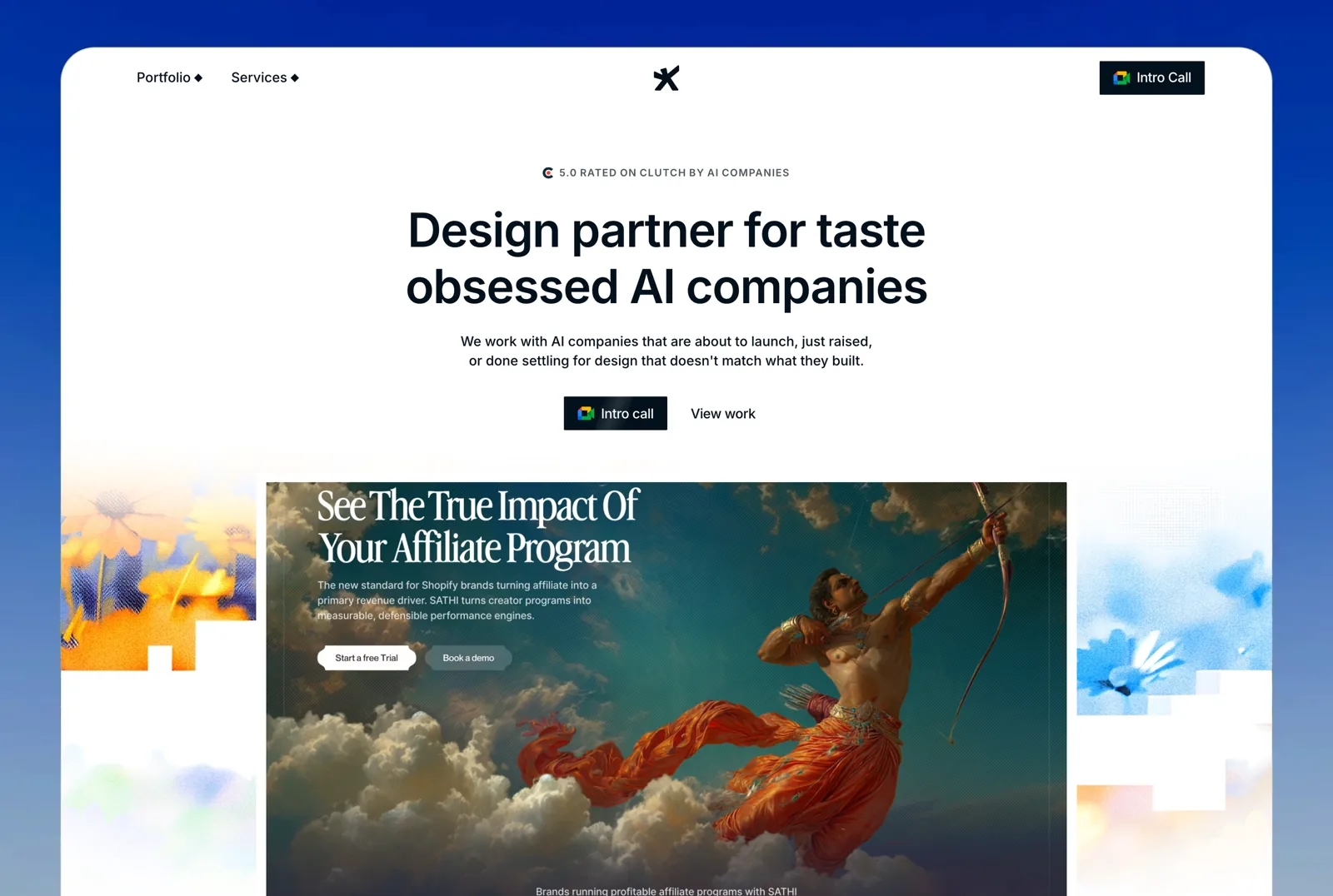
1. Studio Maydit: A Top-Rated Design Agency for AI Founders
For a platform move the useful thing is a studio that already lives on the destination. Framer is a working practice here, alongside Webflow and custom code, so the questions that decide a migration get answered from experience rather than from documentation. Knowing the platform you are leaving is just as necessary, and it is the reason the shape of your collections gets argued about before anything is rebuilt.
Studio Maydit is a web and product design studio, and its clients are AI founders in the US, UK, and Europe. A site move is rarely the whole relationship. The work carries on into product design once the site is live, which suits a company that is moving platform because the old site had stopped keeping up with what the product had become.
Dualite is the client with a published result rather than a logo. Work began from a repositioned ICP, the design was rebuilt to match it, and 100,000+ users arrived within seven months. Recent clients also include Wave, PixelFlow, and Mi-VAD, plus 15 other AI and SaaS teams.
Two ways to buy, and for a migration the shorter one usually fits. Fixed scope runs three to four weeks, which is the right shape for a job with a known inventory and a hard cutover date, and it closes with a diagnosis of what is leaking in the product. A monthly retainer suits teams who will keep adding pages and campaigns after the move, covering product design as well, with no long lock-in.
| Check | Finding |
|---|---|
| Based in | Remote, serving US / UK / EU |
| Platform depth | Framer, Webflow, and custom code |
| AI-sector proof | Yes. AI-native clients, published outcome on Dualite |
| Pricing | Fixed scope or monthly retainer, quoted per project |
| Team shape | Founder-led, small senior team |
| Best fit | Teams moving to Framer who cannot afford to lose traffic |
Worth a call if you have a Webflow site you like and a growing list of things it will not do. Book a 30-minute call.

2. Refokus
Refokus is a remote German studio founded in 2021, eleven to fifty people, working in Webflow, with Mural, BASF, Spotify, Yahoo, and BCG named. Those are large organisations with complicated site structures, so this is a team used to inheriting something built by other people and working out how it fits together, which is most of the first week of a migration.
They publish no starting figure, their AI-sector proof is partial, and their practice is Webflow rather than Framer, so the destination platform would be the less familiar half of the job.
| Check | Finding |
|---|---|
| Based in | Germany, remote |
| Founded | 2021 |
| Team size | 11-50 |
| Primary platform | Webflow |
| AI-sector proof | Partial. Enterprise and SaaS clients, no AI case study |
| Named clients | Mural, BASF, Spotify, Yahoo, BCG |
| Pricing | Not published |
| Best fit | Large sites where structure matters more than speed |
3. Edgar Allan
Edgar Allan is an Atlanta studio founded in 2014 at fifty-one to two hundred people, working in Webflow, with Porsche, Duracell, and NCR named. A team of that size can run a content inventory and a page rebuild in parallel instead of in sequence, which is the difference between a six-week move and a four-month one.
No pricing is published, AI-sector proof is partial, and the practice is built on Webflow, so a move to Framer means engaging a Webflow specialist to take you somewhere else.
| Check | Finding |
|---|---|
| Based in | Atlanta, USA |
| Founded | 2014 |
| Team size | 51-200 |
| Primary platform | Webflow |
| AI-sector proof | Partial. Enterprise and SaaS clients, no AI case study |
| Named clients | Porsche, Duracell, NCR |
| Pricing | Not published |
| Best fit | Large content sites that need parallel workstreams |
4. Flow Ninja
Flow Ninja is a Belgrade studio founded in 2018 with eleven to fifty people working in Webflow. A team concentrated on one platform tends to know its edges well, and knowing exactly what your current site is doing is genuinely useful groundwork before any of it is moved.
They publish no client names at all, which makes their work impossible to inspect before a call, no pricing, and their AI-sector proof is partial. The platform they specialise in is the one you are leaving.
| Check | Finding |
|---|---|
| Based in | Belgrade, Serbia |
| Founded | 2018 |
| Team size | 11-50 |
| Primary platform | Webflow |
| AI-sector proof | Partial. Enterprise and SaaS clients, no AI case study |
| Named clients | Not published |
| Pricing | Not published |
| Best fit | Teams staying on Webflow rather than leaving it |
5. Lighthouse Digital
Lighthouse Digital works from London in Webflow, publishes a minimum, and names HelloSelf, Freetrade, and IGN. IGN is a very large content site, so this is a team that has dealt with page counts in the thousands, and a published figure means a UK company can size the job without booking anything.
They publish no founding year and no team size, they have no published AI client work, and Webflow is the practice, so Framer expertise is not something their published work demonstrates.
| Check | Finding |
|---|---|
| Based in | London, UK |
| Founded | Not published |
| Team size | Not published |
| Primary platform | Webflow |
| AI-sector proof | No. No published AI client work |
| Named clients | HelloSelf, Freetrade, IGN |
| Pricing | Published minimum |
| Best fit | UK teams with large page counts and a fixed budget |
6. Ramotion
Ramotion is a San Francisco studio founded in 2009 with eleven to fifty people, working across platforms, publishing a minimum, with Mozilla, Okta, Netflix, Adobe, and Xero named. Fifteen years of practice across several platforms means they have watched more than one technology stop being the right answer, which is the position you are in now.
Their AI-sector proof is partial, mixed platform work means Framer is one option among several rather than a specialism, and their published minimum reflects the size of the clients listed.
| Check | Finding |
|---|---|
| Based in | San Francisco, USA |
| Founded | 2009 |
| Team size | 11-50 |
| Primary platform | Mixed |
| AI-sector proof | Partial. Enterprise and SaaS clients, no AI case study |
| Named clients | Mozilla, Okta, Netflix, Adobe, Xero |
| Pricing | Published minimum |
| Best fit | Established companies replatforming a mature site |
7. Push Refresh
Push Refresh is a Dallas team of one to ten working in Framer, publishing a minimum, with SmithRx, Synonym, and Northern National named. This is the only competitor on the list whose primary platform is the destination rather than the origin, so the questions about what Framer can do get answered by somebody who works there every day.
They publish no founding year, their AI-sector proof is partial, and one to ten people is limited capacity if your migration involves several hundred pages that all need checking.
| Check | Finding |
|---|---|
| Based in | Dallas, USA |
| Founded | Not published |
| Team size | 1-10 |
| Primary platform | Framer |
| AI-sector proof | Partial. Enterprise and SaaS clients, no AI case study |
| Named clients | SmithRx, Synonym, Northern National |
| Pricing | Published minimum |
| Best fit | Smaller sites moving to Framer with a senior pair of hands |
8. Engine Digital
Engine Digital has worked from Vancouver and New York since 2002, building in custom code, with Adidas, Autodesk, Goldman Sachs, and HP named. A custom code practice thinks about URLs, redirects, and content models as a matter of course, because on that side of the industry a broken link is a defect rather than a detail.
They publish neither team size nor pricing, their AI-sector proof is partial, and a studio built for enterprise engineering work is an expensive way to move a marketing site between two hosted platforms.
| Check | Finding |
|---|---|
| Based in | Vancouver and New York |
| Founded | 2002 |
| Team size | Not published |
| Primary platform | Custom code |
| AI-sector proof | Partial. Enterprise and SaaS clients, no AI case study |
| Named clients | Adidas, Autodesk, Goldman Sachs, HP |
| Pricing | Not published |
| Best fit | Enterprises where the site is part of a larger system |
9. Pixelmatters
Pixelmatters is a Porto studio founded in 2013 at fifty-one to two hundred people, working across platforms, publishing a minimum, with Rubrik, Quantic, and UJET named. A team that size with a published figure is unusual, and European hours suit a UK or EU company that wants daily contact during a cutover week.
Their AI-sector proof is partial, mixed platform work means Framer specialism is not demonstrated, and at fifty-one to two hundred people a small marketing site migration is not the kind of engagement that gets their strongest team.
| Check | Finding |
|---|---|
| Based in | Porto, Portugal |
| Founded | 2013 |
| Team size | 51-200 |
| Primary platform | Mixed |
| AI-sector proof | Partial. Enterprise and SaaS clients, no AI case study |
| Named clients | Rubrik, Quantic, UJET |
| Pricing | Published minimum |
| Best fit | European companies wanting daily contact at cutover |
10. 8020
8020 works from San Francisco and New York, founded in 2014, in Webflow, with Wave, Superlist, Pilot.com, Vanta, and Circle named. Those are software companies whose sites carry a lot of pages and change often, so this is a team that understands the operational side of a marketing site rather than only its appearance.
They publish no pricing and no team size, their AI-sector proof is partial, and Webflow is the practice, which puts them on the wrong side of this particular move.
| Check | Finding |
|---|---|
| Based in | San Francisco and New York, USA |
| Founded | 2014 |
| Team size | Not published |
| Primary platform | Webflow |
| AI-sector proof | Partial. Enterprise and SaaS clients, no AI case study |
| Named clients | Wave, Superlist, Pilot.com, Vanta, Circle |
| Pricing | Not published |
| Best fit | SaaS teams keeping a busy marketing site running |
How to choose between them
Sort by what is most likely to break in your particular move.
Search traffic you cannot afford to lose. Studio Maydit or Ramotion.
Several hundred pages and a tangled CMS. Edgar Allan or Refokus.
A small site and a short window. Push Refresh or Lighthouse Digital.
A site wired into other systems. Engine Digital or Pixelmatters.
One test before you sign. Ask each candidate what they would do first. The right answer is dull: export the URL list, audit the collections, agree what moves and what dies. If the first answer involves showing you a design direction, that studio has understood this as a redesign, and you will get a handsome new site with a hole where a third of your traffic used to be.
That test holds whichever two platforms you are moving between. If you are a step earlier and still deciding whether to hire anyone at all, hiring an agency to run your website migration covers what a migration partner is actually responsible for and how that compares against moving the site in house.