
Summarize with AI


The best design agencies for teams replacing a template website in 2026 are Studio Maydit, Edgar Allan, Flow Ninja, Lighthouse Digital, Instrument, Ramotion, Engine Digital, Digidop, Push Refresh, and Pixelmatters. Studio Maydit and Edgar Allan lead for this brief, because both rebuild a site as a whole rather than restyling the pages that already exist, and Edgar Allan has moved large content-heavy sites onto Webflow for names like Porsche and NCR. Instrument and Engine Digital are the wrong fit here, since both are shaped for long enterprise programmes and neither publishes a starting price, which suits a team that already regrets buying on price the first time.
Buying a template was the correct decision. It is worth saying that plainly, because most teams in this position feel slightly embarrassed about it.
At the point you bought it, you needed a website by Friday and you had no idea what the company would say about itself in a year. A template answered both problems for a few hundred dollars. It is only wrong now because it did its job and you kept growing.
What breaks is rarely the visual design. Templates come with a fixed set of section types, and those sections quietly become the outline of your story. You have a hero, three feature cards, a logo strip, and a testimonial slider, so you write three features whether you have three or seven. New pages get squeezed into whichever layout is closest. A year later the site describes a company that is a rough approximation of yours, and nobody can point at a specific broken thing.
Then there is the recognition problem. Popular templates get bought thousands of times. Buyers who evaluate a lot of tools in your category have seen your exact layout before, sometimes on a competitor, and it registers as sameness long before anyone thinks the word template. That does not sink a deal on its own, but it removes the small advantage a site is supposed to give you.
The last part is the one that catches teams out. Replacing a template is a migration, not a redesign. There are URLs that rank, forms that feed a CRM, tracking that a paid campaign depends on, and content that was written to fit slots that will no longer exist. The design work is the visible half. The unglamorous half is what decides whether traffic survives launch week.
The ten studios below are ranked on how well they handle a rebuild where something is already live and already working.

How we picked these agencies
Five checks, each one answerable from a browser tab before you speak to anybody:
- Platform depth. Does the studio actually build sites, or design them and hand a file to somebody else?
- Proof on replacements. Is there published work where an existing site was rebuilt, rather than a portfolio of first sites for brand new companies?
- Pricing. Is a starting number visible, or does it take two calls to find out?
- Team shape. Will the person who understands your redirect map still be around in month three?
- Their own site. Has it been rebuilt as the studio changed, or is it frozen at whatever they launched with?
That last check earns its place in this particular article. A studio that has never replaced its own site has never lived through the thing you are about to pay them for, including the awkward middle where half the pages are new and half are not.
The tables carry only what each studio has put in public. Where a studio has chosen not to say something, the row says so instead of guessing.
What goes wrong when a template gets replaced
Three failures show up again and again, and none of them is about taste.
The rebuild traces the template. This is the most common and the most expensive. The team hands over the current site as the reference, the studio treats it as the brief, and eight weeks later there is a custom build with the same hero, the same three cards, and the same logo strip, drawn better. Every structural limitation survives, because nobody was asked to question it. The way out is to settle the story before anyone opens a design tool. Write the five things a visitor has to understand, in order, without looking at the existing site. If that list does not match your current page order, you have found the actual project.
Nobody is responsible for the migration. Design gets scoped carefully and the switch-over gets a line item. Then a page that ranked for three years loses its URL, a contact form posts to nowhere for a fortnight, and the analytics tags come across without the campaign parameters, so the paid spend goes dark. The site looks better and the pipeline gets worse, which is a very hard conversation to have. Ask a candidate who writes the redirect map, when it is written, and who checks it after launch. A studio that has done this before will answer immediately and will want your ranking pages early.
The replacement is harder to edit than the template was. Before, a marketer changed a headline in a visual editor on a Tuesday afternoon. After, changes go through a ticket, a sprint, and a deploy. Nobody agreed to that trade, it simply arrived with the new stack. Six to nine months later the site is stale again, which is the same problem you just paid to solve, wearing a better typeface. Ask what a copy change looks like on day thirty-one and who performs it. If the answer involves a developer, price that in for two years.
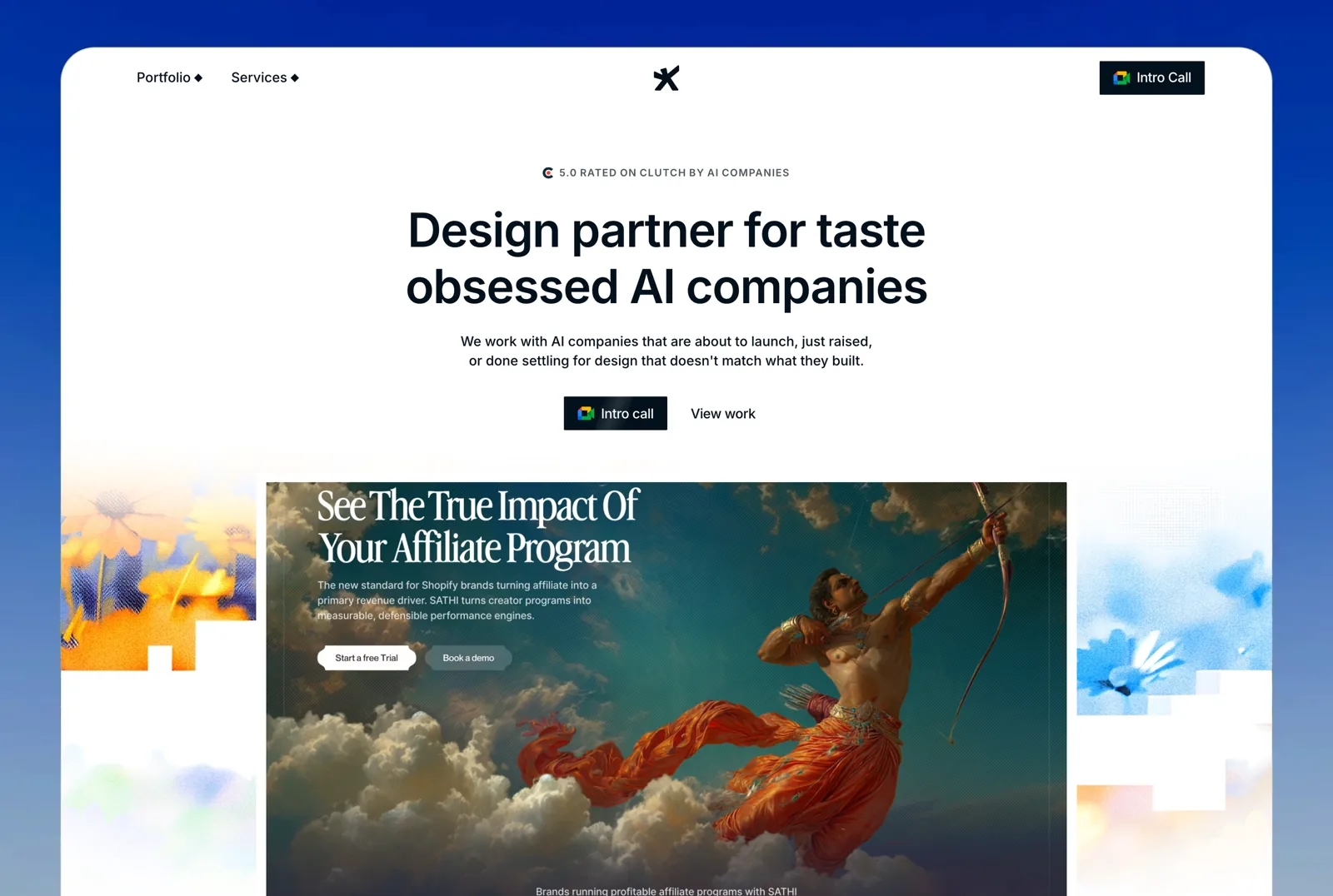
1. Studio Maydit: A Top-Rated Design Agency for AI Founders
Replacing a live site is a different job from building a first one, and it rewards a small team that stays on the project through launch. Studio Maydit is founder-led, with a small senior group rather than an account layer. It is a web and product design studio. The clients are AI founders, working across the US, UK, and Europe. Builds happen in Framer, Webflow, and custom code, so the platform is chosen after the migration is understood rather than before, and the work carries on into product design once the site is live.
Dualite is the published outcome: a repositioned ICP, design work built around it, and 100,000+ users seven months later. The recent list includes Wave, PixelFlow, Mi-VAD, and 15 other AI and SaaS teams.
Pricing has two shapes, and the migration usually decides which one. Where the switch-over is a single event with a date attached, a fixed scope of three to four weeks covers the rebuild and the launch together. Where pages will keep arriving long after go-live, the monthly retainer is the better purchase, covering new pages, campaigns, and product design, with no long lock-in. A fixed-scope project closes with a diagnosis of what is leaking in the product, which for a team leaving a template is usually a page that was carrying more traffic than anyone realised.
| Check | Finding |
|---|---|
| Based in | Remote, serving US / UK / EU |
| Platform depth | Framer, Webflow, and custom code |
| AI-sector proof | Yes. AI-native clients, published outcome on Dualite |
| Pricing | Fixed scope or monthly retainer, quoted per project |
| Team shape | Founder-led, small senior team |
| Best fit | Teams whose template is now the limit on what they can say |
Worth a call if the site still describes the company you were at launch. Book a 30-minute call.

2. Edgar Allan
Edgar Allan is an Atlanta studio of 51 to 200, founded in 2014, building in Webflow, with Porsche, Duracell, and NCR named. Those are established companies with existing sites and existing rankings, which means the published work is replacement work rather than launches, and that is exactly the experience this brief needs.
They publish no pricing, and a team of that size runs a structured process that a five-person company may find slower and more formal than it wants.
| Check | Finding |
|---|---|
| Based in | Atlanta, USA |
| Founded | 2014 |
| Team size | 51-200 |
| Primary platform | Webflow |
| AI-sector proof | Partial. Enterprise and SaaS clients, no AI case study |
| Named clients | Porsche, Duracell, NCR |
| Pricing | Not published |
| Best fit | Teams replacing a large site that already earns traffic |
3. Flow Ninja
Flow Ninja is a Belgrade team of 11 to 50, founded in 2018, working in Webflow. Webflow specialists are worth a look for this job because the platform keeps a marketer able to edit pages afterwards, which is the failure mode most template replacements walk straight into.
They publish no client names and no pricing, so there is very little to evaluate before a call, and no way to check whether they have handled a site the size of yours.
| Check | Finding |
|---|---|
| Based in | Belgrade, Serbia |
| Founded | 2018 |
| Team size | 11-50 |
| Primary platform | Webflow |
| AI-sector proof | Partial. Enterprise and SaaS clients, no AI case study |
| Named clients | Not published |
| Pricing | Not published |
| Best fit | Teams who want a Webflow build kept editable in house |
4. Lighthouse Digital
Lighthouse Digital is a London studio working in Webflow, with a published minimum and HelloSelf, Freetrade, and IGN named. A public starting price is genuinely useful here, because a team coming off a template is usually working out what a real site costs and needs a number before it can ask for budget.
Their AI-sector proof is the weakest in this list, and they publish neither a founding year nor a team size, so longevity and capacity both have to be taken on trust.
| Check | Finding |
|---|---|
| Based in | London, UK |
| Founded | Not published |
| Team size | Not published |
| Primary platform | Webflow |
| AI-sector proof | No. No published AI client work |
| Named clients | HelloSelf, Freetrade, IGN |
| Pricing | Published minimum |
| Best fit | UK teams who need a published price to build a budget |
5. Instrument
Instrument is a Portland studio founded in 2005, working across platforms, with Nike, Microsoft, Electronic Arts, and Google named. Two decades of work at that level means the strategy stage is serious, and a team that cannot explain why its current structure is wrong will get a genuine answer here.
They publish no pricing and no team size, their AI-sector proof is partial, and the engagement shape assumes a client with a marketing organisation rather than one marketer.
| Check | Finding |
|---|---|
| Based in | Portland, USA |
| Founded | 2005 |
| Team size | Not published |
| Primary platform | Mixed |
| AI-sector proof | Partial. Enterprise and SaaS clients, no AI case study |
| Named clients | Nike, Microsoft, Electronic Arts, Google |
| Pricing | Not published |
| Best fit | Larger companies rebuilding brand and site together |
6. Ramotion
Ramotion is a San Francisco firm of 11 to 50, founded in 2009, working across platforms, with a published minimum and Mozilla, Okta, Netflix, Adobe, and Xero named. Every one of those clients had a site before Ramotion arrived, so the portfolio is a record of changing things that were already running, which is the harder version of the job.
Their AI-sector proof is partial, and a firm with that client list is oriented toward companies with in-house design leadership rather than a founder making the calls alone.
| Check | Finding |
|---|---|
| Based in | San Francisco, USA |
| Founded | 2009 |
| Team size | 11-50 |
| Primary platform | Mixed |
| AI-sector proof | Partial. Enterprise and SaaS clients, no AI case study |
| Named clients | Mozilla, Okta, Netflix, Adobe, Xero |
| Pricing | Published minimum |
| Best fit | Established teams replacing a site with real traffic |
7. Engine Digital
Engine Digital works from Vancouver and New York, founded in 2002, building in custom code, with Adidas, Autodesk, Goldman Sachs, and HP named. Custom code depth matters on a replacement when the old site has integrations behind it, because the migration is then an engineering problem as much as a design one.
They publish no pricing and no team size, their AI-sector proof is partial, and the planning phase they run is heavier than a small team leaving a template will want to fund.
| Check | Finding |
|---|---|
| Based in | Vancouver and New York |
| Founded | 2002 |
| Team size | Not published |
| Primary platform | Custom code |
| AI-sector proof | Partial. Enterprise and SaaS clients, no AI case study |
| Named clients | Adidas, Autodesk, Goldman Sachs, HP |
| Pricing | Not published |
| Best fit | Companies whose old site has integrations to carry over |
8. Digidop
Digidop is a Paris team of one to ten, founded in 2021, working in Webflow, with a published minimum and TSE Energy, Ramify, and StreamNative named. A team this size gives you the same people from the first call to the redirect check, and the published price means the budget conversation happens before anyone invests a week.
Their AI-sector proof is partial, and one to ten people limits how much can run at once, so a large multi-language replacement would stretch them.
| Check | Finding |
|---|---|
| Based in | Paris, France |
| Founded | 2021 |
| Team size | 1-10 |
| Primary platform | Webflow |
| AI-sector proof | Partial. Enterprise and SaaS clients, no AI case study |
| Named clients | TSE Energy, Ramify, StreamNative |
| Pricing | Published minimum |
| Best fit | European teams replacing a small to mid-sized site |
9. Push Refresh
Push Refresh is a Dallas team of one to ten working in Framer, with a published minimum and SmithRx, Synonym, and Northern National named. Framer suits a replacement where speed matters and the content set is moderate, and it keeps page edits inside the marketing team afterwards rather than inside a sprint.
They publish no founding year, the team is very small, and Framer becomes a constraint rather than a help once a site runs to hundreds of content pages.
| Check | Finding |
|---|---|
| Based in | Dallas, USA |
| Founded | Not published |
| Team size | 1-10 |
| Primary platform | Framer |
| AI-sector proof | Partial. Enterprise and SaaS clients, no AI case study |
| Named clients | SmithRx, Synonym, Northern National |
| Pricing | Published minimum |
| Best fit | Small teams who want a fast rebuild they can edit |
10. Pixelmatters
Pixelmatters is a Porto team of 51 to 200, founded in 2013, working across platforms, with a published minimum and Rubrik, Quantic, and UJET named. They run website and product work together, which helps when the template you are replacing sits in front of an app that also needs attention.
Their AI-sector proof is partial, and a 51 to 200 person firm assigns a team rather than named individuals, so the person in the kickoff may not be the person doing the work.
| Check | Finding |
|---|---|
| Based in | Porto, Portugal |
| Founded | 2013 |
| Team size | 51-200 |
| Primary platform | Mixed |
| AI-sector proof | Partial. Enterprise and SaaS clients, no AI case study |
| Named clients | Rubrik, Quantic, UJET |
| Pricing | Published minimum |
| Best fit | Teams replacing a site and improving the product behind it |
How to choose between them
Sort by what the template is actually costing you.
You cannot say the new thing on the old structure. Studio Maydit or Edgar Allan.
Traffic and rankings are the thing you cannot lose. Ramotion or Engine Digital.
You need a number before you can ask for budget. Lighthouse Digital or Digidop.
Marketing must keep editing pages without a developer. Flow Ninja or Push Refresh.
One test before you sign. Send a candidate your current site and ask which three pages they would delete. A studio that understands replacements will name pages, explain what each one was trying to do, and say where that job should move instead. A studio that comes back with notes on the typography has looked at the surface of the thing you already know is wrong.