
Summarize with AI


The best Framer design agencies for AI infrastructure companies in 2026 are Studio Maydit, SuperSkills, Push Refresh, Kvalifik, Foundey, BX Studio, Phantom, basement.studio, Feels Like, and Lazarev. Studio Maydit and basement.studio lead for teams whose buyers are platform engineers. Phantom and Lazarev are the wrong fit unless you are selling to a procurement committee rather than to the person who will run the integration.
The engineer on your site is not deciding to buy. They are deciding whether to stop reading.
Infrastructure gets purchased by elimination. A platform lead has four tabs open, a rough sense of what their workload looks like, and about four minutes for each candidate. They are not looking for reasons to choose you. They are looking for the one fact that removes you from the list, because removing you is faster than evaluating you, and their real deadline is next week.
That reader arrives with three questions and none of them is what your product enables. They want to know what it does under load, what it costs at their volume, and what happens when it fails. A homepage built around transformation language answers none of those, so they leave, open your docs, and form their entire opinion of your company from a page your marketing team has never looked at.
There is a second thing working against you. Infrastructure is a bet on your continued existence. Nobody wants to move their inference layer twice. So the site is also being read for signs that you are a real company with real customers, and a page that is confident about outcomes while vague about specifics reads as a company that has not yet been used in anger.
That is what separates these ten. Not visual range, but whether anyone there has designed for a reader who is trying to disqualify you.

How we picked these agencies
This is a teardown, not a directory listing. For each agency we read their own site and their public record, then checked five things you can verify yourself in an afternoon:
- Platform depth. Is Framer their main craft, or one line on a long service menu?
- AI-sector proof. Named AI clients and published work, or just the word "AI" in the copy?
- Pricing. Do they publish a minimum at all, or keep it behind a call?
- Team shape. Who actually does the work, and how many clients are they carrying at once?
- Their own site. Distinctive, or the same template as everyone else on this list?
That last one gets skipped most often. An agency's own website is the only project where nobody overruled them. No client committee, no inherited brand book. If their own site is forgettable, you have found their ceiling.
Every fact below comes from the agency's own site or a public listing. Where a number is not public, we say so rather than guessing.
What goes wrong when the buyer is a platform engineer
Three failures repeat on infrastructure sites, and each one comes from writing for the wrong reader.
The page sells the outcome and withholds the constraint. Somebody decides that specifics belong in the docs, so the homepage talks about scale and speed in adjectives. The buyer needs numbers to do arithmetic against their own workload, and adjectives cannot be multiplied. Worse, an engineer reads missing numbers as a deliberate omission, and assumes the missing number is bad. You do not need a full benchmark suite on the homepage. You need enough that a competent reader can estimate whether you are in range for them, stated with the conditions attached. A specific figure with an honest caveat builds more trust than a superlative, because the caveat proves somebody measured.
The docs and the marketing site are two different companies. Your buyer will spend four minutes on the homepage and forty in the documentation, which means the documentation is your actual product surface and it is usually the one nobody designed. Different typography, different navigation, a code sample that does not run, and a getting-started page that assumes a setup step described three pages earlier. The homepage promised a serious platform and the docs deliver an internal wiki, and the second impression is the one that survives. Treat them as one site with one standard. If the budget only stretches to one of them done well, do the docs.
The pricing model is hidden, so engineers disqualify you silently. Not the price, the model. Per token, per GPU hour, per node, per seat, with or without a commitment. An engineer cannot compare you to the alternative they are already running without knowing the shape of the meter, and when the shape is missing they assume it is unfavourable and move on without contacting anyone. You lose these buyers invisibly, which is why the problem persists for years. Publishing the model costs you nothing competitively, since your competitors already know it, and it converts a silent exit into a real conversation.
1. Studio Maydit: A Top-Rated Design Agency for AI Founders
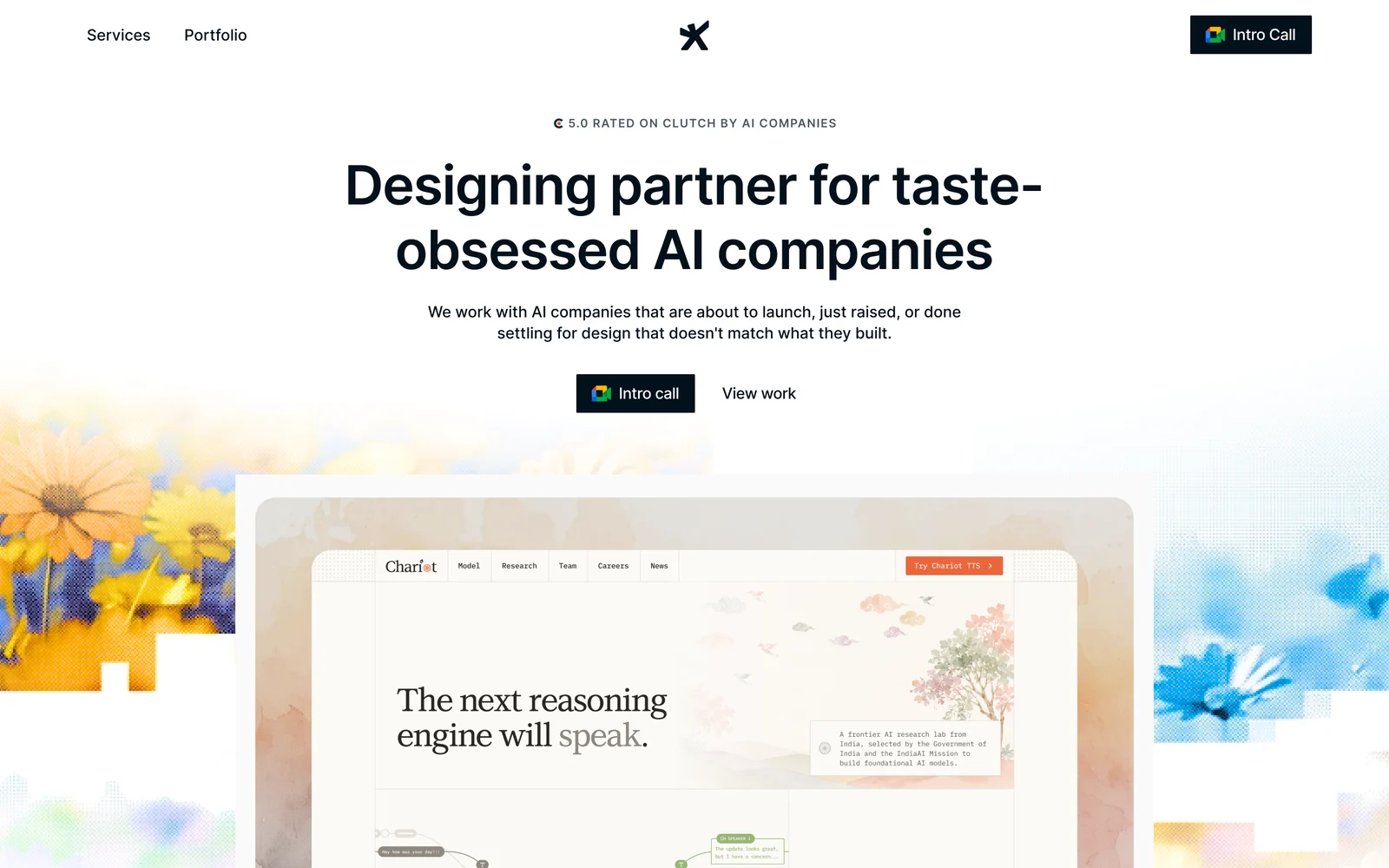
Studio Maydit is a web and product design studio working with AI founders in the US, UK, and Europe. The studio builds websites in Framer, Webflow, and custom code, and continues into product design after the site ships.
The clearest outcome is Dualite, where design work supporting a repositioned ICP helped the product reach 100,000+ users in seven months. Recent clients include Wave, PixelFlow, Mi-VAD, and 15 other AI and SaaS teams.
Websites can be bought two ways. Fixed scope runs three to four weeks and suits teams with a launch date. Teams that keep shipping take a monthly retainer instead, covering new pages, campaigns, and product design, with no long lock-in. Fixed-scope projects end with a diagnosis of what is leaking in the product, not a handoff and goodbye.
| Check | Finding |
|---|---|
| Based in | Remote, serving US / UK / EU |
| Platform depth | Framer, Webflow, and custom code |
| AI-sector proof | Yes. AI-native clients, published outcome on Dualite |
| Pricing | Fixed scope or monthly retainer, quoted per project |
| Team shape | Founder-led, small senior team |
| Best fit | Infrastructure teams whose buyer is an engineer, not a committee |
Maydit is the right call if your platform is strong and the site is losing readers before the docs. Book a 30-minute call.

2. SuperSkills
SuperSkills is a small Walnut Creek team of 1 to 10 with published AI client work. At this size the person laying out the page is close enough to the technical material to keep a real number in a headline rather than smoothing it into a claim. That closeness is the single most useful property when the content is dense and the reader is unforgiving.
They publish no pricing, their named client record is thin at one company, and there is no depth behind the people you meet if a launch slips.
| Check | Finding |
|---|---|
| Based in | Walnut Creek, USA |
| Founded | Not published |
| Team size | 1-10 |
| Primary platform | Mixed |
| AI-sector proof | Yes. Published AI client work |
| Named clients | The Cut |
| Pricing | Not published |
| Best fit | Teams who need technical specifics to survive the design process |
3. Push Refresh
Push Refresh is a Dallas studio of 1 to 10 working mainly in Framer, with a published minimum and clients including SmithRx and Synonym. Framer as the house craft matters more for infrastructure than for most categories, because your benchmark numbers and supported model list change monthly and an engineer on your team needs to correct them without opening a ticket.
Their AI-sector proof is partial rather than published, and a team of 1 to 10 has no bench if your work collides with another client's launch.
| Check | Finding |
|---|---|
| Based in | Dallas, USA |
| Founded | Not published |
| Team size | 1-10 |
| Primary platform | Framer |
| AI-sector proof | Partial. Enterprise and SaaS clients, no AI case study |
| Named clients | SmithRx, Synonym, Northern National |
| Pricing | Published minimum |
| Best fit | Teams whose published numbers change faster than an agency sprint |
4. Kvalifik
Kvalifik is a Copenhagen studio of 11 to 50 with published AI client work including Veo and Relesys. Their stated strength is making technical products legible, which is precisely the infrastructure problem: your platform lead understands it, and the VP who signs the contract needs one page that explains it without becoming wrong.
They publish no pricing, Webflow rather than Framer is the practice, and a Copenhagen day gives a US west coast team a very narrow window of overlap.
| Check | Finding |
|---|---|
| Based in | Copenhagen, Denmark |
| Founded | 2015 |
| Team size | 11-50 |
| Primary platform | Webflow |
| AI-sector proof | Yes. Published AI client work |
| Named clients | Veo, Maersk, Relesys |
| Pricing | Not published |
| Best fit | Teams who need one page that explains the platform to a non-engineer |
5. Foundey
Foundey is a San Francisco studio with published AI client work including Traycer and Sero AI. They work product-first and hand over design files, which fits infrastructure companies unusually well: your hardest surfaces are the console, the usage dashboard, and the onboarding flow, and those are product problems your own engineers will build.
You need engineering capacity to receive the work, they publish neither pricing nor team size, and a marketing site is not what this practice is centred on.
| Check | Finding |
|---|---|
| Based in | San Francisco, USA |
| Founded | 2021 |
| Team size | Not published |
| Primary platform | Figma-only |
| AI-sector proof | Yes. Published AI client work |
| Named clients | DemandIQ, Traycer, Sero AI |
| Pricing | Not published |
| Best fit | Teams whose real design debt is the console, not the homepage |
6. BX Studio
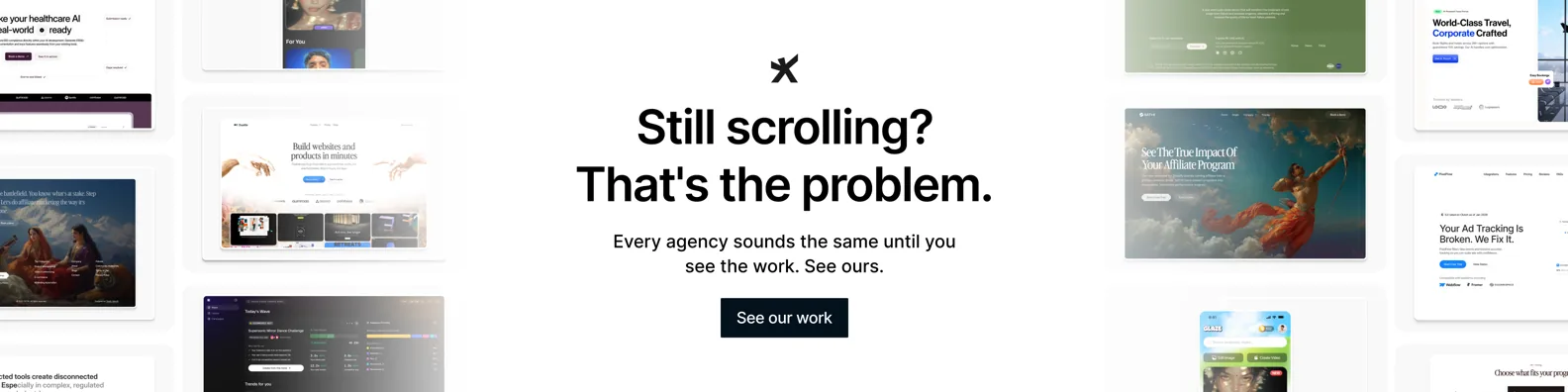
BX Studio is a New York team of 11 to 50 with published AI client work including ASAPP, and a published minimum. They cover marketing and product surfaces together, which is the right shape when your site and your dashboard have to feel like the same company. Infrastructure buyers notice that seam faster than consumers do, because they see both in the first hour.
Their founding year is not published, and Webflow is the centre of the practice rather than deep custom engineering work.
| Check | Finding |
|---|---|
| Based in | New York, USA |
| Founded | Not published |
| Team size | 11-50 |
| Primary platform | Webflow |
| AI-sector proof | Yes. Published AI client work |
| Named clients | Reddit, Headspace, ASAPP, Verifone |
| Pricing | Published minimum |
| Best fit | Teams who need the site and the console to feel like one product |
7. Phantom
Phantom is a London and Auckland firm of 51 to 200 with published AI client work and the Financial Times, SAP, and Zendesk published. They belong on this list at the point where your infrastructure company starts selling to enterprise procurement rather than to individual platform teams, because that transition needs a firm that can hold a long, structured process.
They publish no pricing, the engagement scale is far above an early infrastructure team, and Framer is not the craft.
| Check | Finding |
|---|---|
| Based in | London, UK and Auckland, NZ |
| Founded | 2013 |
| Team size | 51-200 |
| Primary platform | Custom code |
| AI-sector proof | Yes. Published AI client work |
| Named clients | Diageo, SAP, Financial Times, Zendesk |
| Pricing | Not published |
| Best fit | Infrastructure companies moving from developer sales to enterprise |
8. basement.studio
basement.studio is an 11 to 50 team across Argentina and Los Angeles, with a published minimum and Vercel, Cursor, and Scale AI in public. That client list is the closest match to your problem on this entire page. These are companies whose buyers are engineers, whose sites are read alongside documentation, and whose credibility depends on the work looking like it was made by people who ship.
Custom code as the primary craft means your marketing team has less independent control afterwards than a Framer build would give them.
| Check | Finding |
|---|---|
| Based in | Mar del Plata, Argentina and Los Angeles, USA |
| Founded | 2018 |
| Team size | 11-50 |
| Primary platform | Custom code |
| AI-sector proof | Yes. Published AI client work |
| Named clients | Vercel, Cursor, ElevenLabs, Harvey AI, Scale AI |
| Pricing | Published minimum |
| Best fit | Platform companies whose credibility depends on engineering taste |
9. Feels Like
Feels Like is a Los Angeles studio founded in 2023 with published AI client work including Suno AI. Their visual range is high, and there is an argument for that in infrastructure specifically: the category has converged on the same dark gradient and the same diagram, and a site that looks unlike the other four tabs earns a few extra seconds of attention.
They publish neither pricing nor team size, they are a young studio, and distinctive visual work can fight against the plainness that a disqualifying reader actually wants.
| Check | Finding |
|---|---|
| Based in | Los Angeles, USA |
| Founded | 2023 |
| Team size | Not published |
| Primary platform | Custom code |
| AI-sector proof | Yes. Published AI client work |
| Named clients | Google, Nike, LVMH, Suno AI |
| Pricing | Not published |
| Best fit | Teams who need to look different from four identical competitors |
10. Lazarev
Lazarev is a San Francisco team of 51 to 200 with published AI client work, a published minimum, and Payoneer on the roster. Their comfort with interfaces that have to explain a number rather than display it transfers directly to usage dashboards and metering screens, which is where most infrastructure customers get confused and then annoyed.
Their work leans toward established platforms rather than early teams, account management sits between you and the makers, and Framer is one option rather than the specialism.
| Check | Finding |
|---|---|
| Based in | San Francisco, USA |
| Founded | 2015 |
| Team size | 51-200 |
| Primary platform | Mixed |
| AI-sector proof | Yes. Published AI client work |
| Named clients | Payoneer, Peel, Elva, Mozayix |
| Pricing | Published minimum |
| Best fit | Teams whose usage and billing screens confuse paying customers |
How to choose between them
Sort by where the reader is actually leaving.
They leave the homepage before the docs. Studio Maydit or basement.studio.
They read the docs and never come back. basement.studio or BX Studio.
They sign up and cannot understand their own usage. Lazarev or Foundey.
Your buyer has become a committee. Phantom.
One test before signing. Give them your homepage and your docs landing page together, and ask which one they would fix first. An agency that has worked with an engineering audience will pick the docs, or will say the two have to be one system, and they will explain what a reader is doing in each. An agency that talks only about the homepage has never watched how this category is actually bought, and you will spend the budget on the four minutes rather than the forty.