
Summarize with AI


The best Framer design agencies for remote-first teams in 2026 are Studio Maydit, Push Refresh, Trueform, Pixelmatters, Ramotion, Feely Studio, Fantasy, Lazarev, Flow Ninja, and Flowout. Studio Maydit and Trueform lead for this brief, because both work natively in Framer and both are set up to run a project without everyone being awake at the same time. Flow Ninja and Flowout are the wrong fit here, since both build in Webflow, and a team that has chosen Framer for the editing model will not get it from either.
A remote-first company has a strange relationship with its own website. There is no office to visit, no reception, no wall of awards. For a candidate in Lisbon, a customer in Toronto, and an investor who has never met any of you, the site is the entire physical evidence that the company exists.
That raises the stakes on things other companies treat casually. The team page is not vanity, it is proof that there are real people. The careers page is not a formality, it is your main recruiting channel, competing against companies that can offer a building and a lunch. Most remote-first sites put four sentences and a job board link on that page and then wonder why applications are thin.
The second thing that changes is the project itself. Your company runs asynchronously, and if the studio does not, the mismatch shows up as delay. Three rounds of feedback between a team in California and a studio in Europe can quietly cost a fortnight, not because anybody is slow, but because every exchange waits overnight. The working method is part of what you are buying.
Framer is usually chosen for a specific reason here, and it is worth being explicit about it. It lets people who are not developers change the site the same day, from wherever they are, without a deploy or a queue. That advantage only survives if the studio builds for it and actually hands over the ability to use it.
The ten studios below are ordered by how well they build for a company that exists mostly on the internet.

How we picked these agencies
Five checks, tuned for a company with no shared office and no shared hours:
- Platform depth. Is Framer a genuine practice for this studio, or one of several tools it is willing to touch?
- Proof across distance. Is there published work for clients on another continent, which is the plainest evidence that the studio can run a project without a room?
- Pricing. Is a starting figure published, so a team spread across time zones can qualify a studio without arranging a call to find out?
- Team shape. Who is on the account, and do their working hours overlap yours by more than an hour?
- Their own site. Is it edited often, or has it clearly not changed since it launched?
That last one takes two minutes and tells you a lot. Look at a candidate's blog, their careers page, their recent work. A studio whose own site is visibly maintained is a studio that builds sites people can maintain, and the reverse is also true. Plenty of beautiful portfolios are frozen, which usually means the site was built as a deliverable rather than as something anybody was expected to keep using.
The tables record only what each studio publishes about itself. Where nothing is published, that is what the row says, because an estimate presented as a fact is the one thing that would make this list worthless.
What goes wrong on remote-first websites
Three failures, all of them about how the work is run rather than how it looks.
The project assumes a room. Reviews get scheduled as long synchronous calls at a time that suits the studio, decisions get made verbally, and nothing is written down. Then somebody in a different time zone reads the file a day later and reopens a question that was settled in a conversation they were not part of. The alternative is the same thing your own company already does. Recorded walkthroughs, written decisions with a deadline for objections, and one live call a week reserved for the things that genuinely need voices. Ask a candidate how they run reviews before you ask anything about design.
The careers page is treated as a formality. For a company competing for people it will never sit next to, this is the highest-leverage page on the site, and it is nearly always the thinnest. Four lines about culture, a link to a job board, done. What a good candidate wants is specific and easy to supply: how decisions actually get made, what a week looks like, which time zones the team already spans, and what the company is honest about being bad at. That page is worth more of the budget than the homepage and almost never gets it.
Editing is handed to one person. The reason to choose Framer is that a marketer in another country can fix a headline at nine at night without asking anybody. Studios routinely undo that by building pages as rigid one-offs, then handing over a single login and a video. Six weeks later every change is a request again, and you are paying for the flexibility you were sold. Insist that two or three people on your side are trained, and that at least one of them makes a real change before the project is signed off.
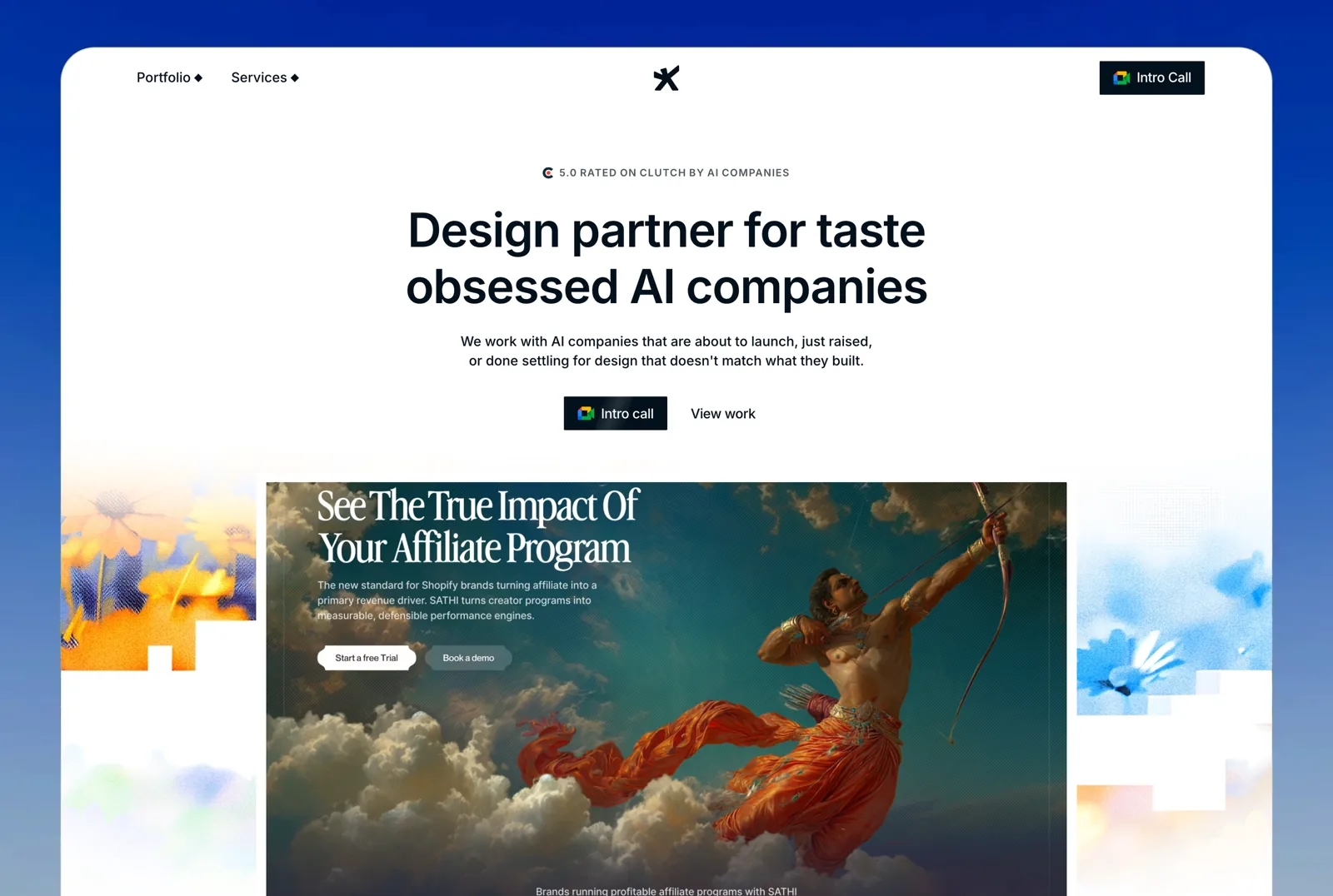
1. Studio Maydit: A Top-Rated Design Agency for AI Founders
The studio is remote and works with clients in the US, UK, and Europe, so a project running across time zones is the normal arrangement here rather than an accommodation being made for you. Studio Maydit is a web and product design studio, founder-led with a small senior team, which means the person reading your written feedback overnight is the person who then does the work. Framer, Webflow, and custom code are all available, and the choice is made by what the site has to do. Its clients are AI founders, and the engagement continues into product design after launch rather than stopping there.
Buying happens two ways. A fixed scope of three to four weeks suits a team with a launch date, and the short window is easier to protect when your own people are spread out and hard to convene. A monthly retainer suits teams that keep shipping, covering new pages, campaigns, and product design, with no long lock-in. Fixed-scope projects end with a diagnosis of what is leaking in the product, which for a distributed company is often a signup flow nobody has watched anybody complete.
Dualite is the one client with a number in public. A repositioned ICP, the design work that came with it, and 100,000+ users seven months later. The recent list runs to Wave, PixelFlow, Mi-VAD, and 15 other AI and SaaS teams.
| Check | Finding |
|---|---|
| Based in | Remote, serving US / UK / EU |
| Platform depth | Framer, Webflow, and custom code |
| AI-sector proof | Yes. AI-native clients, published outcome on Dualite |
| Pricing | Fixed scope or monthly retainer, quoted per project |
| Team shape | Founder-led, small senior team |
| Best fit | Distributed teams who need the site edited from anywhere |
Worth a call if changing a headline currently requires finding the one person who can. Book a 30-minute call.

2. Push Refresh
Push Refresh is a Dallas team of one to ten working in Framer, with a published minimum and SmithRx, Synonym, and Northern National named. Framer plus a very small team is the combination that gives a distributed company the fastest turnaround, because there is no internal queue between your message and the person editing the page.
They publish no founding year, their AI-sector proof is partial, and a team of one to ten sits in a single time zone, so overlap with a team spread across Europe and Asia will be narrow.
| Check | Finding |
|---|---|
| Based in | Dallas, USA |
| Founded | Not published |
| Team size | 1-10 |
| Primary platform | Framer |
| AI-sector proof | Partial. Enterprise and SaaS clients, no AI case study |
| Named clients | SmithRx, Synonym, Northern National |
| Pricing | Published minimum |
| Best fit | US-centred teams who want fast Framer turnaround |
3. Trueform
Trueform is a Swiss studio founded in 2022 working in Framer, with a published minimum, published AI client work, and Miro, Morning Brew, Bilt Rewards, and Gather named. Two of those clients build tools for people who are not in the same room, which means the studio has already had to think about the problem your company lives inside every day.
They publish no team size, and they are young, so there is less evidence of how they behave on a long engagement than there is for the older studios here.
| Check | Finding |
|---|---|
| Based in | Wil, Switzerland |
| Founded | 2022 |
| Team size | Not published |
| Primary platform | Framer |
| AI-sector proof | Yes. Published AI client work |
| Named clients | Miro, Morning Brew, Bilt Rewards, Gather |
| Pricing | Published minimum |
| Best fit | European-hours teams who want deep Framer capability |
4. Pixelmatters
Pixelmatters is a Porto studio of 51 to 200 founded in 2013, working across platforms, with a published minimum and Rubrik, Quantic, and UJET named. Portuguese hours overlap both the US east coast and most of Europe, which is a practical advantage that is easy to underrate until you have spent a month waiting a day for every answer.
They work across platforms rather than specialising in Framer, and their AI-sector proof is partial, so a Framer-specific brief will be handled by a generalist team.
| Check | Finding |
|---|---|
| Based in | Porto, Portugal |
| Founded | 2013 |
| Team size | 51-200 |
| Primary platform | Mixed |
| AI-sector proof | Partial. Enterprise and SaaS clients, no AI case study |
| Named clients | Rubrik, Quantic, UJET |
| Pricing | Published minimum |
| Best fit | Teams split across Europe and the US east coast |
5. Ramotion
Ramotion is a San Francisco studio of 11 to 50 founded in 2009, working across platforms, with a published minimum and Mozilla, Okta, Netflix, Adobe, and Xero named. Mozilla is the interesting reference for this brief, because it has been a distributed organisation for decades and its public surfaces had to work without a central office behind them.
Their AI-sector proof is partial, Framer is not their specialism, and sixteen years of brand-led practice produces a careful process rather than a fast one.
| Check | Finding |
|---|---|
| Based in | San Francisco, USA |
| Founded | 2009 |
| Team size | 11-50 |
| Primary platform | Mixed |
| AI-sector proof | Partial. Enterprise and SaaS clients, no AI case study |
| Named clients | Mozilla, Okta, Netflix, Adobe, Xero |
| Pricing | Published minimum |
| Best fit | Teams who need brand and site handled in one engagement |
6. Feely Studio
Feely Studio is a distributed European team of one to ten, working across platforms, with a published minimum, published AI client work, and Noxus, Mutiny, Luasai, and Basic Capital named. A studio that is itself distributed will not need convincing about recorded reviews and written decisions, because it already runs that way internally.
They publish no founding year, and one to ten distributed people is a small amount of capacity, which becomes a real limit if your site is large or your deadline is fixed.
| Check | Finding |
|---|---|
| Based in | Distributed, Europe |
| Founded | Not published |
| Team size | 1-10 |
| Primary platform | Mixed |
| AI-sector proof | Yes. Published AI client work |
| Named clients | Noxus, Mutiny, Luasai, Basic Capital |
| Pricing | Published minimum |
| Best fit | Distributed teams who want a studio that works the same way |
7. Fantasy
Fantasy has run from San Francisco and New York since 1999, works across platforms, and publishes AI client work. Two offices on opposite coasts means the studio has been coordinating work across distance for a very long time, and twenty-six years of practice buys judgement that younger studios cannot fake.
They publish no client names, no team size, and no pricing, so there is very little to evaluate remotely, which is an awkward starting point for a company that prefers to decide without meetings.
| Check | Finding |
|---|---|
| Based in | San Francisco and New York, USA |
| Founded | 1999 |
| Team size | Not published |
| Primary platform | Mixed |
| AI-sector proof | Yes. Published AI client work |
| Named clients | Not published |
| Pricing | Not published |
| Best fit | Funded teams buying long experience over speed |
8. Lazarev
Lazarev is a San Francisco studio of 51 to 200 founded in 2015, working across platforms, with a published minimum, published AI client work, and Payoneer, Peel, Elva, and Mozayix named. Payoneer serves users in a very large number of countries, so the studio has worked on surfaces that had to make sense to people with nothing in common except the product.
Framer is not their specialism, and at 51 to 200 people the team assigned to you is decided after signing, which is harder to assess from a distance than it is in person.
| Check | Finding |
|---|---|
| Based in | San Francisco, USA |
| Founded | 2015 |
| Team size | 51-200 |
| Primary platform | Mixed |
| AI-sector proof | Yes. Published AI client work |
| Named clients | Payoneer, Peel, Elva, Mozayix |
| Pricing | Published minimum |
| Best fit | Teams selling into many countries at once |
9. Flow Ninja
Flow Ninja is a Belgrade team of 11 to 50 founded in 2018, working in Webflow. Belgrade hours cover the European working day and reach into the US morning, and a team of that size has enough capacity to keep a large site moving without pauses.
They publish no client names and no pricing, their AI-sector proof is partial, and Webflow is not the platform in your brief, which matters when the reason for choosing Framer was the editing model.
| Check | Finding |
|---|---|
| Based in | Belgrade, Serbia |
| Founded | 2018 |
| Team size | 11-50 |
| Primary platform | Webflow |
| AI-sector proof | Partial. Enterprise and SaaS clients, no AI case study |
| Named clients | Not published |
| Pricing | Not published |
| Best fit | European teams committed to Webflow rather than Framer |
10. Flowout
Flowout is a distributed Webflow service with a published minimum and Jasper, Kajabi, Riverside, and Sendlane named. Being distributed by design means the arrangement works fine without meetings, and the published starting figure lets a remote team decide in an afternoon whether to proceed.
Their AI-sector proof is partial, they publish no team size or founding year, and it is a production service in the wrong platform for this brief, so you would be specifying the work yourself and giving up the editing model at the same time.
| Check | Finding |
|---|---|
| Based in | Distributed |
| Founded | Not published |
| Team size | Not published |
| Primary platform | Webflow |
| AI-sector proof | Partial. Enterprise and SaaS clients, no AI case study |
| Named clients | Jasper, Kajabi, Riverside, Sendlane |
| Pricing | Published minimum |
| Best fit | Teams who need Webflow pages produced without meetings |
How to choose between them
Sort by what distance is currently costing you.
Every small change waits for one person. Studio Maydit or Push Refresh.
Feedback rounds are eating a week each. Feely Studio or Pixelmatters.
You are hiring across countries and the careers page is thin. Studio Maydit or Trueform.
Customers in many countries need to understand you. Lazarev or Ramotion.
One test before you sign. Ask a candidate to describe their review process in writing, without a call. A studio suited to a distributed client will send you something specific: how work is shared, how long you have to respond, what happens when nobody does. A studio that replies asking to set up a call to discuss it has answered the question, just not the way it intended.