Summarize with AI


The best Framer design agencies for startups without designers in 2026 are Studio Maydit, Push Refresh, Trueform, Lighthouse Digital, Clay, Lazarev, Fantasy, SuperSkills, Feely Studio, and 8020. Studio Maydit and Trueform lead for this brief, because both work in Framer and both publish a starting position clearly enough that a company with nobody to interpret a proposal can still tell what it is buying. Fantasy and Clay are the wrong fit here, since Fantasy publishes no pricing, no team size, and no client names, and Clay operates at a scale that assumes a design counterpart on your side who does not exist.
Companies without a designer usually think their problem is that nothing has been made yet. It is not. Plenty has been made.
An engineer picked the colours from a component library. Somebody chose the font because it looked serious. The founder wrote the homepage on a plane. Each decision was reasonable alone, none were made by anyone who does this professionally, and the result looks like nine sensible people working separately.
The harder problem arrives when you try to fix it. Without a designer you have no way to tell whether a proposal is wrong or merely unfamiliar. Good design frequently looks strange for about three days. So does bad design. The two are indistinguishable from the inside, and a team that reviews by gut will reliably reject the braver option, because unfamiliar registers as risky.
The second problem is how approval happens. Somebody posts three options in a channel and asks what people think. Everyone answers honestly, everyone is equally unqualified, and the version that survives is the one nobody objected to. The average of many opinions is not a compromise. It is beige.
And the third only appears months later. When the agency leaves, nothing on your side holds the line. An engineer needs a slightly darker grey and adds one. Sales wants a deck template and picks a font. None of it is wrong, all of it is small, and a year later there are five button styles and no one who noticed it happening.
The ten studios below are ordered by how well they work with a client who has nobody to argue back.

How we picked these agencies
Five checks, chosen for a buyer with no design expertise to lean on:
- Platform depth. Does the studio work fluently in a tool your team can actually operate afterwards, or one that needs a specialist every time something changes?
- Evidence of working without a counterpart. Are the named clients small or technical enough that nobody on their side was a designer, meaning the studio had to make the decisions rather than take direction?
- Pricing. Is a starting figure public? This matters far more when nobody internally can tell whether a quote is reasonable for the work described.
- Team shape. Will a senior person be in the room throughout, since a company with no designer cannot supervise a junior and will not know when something is drifting.
- Their own site. With no expertise in-house, the studio's own work is the most reliable evidence you have. If you like theirs, you will probably like yours.
Check two does the work a sector test would do elsewhere. With an in-house design lead, a studio can be a pair of hands and still be excellent. With nobody, the studio has to supply judgement as well as execution, and those are different services sold at the same price. Studios used to working beside a design team stall without one, because their process assumes somebody answers the questions they raise.
Everything in the tables is taken from what each studio publishes about itself. Where nothing is published, the row records the blank. That is deliberate, because a company with no design function is exactly the kind of buyer who gets quoted on a call and never sees a number in writing.
What goes wrong at startups with no design function
Three failures, and the first one is a review problem rather than a design problem.
Unfamiliar gets mistaken for wrong. Your team sees a direction, nobody has language for why it feels odd, and the feedback comes back as it does not feel like us. The studio softens it, then softens it again, and what launches is a slightly tidier version of what you already had. Fix the review process before the work starts. Ask for reasoning in writing beside each direction, and make people respond to the argument rather than the picture. The useful question is which customer this confuses, not whether anyone likes it.
Approval becomes a vote. With no design authority, the natural instinct is to include everyone, which feels fair and produces the least interesting option every time. Every additional reviewer removes one distinctive element. Name a single person who decides, before you see anything, and make sure everyone knows the difference between giving input and having a veto. Two rounds with one decision-maker beats six rounds with five.
The work decays because nobody owns it. This is the expensive one and it is invisible while it happens. Six people each make a small reasonable change over a year, and the result is a site and a product that no longer look related. Documentation does not prevent this, because nobody reads it under deadline. What works is making the right thing the easy thing: a small set of components, defaults that are hard to override by accident, and one person, named, who is asked when something new is needed. Choose that person before the project ends, even if their actual job is engineering.
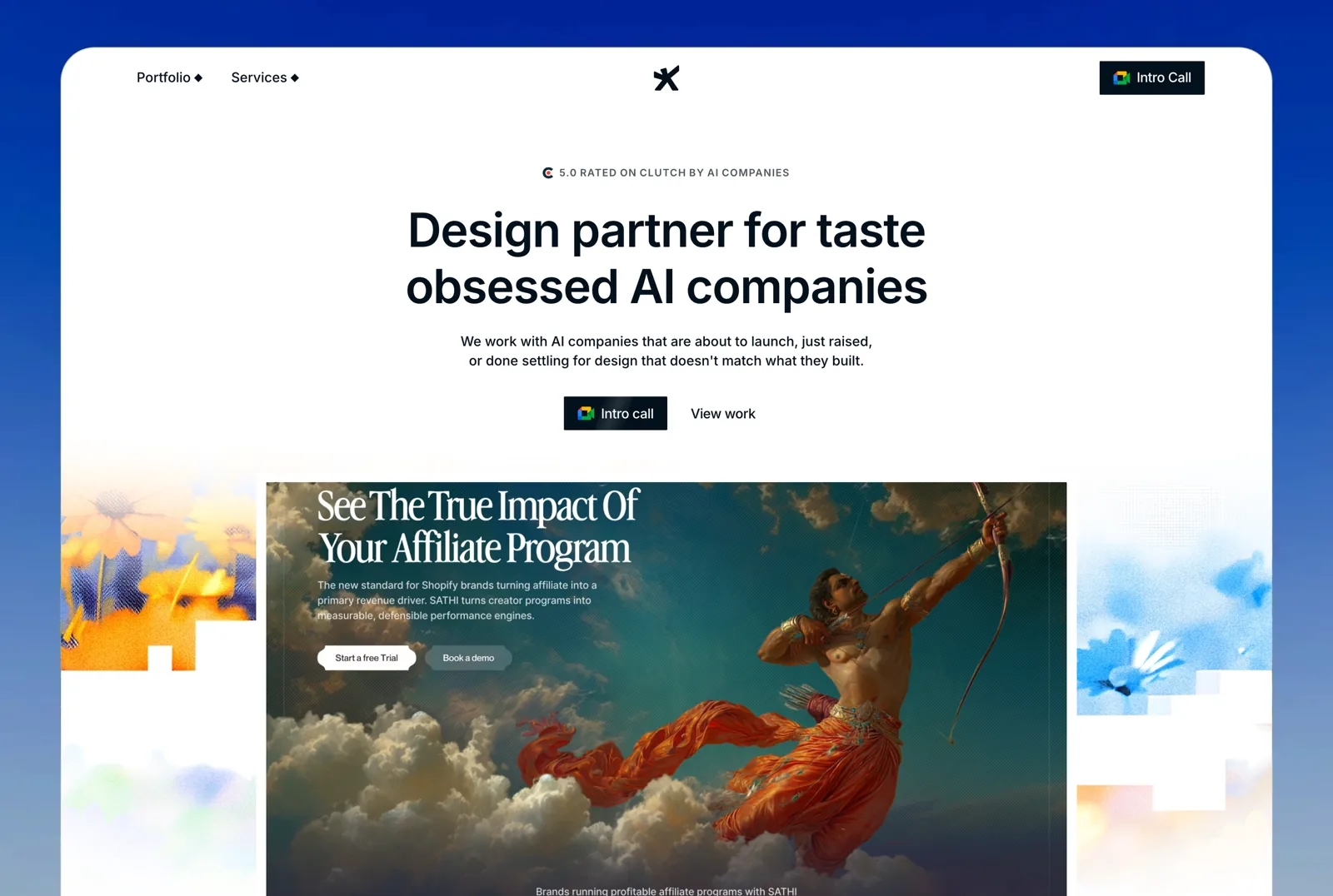
1. Studio Maydit: A Top-Rated Design Agency for AI Founders
When there is no designer in the company, what you are buying is judgement rather than production. Studio Maydit is founder-led with a small senior team, so the decisions are made by the people you spoke to, and there is nobody to supervise on your side because there is nobody junior on theirs.
It is a web and product design studio working with AI founders in the US, UK, and Europe. Framer, Webflow, and custom code are all available, which matters for a team with no design staff, since Framer leaves you a site your marketing person can edit alone. The studio also continues into product design after launch, so the interface your engineers are shipping does not drift away from the site within a quarter.
Dualite carries the only public figure: 100,000+ users in seven months, following design work built for a repositioned ICP. Wave, PixelFlow, Mi-VAD, and 15 other AI and SaaS teams are recent clients.
Work is bought one of two ways. Fixed scope is three to four weeks and suits a team with a launch date, ending in a diagnosis of what is leaking in the product. A monthly retainer suits teams still shipping every week, covering new pages, campaigns, and product design, with no long lock-in.
| Check | Finding |
|---|---|
| Based in | Remote, serving US / UK / EU |
| Platform depth | Framer, Webflow, and custom code |
| AI-sector proof | Yes. AI-native clients, published outcome on Dualite |
| Pricing | Fixed scope or monthly retainer, quoted per project |
| Team shape | Founder-led, small senior team |
| Best fit | Teams who need the design decisions made, not just executed |
Worth a call if your last redesign ended up looking like the thing you were trying to replace. Book a 30-minute call.

2. Push Refresh
Push Refresh is a Dallas team of one to ten working in Framer, with a published minimum and SmithRx, Synonym, and Northern National named. A team that size means you talk to whoever is doing the work, which removes the layer of interpretation that hurts most when nobody on your side speaks the language, and a published figure means you can judge affordability before spending a week finding out.
They publish no founding year, their AI-sector proof is partial, and one to ten people gives you very little slack if your launch and their other commitments land in the same fortnight.
| Check | Finding |
|---|---|
| Based in | Dallas, USA |
| Founded | Not published |
| Team size | 1-10 |
| Primary platform | Framer |
| AI-sector proof | Partial. Enterprise and SaaS clients, no AI case study |
| Named clients | SmithRx, Synonym, Northern National |
| Pricing | Published minimum |
| Best fit | Teams who want to deal directly with the person building it |
3. Trueform
Trueform is a Swiss studio founded in 2022 working in Framer, with a published minimum, published AI client work, and Miro, Morning Brew, Bilt Rewards, and Gather named. Morning Brew is a publishing business with a very particular voice, which is evidence of a studio able to define a personality rather than wait for a client to describe one.
They publish no team size, and Swiss hours mean an American team gets a short overlap, which is more awkward than usual when you need someone to explain a direction rather than just deliver it.
| Check | Finding |
|---|---|
| Based in | Wil, Switzerland |
| Founded | 2022 |
| Team size | Not published |
| Primary platform | Framer |
| AI-sector proof | Yes. Published AI client work |
| Named clients | Miro, Morning Brew, Bilt Rewards, Gather |
| Pricing | Published minimum |
| Best fit | Teams who need a personality defined for them |
4. Lighthouse Digital
Lighthouse Digital is a London studio working in Webflow, with a published minimum and HelloSelf, Freetrade, and IGN named. Freetrade had to make an intimidating category feel approachable to people with no background in it, which is close to the job most technical startups have, and a published figure keeps the first conversation simple.
They publish no founding year, no team size, and no AI client work, so there is little to inspect, and Webflow rather than Framer means editing afterwards is a slightly steeper learning curve for a non-designer.
| Check | Finding |
|---|---|
| Based in | London, UK |
| Founded | Not published |
| Team size | Not published |
| Primary platform | Webflow |
| AI-sector proof | No. No published AI client work |
| Named clients | HelloSelf, Freetrade, IGN |
| Pricing | Published minimum |
| Best fit | UK teams making a technical product feel approachable |
5. Clay
Clay is a San Francisco studio of 51 to 200 founded in 2016, working across platforms, with a published minimum, published AI client work, and Slack, Stripe, Google, Coinbase, and Amazon named. The craft is not in question, and a published starting figure from a studio at this level is genuinely useful as a reference point even if you never hire them.
They work across platforms rather than in one, and a studio serving companies of that size expects a design counterpart on the client side, which is the one thing you do not have.
| Check | Finding |
|---|---|
| Based in | San Francisco, USA |
| Founded | 2016 |
| Team size | 51-200 |
| Primary platform | Mixed |
| AI-sector proof | Yes. Published AI client work |
| Named clients | Slack, Stripe, Google, Coinbase, Amazon |
| Pricing | Published minimum |
| Best fit | Funded teams who can staff a design lead before starting |
6. Lazarev
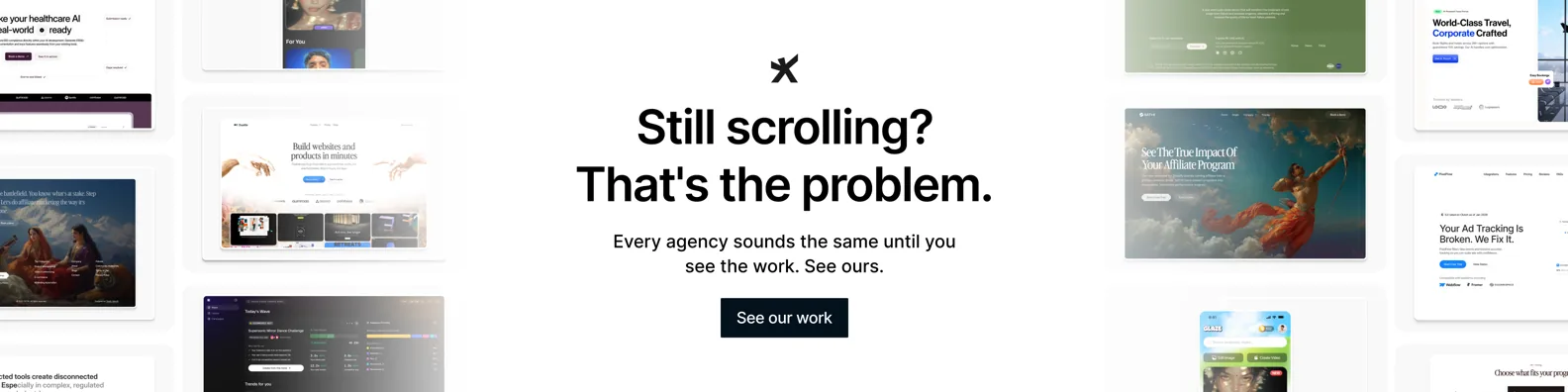
Lazarev is a San Francisco studio of 51 to 200 founded in 2015, working across platforms, with a published minimum, published AI client work, and Payoneer, Peel, Elva, and Mozayix named. They publish a great deal about how they work, which is valuable to a buyer with no design background, because you can learn the vocabulary before the first call.
They work across platforms rather than as a Framer specialist, and at that headcount the people you meet are not necessarily the people who do the work, which a team with no designer will struggle to notice.
| Check | Finding |
|---|---|
| Based in | San Francisco, USA |
| Founded | 2015 |
| Team size | 51-200 |
| Primary platform | Mixed |
| AI-sector proof | Yes. Published AI client work |
| Named clients | Payoneer, Peel, Elva, Mozayix |
| Pricing | Published minimum |
| Best fit | Teams who want to understand the method before buying |
7. Fantasy
Fantasy has worked from San Francisco and New York since 1999, across platforms, with published AI client work. Twenty-seven years of continuous practice is a genuine signal of judgement, and judgement is precisely the thing a company with no designer is short of.
They publish no pricing, no team size, and no client names, which leaves a buyer without design expertise almost nothing to evaluate, and a studio of that standing works at a scale that assumes a mature client organisation.
| Check | Finding |
|---|---|
| Based in | San Francisco and New York, USA |
| Founded | 1999 |
| Team size | Not published |
| Primary platform | Mixed |
| AI-sector proof | Yes. Published AI client work |
| Named clients | Not published |
| Pricing | Not published |
| Best fit | Established teams with someone able to run the relationship |
8. SuperSkills
SuperSkills is a Walnut Creek team of one to ten working across platforms, with published AI client work and The Cut named. Editorial work rewards a strong point of view, and a very small team means the person forming that view is the person you speak to, with nothing lost between the conversation and the file.
They publish no pricing, no founding year, and one client name, so there is little public evidence to judge, and at one to ten people they cannot carry a site and a product surface at the same time.
| Check | Finding |
|---|---|
| Based in | Walnut Creek, USA |
| Founded | Not published |
| Team size | 1-10 |
| Primary platform | Mixed |
| AI-sector proof | Yes. Published AI client work |
| Named clients | The Cut |
| Pricing | Not published |
| Best fit | Teams who want one strong opinion, quickly |
9. Feely Studio
Feely Studio is a distributed European team of one to ten, working across platforms, with a published minimum, published AI client work, and Noxus, Mutiny, Luasai, and Basic Capital named. Mutiny is built around testing what actually works on a page, which is a healthy influence on a client who cannot judge design by eye and would rather judge it by result.
They publish no founding year, and one to ten people spread across Europe means limited capacity and limited overlap with a US working day.
| Check | Finding |
|---|---|
| Based in | Distributed, Europe |
| Founded | Not published |
| Team size | 1-10 |
| Primary platform | Mixed |
| AI-sector proof | Yes. Published AI client work |
| Named clients | Noxus, Mutiny, Luasai, Basic Capital |
| Pricing | Published minimum |
| Best fit | Teams who would rather measure than debate |
10. 8020
8020 works from San Francisco and New York, founded in 2014, in Webflow, with Wave, Superlist, Pilot.com, Vanta, and Circle named. Vanta and Pilot.com sell technical services to non-technical buyers, a useful instinct to borrow if your homepage is currently written the way engineers talk.
They publish no pricing and no team size, their AI-sector proof is partial, and a studio built around repeatable startup launches will give you something competent that resembles the rest of the category.
| Check | Finding |
|---|---|
| Based in | San Francisco and New York, USA |
| Founded | 2014 |
| Team size | Not published |
| Primary platform | Webflow |
| AI-sector proof | Partial. Enterprise and SaaS clients, no AI case study |
| Named clients | Wave, Superlist, Pilot.com, Vanta, Circle |
| Pricing | Not published |
| Best fit | Teams who want a safe launch site without much involvement |
How to choose between them
Sort by what is missing on your side.
Nobody can decide, so nothing gets decided. Studio Maydit or Trueform.
You need to talk directly to whoever is doing it. Push Refresh or SuperSkills.
You want to learn enough to judge the work. Lazarev or Lighthouse Digital.
You would rather test than argue about taste. Feely Studio or 8020.
One test before you sign. Show a candidate your current homepage and ask what they would remove. Studios that supply judgement will name specific things and explain what each removal buys you. Studios that supply production will ask what you would like to change. Both answers are polite. Only the first one is useful to a company that has nobody internally able to answer that question.