
Summarize with AI


For an AI HR tech startup, the ten studios worth reviewing are Studio Maydit, SuperSkills, Trueform, Kvalifik, Feels Like, Lazarev, Phantom, Feely Studio, Foundey, and basement.studio. Kvalifik and Lazarev lead this list. Kvalifik has built in Webflow from Copenhagen since 2015 with eleven to fifty people and AI-sector proof, for Veo, Maersk, and Relesys, and Relesys is a workforce platform used by people who did not choose it. Lazarev has worked from San Francisco since 2015 with fifty-one to two hundred people, a published starting price, and AI-sector proof, for Payoneer, Peel, Elva, and Mozayix. Foundey and basement.studio fit least well. Foundey hands over Figma files with nothing built, and basement.studio's strength is impressing engineers, which is not who buys here.
Your product is bought by one person and lived with by a thousand. Almost every mistake on an HR tech website comes from forgetting the second group.
The buyer is a head of people or a talent leader. They want fewer hours spent on screening, better hires, and a defensible process. They are also the person who will be in the room if something goes wrong, which makes them cautious in a way that a sales-led site rarely accounts for.
Behind them sits their legal counsel, who has read about hiring algorithms being audited, and their IT team, who want to know where candidate data goes. Both will visit your site, and neither is looking for your vision.
And then there are the candidates and employees. They did not choose your product, they cannot opt out of it, and if it feels like something being done to them, that sentiment reaches your buyer eventually.

How we picked these agencies
Five checks, each of which can be run from public pages before any call.
Platform depth, judged against how often your claims will need changing. HR technology sits close to employment law, and law moves. A new jurisdiction, a new audit requirement, or a change to what the model is allowed to do, and several pages need updating in the same week. Ask who can make that change and how long it takes.
Proof with products that carry consequences for the people inside them. That is the criterion carrying the most weight on this page. Designing for software that affects somebody's job is different from designing for software that affects somebody's afternoon. It shows in whether a studio writes efficiency claims carefully and in whether they think about the person on the receiving end at all.
Pricing. Is a starting figure published. Your own buyers increasingly expect transparency about how decisions get made, so there is a small consistency argument for partners who are willing to be transparent about their own terms.
Team shape. Size predicts who reviews the wording. In this category a single sentence can create a legal exposure, and that sentence should be written by somebody senior enough to know it.
Their own site. It is the one project with no client to blame, so read it for precision rather than for style.
An extra question worth asking on the first call: how would they describe an automated decision without either overclaiming or sounding evasive. It is the hardest sentence on your site, and their answer to it tells you most of what you need.
Everything in the tables below repeats what each studio publishes about itself. Nothing has been estimated, and where a row reads unpublished, that studio has simply chosen not to disclose the figure.
What goes wrong for AI HR tech startups
Three failures, and the first is the most common headline on sites in this category.
The efficiency claim frightens the people who have to approve you. Screen a thousand applicants in an hour. Cut time to hire by seventy percent. Those sentences are written for a buyer under pressure, and they are read by that buyer's lawyer as a description of automated decision-making at scale. Say what the system does and what it does not decide, in the same breath. The claim survives review and gets stronger, because a specific limit makes the rest believable.
There is no fairness or auditability page, so the first procurement question has no answer. Buyers now expect to know what data trains the model, what has been tested for adverse impact, what is logged, and what a candidate can request. If those answers only exist in a security questionnaire your sales team fills in manually, every deal slows down at the same point. Put them on a page and link to it from your pricing and product pages.
The site speaks only to the purchaser and ignores the workforce. No page explains to an employee or a candidate what happens to their information, what the system does with it, or how a person can question an outcome. That page costs a day to write and it does two things: it reassures the buyer, who is imagining the internal announcement, and it removes the easiest criticism anyone can make of you in public.
1. Studio Maydit: A Top-Rated Design Agency for AI Founders
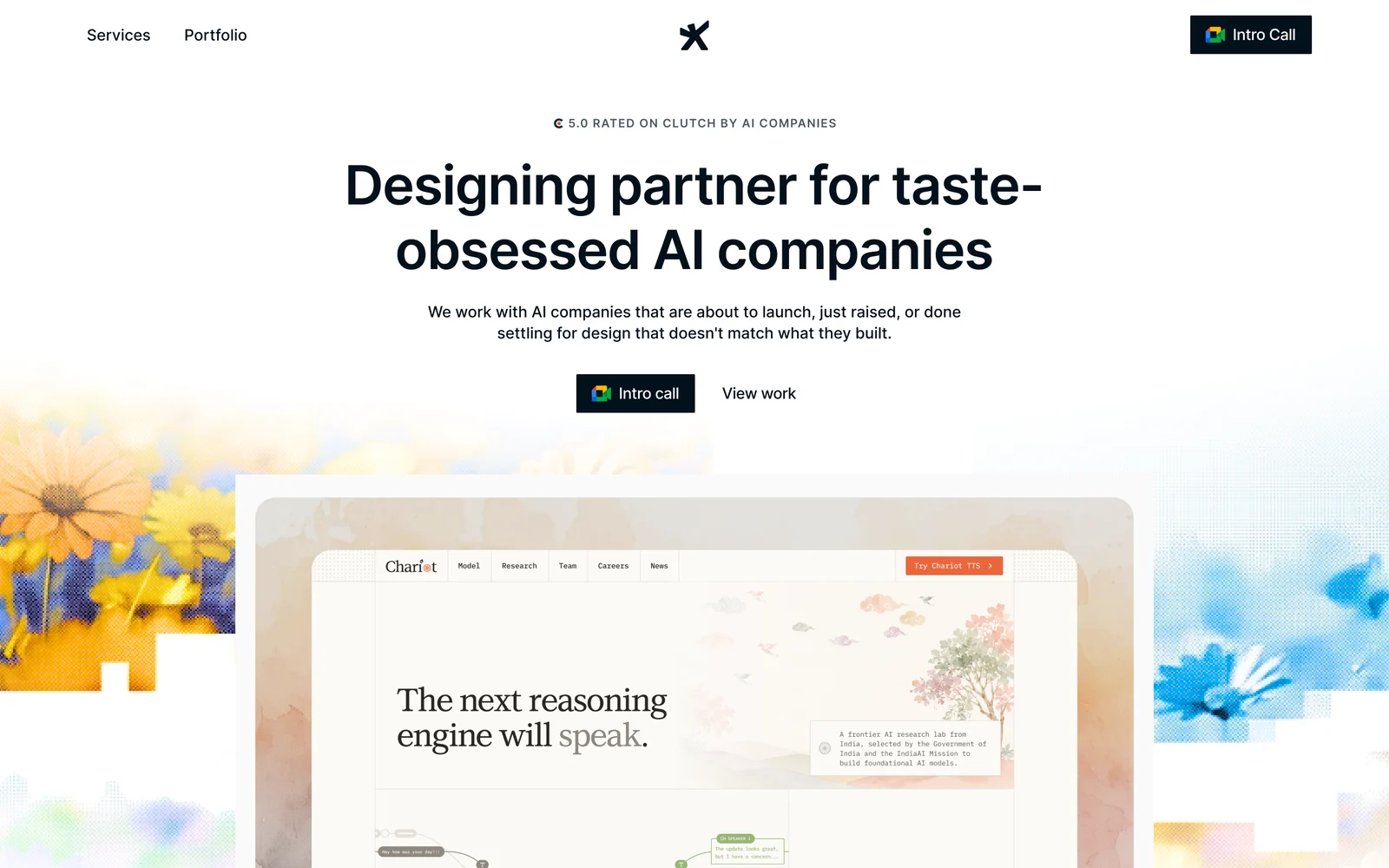
The most delicate screens in HR software are inside the product, where a person is shown a score, a ranking, or a rejection. Studio Maydit continues into product design after the site ships, so the promises made on the marketing page and the way those moments are handled are designed by the same people. It is a web and product design studio. Its clients are AI founders, across the US, UK, and Europe. Framer where claims change with regulation, Webflow where a marketing team runs its own calendar, and custom code where the page has to show something real from the product.
Dualite is the published outcome. A repositioned ICP came first. The product was then designed for the narrower group that decision defined. 100,000+ users arrived across seven months. HR technology has an unusually strong pull towards the opposite move, since every company on earth hires and the temptation is to address all of them at once. A page written for enterprise talent teams and for twelve-person startups convinces neither. Recent clients include Wave, PixelFlow, Mi-VAD, and 15 other AI and SaaS teams.
Two ways to buy, and the choice usually follows how settled your claims are. Fixed scope takes three to four weeks, fits a launch or a compliance deadline, and ends with a written diagnosis of what is leaking in the product. A monthly retainer suits companies whose obligations keep shifting, covering new pages, campaigns, and product design, with no long lock-in, so nothing is committed to beyond the point it is useful.
| Check | Finding |
|---|---|
| Based in | Remote, serving US / UK / EU |
| Platform depth | Framer, Webflow, and custom code |
| AI-sector proof | Yes. AI-native clients, published outcome on Dualite |
| Pricing | Fixed scope or monthly retainer, quoted per project |
| Team shape | Founder-led, small senior team |
| Best fit | HR tech teams whose site must satisfy a buyer, a lawyer, and a workforce |
Write the page for the employee first. The buyer is reading over their shoulder. Book a 30-minute call.

2. Kvalifik
Kvalifik has built in Webflow from Copenhagen since 2015 with eleven to fifty people and AI-sector proof, for Veo, Maersk, and Relesys. Relesys is a workforce communication platform, which means this studio has already designed for the group nobody else on this page considers: the employees who are given the software rather than choosing it. Maersk adds a very large organisation with a distributed workforce.
No pricing is published, and Copenhagen shares only a morning with the US west coast.
| Check | Finding |
|---|---|
| Based in | Copenhagen, Denmark |
| Founded | 2015 |
| Team size | 11-50 |
| Primary platform | Webflow |
| AI-sector proof | Yes |
| Named clients | Veo, Maersk, Relesys |
| Pricing | Not published |
| Best fit | HR tech teams who need to speak to a workforce, not just a buyer |
3. Trueform
Trueform has worked from Wil in Switzerland since 2022 in Framer, with a published starting price and AI-sector proof, for Miro, Morning Brew, Bilt Rewards, and Gather. Framer is the quickest route to changing a claim the day your legal counsel asks, which matters in a category where the rules keep moving, and European data expectations are already familiar territory.
No team size is published, the studio is young, and none of the named clients operates in HR or another regulated area.
| Check | Finding |
|---|---|
| Based in | Wil, Switzerland |
| Founded | 2022 |
| Team size | Not published |
| Primary platform | Framer |
| AI-sector proof | Yes |
| Named clients | Miro, Morning Brew, Bilt Rewards, Gather |
| Pricing | Published minimum |
| Best fit | Teams whose claims change faster than a build cycle |
4. SuperSkills
SuperSkills is a one to ten person team in Walnut Creek working across platforms, with AI-sector proof and The Cut as a named client. On a category where precise wording decides whether a claim survives review, the short chain from you to the person writing it is worth a great deal.
Only one client is named, no price is published, and a category that needs fairness, security, integration, and compliance pages is a lot of surface for a team that size.
| Check | Finding |
|---|---|
| Based in | Walnut Creek, USA |
| Founded | Not published |
| Team size | 1-10 |
| Primary platform | Mixed |
| AI-sector proof | Yes |
| Named clients | The Cut |
| Pricing | Not published |
| Best fit | Teams rewriting a small number of high-stakes pages |
5. Feels Like
Feels Like is a Los Angeles studio founded in 2023 in custom code, with AI-sector proof, for Google, Nike, LVMH, and Suno AI. The craft level is the highest here, and in a category crowded with software that looks like a spreadsheet, feeling human rather than administrative is a genuine advantage.
The studio is young, no team size or price is published, custom code means marketing returns to them for edits, and there is no regulated reference.
| Check | Finding |
|---|---|
| Based in | Los Angeles, USA |
| Founded | 2023 |
| Team size | Not published |
| Primary platform | Custom code |
| AI-sector proof | Yes |
| Named clients | Google, Nike, LVMH, Suno AI |
| Pricing | Not published |
| Best fit | HR products competing on feeling human rather than efficient |
6. Lazarev
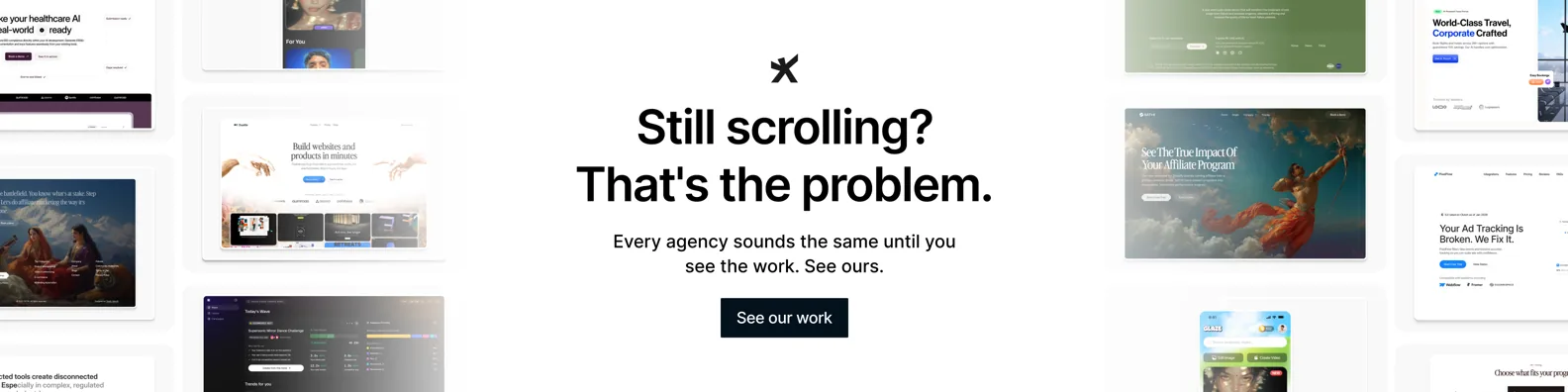
Lazarev has worked from San Francisco since 2015 with fifty-one to two hundred people, a published starting price, and AI-sector proof, for Payoneer, Peel, Elva, and Mozayix. Payoneer operates under multiple regulators at once, which is the closest analogue here to selling hiring software across jurisdictions, and the studio's real strength is making a dense product understandable.
The band is premium, the platform is mixed, none of the named clients works in HR, and at that headcount you should ask who reviews the copy.
| Check | Finding |
|---|---|
| Based in | San Francisco, USA |
| Founded | 2015 |
| Team size | 51-200 |
| Primary platform | Mixed |
| AI-sector proof | Yes |
| Named clients | Payoneer, Peel, Elva, Mozayix |
| Pricing | Published minimum |
| Best fit | Teams selling a complicated product into several jurisdictions |
7. Phantom
Phantom has worked from London and Auckland since 2013 with fifty-one to two hundred people and AI-sector proof, for Diageo, SAP, Financial Times, and Zendesk. SAP sells human resources software into very large organisations, which makes it the most directly relevant reference on this page for anyone selling to enterprise talent teams.
No pricing is published, custom code puts later edits back through them, and the engagements are sized for larger programmes than an early product needs.
| Check | Finding |
|---|---|
| Based in | London, UK and Auckland, NZ |
| Founded | 2013 |
| Team size | 51-200 |
| Primary platform | Custom code |
| AI-sector proof | Yes |
| Named clients | Diageo, SAP, Financial Times, Zendesk |
| Pricing | Not published |
| Best fit | HR products selling into large enterprise buying committees |
8. Feely Studio
Feely Studio is a distributed European team of one to ten with a published starting price and AI-sector proof, for Noxus, Mutiny, Luasai, and Basic Capital. Being European matters here more than usual, since candidate data brings GDPR into every conversation and a studio working under those rules already treats consent and data pages as normal content.
One to ten people caps how much can run at once, no founding year is published, and none of the named clients is in HR.
| Check | Finding |
|---|---|
| Based in | Distributed, Europe |
| Founded | Not published |
| Team size | 1-10 |
| Primary platform | Mixed |
| AI-sector proof | Yes |
| Named clients | Noxus, Mutiny, Luasai, Basic Capital |
| Pricing | Published minimum |
| Best fit | Teams selling into Europe where candidate data rules apply |
9. Foundey
Foundey has worked from San Francisco since 2021 with AI-sector proof, for DemandIQ, Traycer, and Sero AI. The practice is design-led, which suits a team that wants to think carefully about how a difficult moment in the product should be handled before anybody builds it.
Foundey delivers Figma and stops. Someone on your side builds it, no team size or price is published, and the pages this category needs are numerous rather than beautiful, which is a poor trade for a design-only engagement.
| Check | Finding |
|---|---|
| Based in | San Francisco, USA |
| Founded | 2021 |
| Team size | Not published |
| Primary platform | Figma-only |
| AI-sector proof | Yes |
| Named clients | DemandIQ, Traycer, Sero AI |
| Pricing | Not published |
| Best fit | Teams with spare engineering capacity to build the design |
10. basement.studio
basement.studio works from Mar del Plata and Los Angeles, founded in 2018, with eleven to fifty people, custom code, a published starting price, and AI-sector proof, for Vercel, Cursor, ElevenLabs, Harvey AI, and Scale AI. The work is outstanding and it is precisely calibrated for an audience of engineers.
Your buyer is not an engineer. A head of people evaluating a hiring system wants clarity and reassurance rather than technical spectacle, and custom code also means every wording change goes back through the studio.
| Check | Finding |
|---|---|
| Based in | Mar del Plata, Argentina and Los Angeles, USA |
| Founded | 2018 |
| Team size | 11-50 |
| Primary platform | Custom code |
| AI-sector proof | Yes |
| Named clients | Vercel, Cursor, ElevenLabs, Harvey AI, Scale AI |
| Pricing | Published minimum |
| Best fit | Companies whose buyers are developers rather than people leaders |
How to choose between them
Sort by what is actually broken.
If deals stall in legal review, the missing thing is a fairness and data page. Lazarev, or Phantom for enterprise buyers.
If nobody has written for the employees who will be subject to the product, buy that perspective. Kvalifik.
If claims keep changing because the rules keep changing, buy publishing speed. Trueform on Framer.
If the product reads as cold and administrative, that is craft. Feels Like.
One test before you sign. Ask them to rewrite your strongest efficiency claim so it would survive an employment lawyer reading it. A studio that fits this brief returns something more specific and more persuasive. A studio that does not returns something vague.