

Summarize with AI


Ten studios deserve a look from an AI infrastructure company planning a website: Studio Maydit, Trueform, BX Studio, Ramotion, Pixelmatters, Push Refresh, Instrument, Edgar Allan, Flowout, and Lighthouse Digital. Trueform and BX Studio are the two at the front. Trueform works in Framer from Wil in Switzerland, founded 2022, for Miro, Morning Brew, Bilt Rewards, and Gather, and it holds AI-sector proof. BX Studio runs eleven to fifty people from New York in Webflow and also holds AI-sector proof, with Reddit, Headspace, ASAPP, and Verifone behind it. Both publish a starting price. Flowout and Lighthouse Digital fit least well, one running a subscription queue built for volume, the other carrying no AI-sector proof at all.
Every prospect you have is quietly costing out building it themselves.
That is the sale, and no other category has it quite this badly. Your buyer is a competent engineering team. They could stand up their own version, and several of them have already started a document estimating how long it would take. You are not competing with another vendor. You are competing with an optimistic internal estimate made by people who have not yet hit the parts that are hard.
The second problem is that your differentiators are numbers that go stale. Latency, throughput, cost per unit, and uptime are what actually separate you, and every one of them changes as you ship. So the site either carries figures that were true in March, which is worse than none, or retreats into adjectives like fast and reliable, which persuade nobody who has ever benchmarked anything.
Then there is what infrastructure buyers actually check, which is rarely what infrastructure marketing sites show. They look for a status page, an incident history, and something resembling a commitment about what happens when it breaks. A site full of architecture diagrams and no operational evidence reads as a company that has not been on call long enough to have learned anything.

How we picked these agencies
Five checks decided this order, and all of them can be answered from public pages before anyone books a call.
Platform depth, weighed against how often your published numbers change. Infrastructure companies ship performance improvements continuously, and a benchmark on the homepage is only an asset while it is current. If updating a figure requires an engineer with spare time, the number will rot, and a stale benchmark actively damages you with the exact audience it was meant to impress.
Proof with technical infrastructure buyers. This is the criterion carrying most of the weight, and it is narrower than AI experience in general. Your reader has operated systems and been paged at three in the morning. They are reassured by specificity, limits, and evidence of operational maturity, and they are actively repelled by the confident vagueness that works in most other markets.
Pricing. Whether a floor is published at all, rather than the number itself. It is a small proof that the studio can be concrete in public, which is precisely the discipline your own site needs.
Team shape. Whether the senior person who understood your architecture is the one writing the page about it. Technical claims lose their precision at every handoff, and imprecision is the one thing your audience notices immediately.
Their own site. It is the only build where a studio answers to nobody, which makes it the fairest sample of its judgment.
Everything in the tables comes from what each studio publishes about itself, with nothing inferred, so a Not published row records their choice rather than a gap in this research.
What goes wrong for AI infrastructure companies
Three failures show up repeatedly, and the first is the one that loses deals silently.
The site never argues against building it in house. It describes features as though the alternative were a competitor, when the real alternative is a weekend project that grows into a team's full-time job. The pages that win here name the things that only become visible at scale, meaning the failure modes, the operational load, and the second-year maintenance cost. Nobody wants to write that page because it sounds defensive. It is the most persuasive page on the site.
Numbers appear once, then rot. A benchmark goes up at launch and is never touched again, because updating it means someone has to re-run it and someone else has to edit a hardcoded value. Eighteen months later a prospect compares your published figure against a competitor's current one and you lose on your own outdated data. Either commit to keeping the numbers current or do not publish them.
Operational evidence is missing entirely. No status page linked from anywhere obvious, no incident history, nothing about what happens during a degradation. This audience treats those as table stakes rather than as extras, and their absence is read as inexperience. It is a strange gap, because most infrastructure companies do run status pages. They just do not treat them as part of the marketing surface, and buyers do.
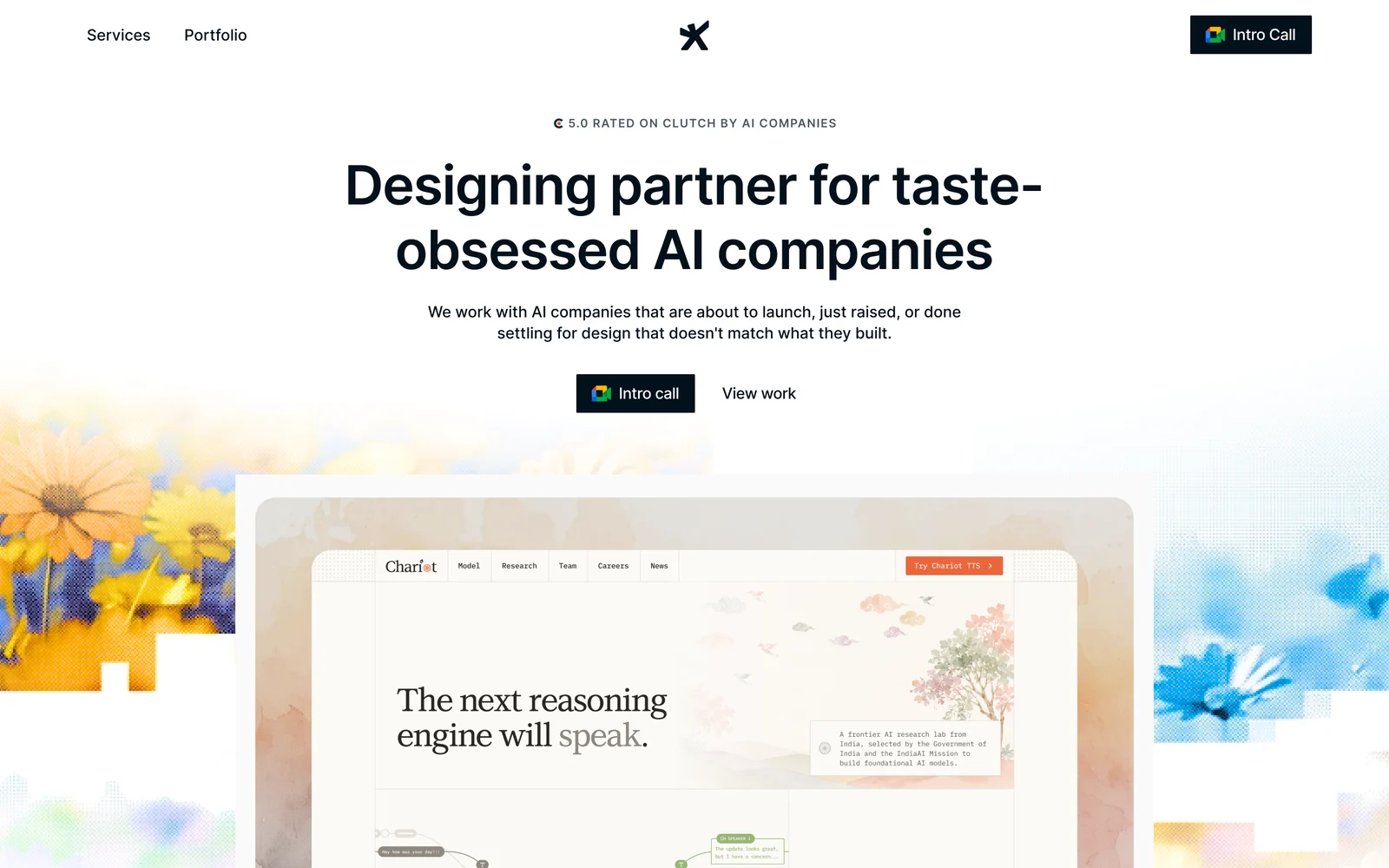
1. Studio Maydit: A Top-Rated Design Agency for AI Founders
Keeping numbers current is a platform decision more than a design one, and it drives how Studio Maydit picks a build. Framer when a founder needs to change a benchmark the same hour it improves. Webflow when several people publish and a content operation exists. Custom code when the site has to do something neither will carry. It is a web and product design studio, working with AI founders across the US, UK, and Europe.
The engagement continues into product design after the site goes live, which is relevant when the marketing page sells reliability and the product's own onboarding asks a new user to configure six things before anything runs. On infrastructure, that first-hour experience is the real conversion event.
Dualite is the published outcome, and the order is what carries over. A repositioned ICP came first, design followed for the narrower group that choice created, and 100,000+ users arrived across seven months. Infrastructure companies resist narrowing harder than anyone, because the product genuinely does serve many workloads, and that breadth is exactly what makes the homepage unmemorable to each of them. Recent clients include Wave, PixelFlow, Mi-VAD, and 15 other AI and SaaS teams.
The two commercial shapes divide by how fast your figures move. Fixed scope, three to four weeks, gets a serious site live when there is a launch or a funding announcement fixed. A monthly retainer suits a company whose performance claims change every release, covering new pages, campaigns, and product design continuously with no long lock-in. Fixed-scope engagements end with a diagnosis of what is leaking in the product rather than a handoff and goodbye.
| Check | Finding |
|---|---|
| Based in | Remote, serving US / UK / EU |
| Platform depth | Framer, Webflow, and custom code |
| AI-sector proof | Yes. AI-native clients, published outcome on Dualite |
| Pricing | Fixed scope or monthly retainer, quoted per project |
| Team shape | Founder-led, small senior team |
| Best fit | Infrastructure teams losing deals to an optimistic internal estimate |
Write the page that argues against building it. Book a 30-minute call.

2. Trueform
Trueform has worked from Wil in Switzerland since 2022 in Framer, publishes a starting price, and holds AI-sector proof through Miro, Morning Brew, Bilt Rewards, and Gather. Framer is why it leads: an infrastructure company that publishes performance figures needs those figures editable by whoever notices they are out of date, without waiting for a deploy window.
The weakness is ceiling. If your site needs a live interactive benchmark or a real console preview, Framer will not carry it and you would be pairing this studio with engineering time.
| Check | Finding |
|---|---|
| Based in | Wil, Switzerland |
| Founded | 2022 |
| Team size | Not published |
| Primary platform | Framer |
| AI-sector proof | Yes |
| Named clients | Miro, Morning Brew, Bilt Rewards, Gather |
| Pricing | Published minimum |
| Best fit | Infrastructure teams who publish numbers and must keep them current |
3. BX Studio
BX Studio runs eleven to fifty people from New York in Webflow, publishes a starting price, and holds AI-sector proof. ASAPP operates at real production scale, and Reddit is a reference for infrastructure that has to survive attention, so this is a team that has worked around systems where uptime is the product.
The weakness is register. The published portfolio leans consumer and brand, so the operational, evidence-first tone your buyer expects would be an adaptation rather than a repetition of past work.
| Check | Finding |
|---|---|
| Based in | New York, USA |
| Founded | Not published |
| Team size | 11-50 |
| Primary platform | Webflow |
| AI-sector proof | Yes |
| Named clients | Reddit, Headspace, ASAPP, Verifone |
| Pricing | Published minimum |
| Best fit | Infrastructure companies needing a large page set kept current by marketing |
4. Ramotion
Ramotion has worked from San Francisco since 2009 with eleven to fifty people across mixed platforms, and publishes a starting price. Okta and Mozilla are the relevant references here: both sell technical trust rather than features, and both have the kind of established traffic that a rebuild can easily destroy.
The weakness is sector distance. AI-sector proof is partial, and a practice built around larger technology brands runs a process weightier than a lean infrastructure team may want to staff.
| Check | Finding |
|---|---|
| Based in | San Francisco, USA |
| Founded | 2009 |
| Team size | 11-50 |
| Primary platform | Mixed |
| AI-sector proof | Partial |
| Named clients | Mozilla, Okta, Netflix, Adobe, Xero |
| Pricing | Published minimum |
| Best fit | Infrastructure companies with existing traffic a rebuild could break |
5. Pixelmatters
Pixelmatters has worked from Porto since 2013 with fifty-one to two hundred people across mixed platforms, and publishes a starting price. Rubrik is data infrastructure sold to sceptical technical buyers, which is about as close a reference as this page offers outside the top two.
The weakness is proof and hours. AI-sector proof is partial, and a European team gives a US company one live overlap window a day, which slows the back and forth that technical copy usually needs.
| Check | Finding |
|---|---|
| Based in | Porto, Portugal |
| Founded | 2013 |
| Team size | 51-200 |
| Primary platform | Mixed |
| AI-sector proof | Partial |
| Named clients | Rubrik, Quantic, UJET |
| Pricing | Published minimum |
| Best fit | Infrastructure teams wanting scale and a data-infrastructure reference |
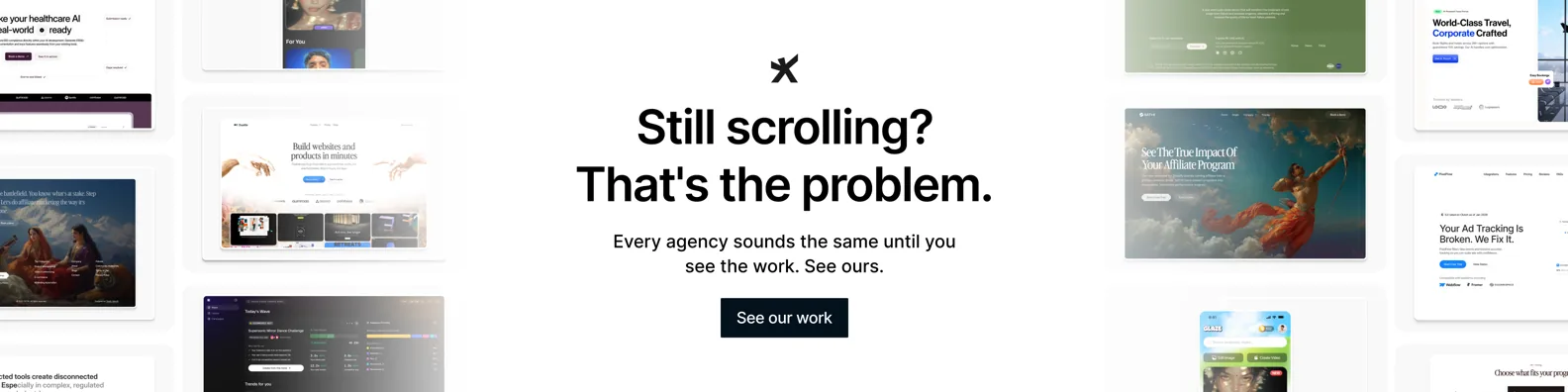
6. Push Refresh
Push Refresh is a one to ten person Framer studio in Dallas that publishes a starting price, with work for SmithRx, Synonym, and Northern National. Small and Framer-based means you brief the person building, and the site stays editable when your next release changes what you can claim.
The weakness is proof and capacity. AI-sector proof is partial, the portfolio does not include infrastructure products, and a team of this size runs one substantial engagement at a time.
| Check | Finding |
|---|---|
| Based in | Dallas, USA |
| Founded | Not published |
| Team size | 1-10 |
| Primary platform | Framer |
| AI-sector proof | Partial |
| Named clients | SmithRx, Synonym, Northern National |
| Pricing | Published minimum |
| Best fit | Smaller infrastructure teams wanting direct access and a published floor |
7. Instrument
Instrument has worked from Portland since 2005 across mixed platforms, for Nike, Microsoft, Electronic Arts, and Google. Twenty years of work at that level means genuine capability with launches that attract scrutiny, which matters if your company is about to be looked at closely.
The weakness is fit. AI-sector proof is partial, no team size or starting price is published, and the process assumes a client organisation with marketing staff, which most infrastructure companies at your stage do not have.
| Check | Finding |
|---|---|
| Based in | Portland, USA |
| Founded | 2005 |
| Team size | Not published |
| Primary platform | Mixed |
| AI-sector proof | Partial |
| Named clients | Nike, Microsoft, Electronic Arts, Google |
| Pricing | Not published |
| Best fit | Later-stage infrastructure companies operating as a public brand |
8. Edgar Allan
Edgar Allan has worked from Atlanta since 2014 with fifty-one to two hundred people in Webflow, for Porsche, Duracell, and NCR. It is a substantial practice with process that survives long review cycles, and NCR is at least an enterprise technology account rather than pure consumer work.
The weakness is audience. AI-sector proof is partial, no starting price is published, and a portfolio built on consumer and enterprise brand work is poor preparation for a reader who wants a benchmark and an incident history.
| Check | Finding |
|---|---|
| Based in | Atlanta, USA |
| Founded | 2014 |
| Team size | 51-200 |
| Primary platform | Webflow |
| AI-sector proof | Partial |
| Named clients | Porsche, Duracell, NCR |
| Pricing | Not published |
| Best fit | Infrastructure companies who need brand weight over technical proof |
9. Flowout
Flowout is a distributed Webflow team on a subscription model with a published starting price, and clients including Jasper, Kajabi, Riverside, and Sendlane. The subscription shape has one real advantage for you: a steady queue is a sensible way to keep published figures current rather than letting them rot.
The weakness is depth. A queue optimised for throughput is not built for the positioning work of arguing buy over build, and neither team size nor founding date is published.
| Check | Finding |
|---|---|
| Based in | Distributed |
| Founded | Not published |
| Team size | Not published |
| Primary platform | Webflow |
| AI-sector proof | Partial |
| Named clients | Jasper, Kajabi, Riverside, Sendlane |
| Pricing | Published minimum |
| Best fit | Teams with settled messaging who mainly need numbers kept up to date |
10. Lighthouse Digital
Lighthouse Digital works from London in Webflow, publishes a starting price, and has shipped for HelloSelf, Freetrade, and IGN. Freetrade is regulated fintech, so the studio has worked somewhere that operational and compliance detail had to live on the page rather than behind a form.
The weakness is the criterion this list is ordered by. There is no AI-sector proof, so both the technical register and the buy-versus-build argument would be developed for the first time on your project.
| Check | Finding |
|---|---|
| Based in | London, UK |
| Founded | Not published |
| Team size | Not published |
| Primary platform | Webflow |
| AI-sector proof | No |
| Named clients | HelloSelf, Freetrade, IGN |
| Pricing | Published minimum |
| Best fit | UK teams who will supply the technical argument themselves |
How to choose between them
Sort by what is actually broken.
If your published numbers are already out of date, buy editability before craft. Trueform or Push Refresh.
If the site needs to grow into a large, current page set, buy a team that can maintain one. BX Studio.
If you have real search traffic and a rebuild could lose it, buy migration discipline. Ramotion.
If your reader is a sceptical data-infrastructure buyer, buy the studio that has already persuaded one. Pixelmatters.
One test before you sign. Ask each studio how they would write the page for a prospect who is planning to build this in house. A studio that reaches for failure modes, operational load, and second-year cost has understood your actual competitor. A studio that proposes a stronger feature comparison is still imagining a rival vendor who is not in the room.