

Summarize with AI


For an AI legaltech startup, the ten studios worth reviewing are Studio Maydit, basement.studio, Foundey, Kvalifik, BX Studio, Feely Studio, Feels Like, Clay, Phantom, and Trueform. basement.studio and Clay lead this list. basement.studio works in custom code from Mar del Plata and Los Angeles since 2018, with eleven to fifty people, a published starting price, and AI-sector proof, for Vercel, Cursor, ElevenLabs, Harvey AI, and Scale AI, and Harvey AI is a model applied directly inside legal practice. Clay has worked from San Francisco since 2016 with fifty-one to two hundred people, a published starting price, and AI-sector proof, for Slack, Stripe, Google, Coinbase, and Amazon. Foundey and Trueform fit least well. Foundey delivers Figma files with nothing built, and Trueform names no clients in a regulated profession.
Your buyer reads for a living, and what they read for is the flaw.
That is the whole difficulty of a legaltech homepage. Every other audience skims. A lawyer evaluating software applies the same habit they apply to a contract: find the ambiguity, find the unstated assumption, find where the promise quietly narrows. A sentence that would pass anywhere else gets taken apart here.
Which means the usual marketing instincts actively hurt you. Confident vagueness reads as evasion. A big claim without a qualifier reads as a claim you have not thought through. Enthusiasm reads as inexperience.
There is a second pressure on top. The profession is anxious about this technology in a way it is not anxious about document management. Every buyer has read about a hallucinated citation reaching a court, and they are wondering whether your product is how that happens to them.
So the site has to do something unusual. It has to be more careful than your competitors and more specific at the same time, because careful alone reads as having nothing to say.

How we picked these agencies
Five things decided the order, all of them visible from public pages before a call.
Platform depth, judged against how often your wording will be revised. In legaltech copy gets rewritten after counsel reads it, after a court rules on something adjacent, and after a bar association publishes guidance. If that revision needs a developer and a release, it does not happen promptly, and stale wording in this category is a liability rather than an inconvenience.
Proof in professions that audit their own work, which is the criterion carrying the most weight here. General AI experience is insufficient. What matters is whether a studio has designed for a product used by people who are personally accountable for the output. Legal, medical, and financial work all build that instinct.
Pricing. Is a starting figure published. You are selling to a profession that bills transparently and reads terms closely, and there is a real consistency argument for choosing partners who publish their own.
Team shape. Size predicts who writes the sentence that matters. In legaltech a single unqualified verb can imply your software gives advice, and that sentence needs someone senior enough to know what it triggers.
Their own site. It is the only project with no client to blame, so read it for precision. If their own claims are loose, yours will be too.
One extra question for the first call: ask how they would describe what your product produces without implying it is legal advice. That is the hardest line on your website, and their answer will tell you whether they have done this before.
The table entries come straight from public sources. Where a studio does not disclose something, the row says so rather than guessing.
What goes wrong for AI legaltech startups
Three failures, and the first is the one that ends deals silently.
The site implies the software gives advice. Knows the answer. Tells you what to do. Handles the matter. Each of those reads to a lawyer as unauthorised practice, which is a category with real professional consequences for them, not just for you. The fix is to be exact about the output and who owns it. A product that drafts a first version for a lawyer to review is genuinely valuable, and saying so precisely makes it sound more usable rather than smaller.
Nothing on the page addresses hallucination, so the buyer assumes the worst. This is the first thing on their mind and the last thing most legaltech sites mention. Silence is read as either ignorance or concealment, and both are fatal with this audience. Say what the system does when it is unsure, whether outputs are grounded in cited sources, and what verification looks like. Naming the failure mode is the single most trust-building thing you can publish.
Confidentiality is treated as a compliance page rather than a headline. A lawyer cannot put privileged material into a system without knowing where it goes, whether it trains a model, and who at your company could see it. That is not a procurement detail for them, it is a professional obligation. If the answer lives three clicks away in a trust centre, you are asking the most cautious buyer in software to go looking for permission to trust you.
1. Studio Maydit: A Top-Rated Design Agency for AI Founders
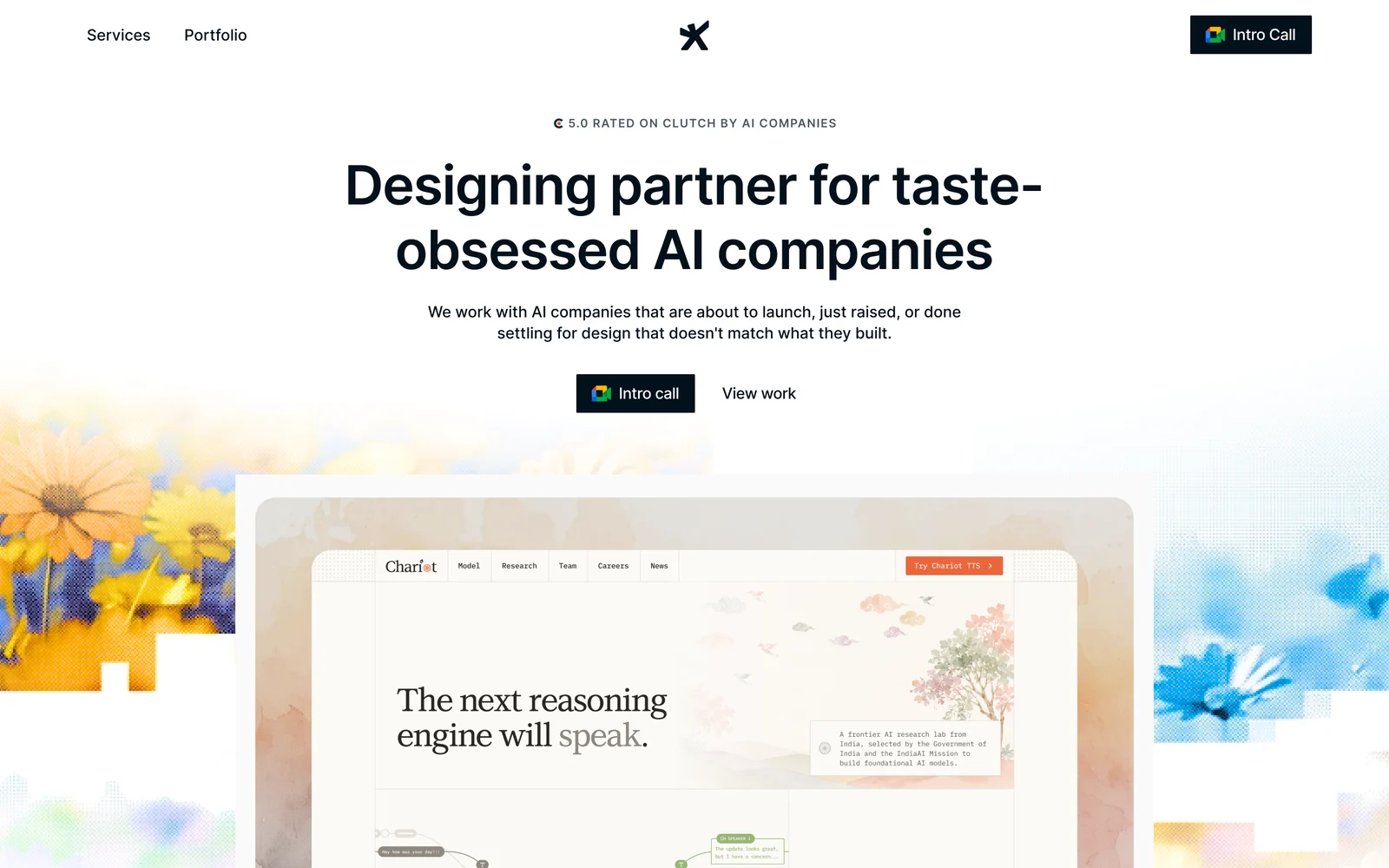
The sentence that decides a legaltech deal is usually inside the product, at the point where a draft is handed to a lawyer and the interface has to make clear what has been checked and what has not. Studio Maydit continues into product design after the site ships, so the careful promise on the marketing page and the screen that has to keep it are made by the same people. It is a web and product design studio working with AI founders across the US, UK, and Europe.
Framer, Webflow, and custom code are all options, and here the choice tends to follow revision frequency. Framer when counsel is still rewriting claims monthly. Webflow when a marketing team publishes on its own schedule. Custom code when a page must show real output rather than a picture of it.
Dualite is the published outcome and the sequence transfers. A repositioned ICP came first, the product was then built for the narrower group that decision created, and 100,000+ users arrived within seven months. Legaltech pulls hard the other way, because every firm has contracts, research, and discovery, and it is tempting to address all three. A page written for litigators and transactional teams and in-house counsel at once convinces none of them. Recent clients include Wave, PixelFlow, Mi-VAD, and 15 other AI and SaaS teams. Fixed scope runs three to four weeks and ends with a written diagnosis of what is leaking in the product. A monthly retainer covers new pages, campaigns, and product design with no long lock-in.
| Check | Finding |
|---|---|
| Based in | Remote, serving US / UK / EU |
| Platform depth | Framer, Webflow, and custom code |
| AI-sector proof | Yes. AI-native clients, published outcome on Dualite |
| Pricing | Fixed scope or monthly retainer, quoted per project |
| Team shape | Founder-led, small senior team |
| Best fit | Legaltech teams whose page must survive a lawyer reading it closely |
Name the failure mode on the page, before your buyer names it for you. Book a 30-minute call.

2. basement.studio
basement.studio works in custom code from Mar del Plata and Los Angeles since 2018, with eleven to fifty people, a published starting price, and AI-sector proof, for Vercel, Cursor, ElevenLabs, Harvey AI, and Scale AI. Harvey AI is the closest possible reference on this page: a model deployed inside legal practice, sold to firms who interrogate every claim. A studio that has shipped for them has already met your buyer.
Custom code means marketing changes go through engineering, which is a poor fit for wording that counsel revises regularly.
| Check | Finding |
|---|---|
| Based in | Mar del Plata, Argentina and Los Angeles, USA |
| Founded | 2018 |
| Team size | 11-50 |
| Primary platform | Custom code |
| AI-sector proof | Yes |
| Named clients | Vercel, Cursor, ElevenLabs, Harvey AI, Scale AI |
| Pricing | Published minimum |
| Best fit | Legaltech teams selling to firms that audit every claim |
3. Clay
Clay has worked from San Francisco since 2016 with fifty-one to two hundred people, a published starting price, and AI-sector proof, for Slack, Stripe, Google, Coinbase, and Amazon. Stripe and Coinbase both operate where an imprecise sentence has regulatory consequences, and that discipline is the transferable skill here. At this size, brand and product work can run together.
This is the most expensive option on the page, and a studio at this level expects a decision process most early legaltech teams have not built.
| Check | Finding |
|---|---|
| Based in | San Francisco, USA |
| Founded | 2016 |
| Team size | 51-200 |
| Primary platform | Mixed |
| AI-sector proof | Yes |
| Named clients | Slack, Stripe, Google, Coinbase, Amazon |
| Pricing | Published minimum |
| Best fit | Funded legaltech teams buying brand and product together |
4. Phantom
Phantom has worked from London and Auckland since 2013 in custom code with fifty-one to two hundred people and AI-sector proof, for Diageo, SAP, Financial Times, and Zendesk. The Financial Times is a publisher where accuracy and archive integrity are the product, and SAP sells into procurement processes as slow and sceptical as a law firm's.
No pricing and no team size figures are published, and a studio serving clients of this scale is a heavy commitment for an early legaltech company.
| Check | Finding |
|---|---|
| Based in | London, UK and Auckland, NZ |
| Founded | 2013 |
| Team size | 51-200 |
| Primary platform | Custom code |
| AI-sector proof | Yes |
| Named clients | Diageo, SAP, Financial Times, Zendesk |
| Pricing | Not published |
| Best fit | Teams selling into large firms with formal procurement |
5. BX Studio
BX Studio works in Webflow from New York with eleven to fifty people, a published starting price, and AI-sector proof, for Reddit, Headspace, ASAPP, and Verifone. Webflow suits a legaltech site precisely because counsel will want wording changed without a deploy. Verifone brings work in a category with genuine compliance weight, and New York is where a great many of your buyers are.
The studio publishes no founding year, and none of the named clients is a legal product, so the professional-responsibility nuance will be yours to supply.
| Check | Finding |
|---|---|
| Based in | New York, USA |
| Founded | Not published |
| Team size | 11-50 |
| Primary platform | Webflow |
| AI-sector proof | Yes |
| Named clients | Reddit, Headspace, ASAPP, Verifone |
| Pricing | Published minimum |
| Best fit | Legaltech teams who need counsel to edit copy directly |
6. Feels Like
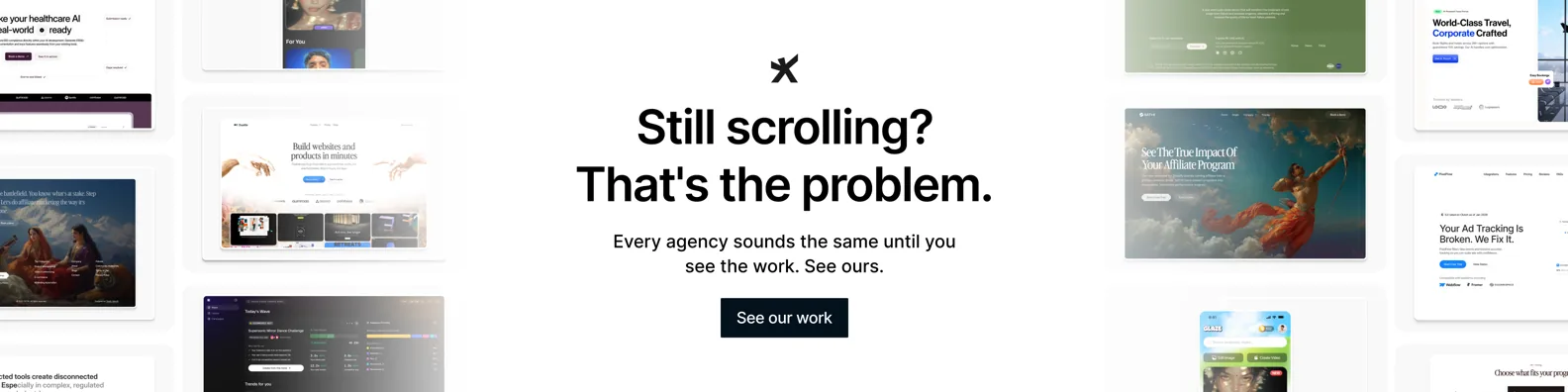
Feels Like is a custom-code studio in Los Angeles founded in 2023, with AI-sector proof, for Google, Nike, LVMH, and Suno AI. Craft matters more in legaltech than founders expect. A profession that judges documents partly on presentation extends that habit to software, and a product that looks hurried is assumed to have been built hurriedly.
No pricing and no team size are published, the studio is young, and none of the named clients works in a regulated profession.
| Check | Finding |
|---|---|
| Based in | Los Angeles, USA |
| Founded | 2023 |
| Team size | Not published |
| Primary platform | Custom code |
| AI-sector proof | Yes |
| Named clients | Google, Nike, LVMH, Suno AI |
| Pricing | Not published |
| Best fit | Legaltech teams whose product looks less serious than it is |
7. Kvalifik
Kvalifik has built in Webflow from Copenhagen since 2015 with eleven to fifty people and AI-sector proof, for Veo, Maersk, and Relesys. European work brings familiarity with strict data expectations, which is directly relevant when your buyer's first question is where privileged material is processed. Maersk is a large organisation with genuine document sprawl.
No pricing is published, Copenhagen overlaps only partly with US working hours, and no named client is a legal product.
| Check | Finding |
|---|---|
| Based in | Copenhagen, Denmark |
| Founded | 2015 |
| Team size | 11-50 |
| Primary platform | Webflow |
| AI-sector proof | Yes |
| Named clients | Veo, Maersk, Relesys |
| Pricing | Not published |
| Best fit | European legaltech teams where data residency leads the sale |
8. Feely Studio
Feely Studio is a distributed European team of one to ten people with a published starting price and AI-sector proof, for Noxus, Mutiny, Luasai, and Basic Capital. A very small senior team means the person who understands your professional-responsibility constraint writes the page, with nobody in between to soften it into marketing language.
The client list is AI and finance rather than legal, and a team this size cannot run a site build and a product workstream at once.
| Check | Finding |
|---|---|
| Based in | Distributed, Europe |
| Founded | Not published |
| Team size | 1-10 |
| Primary platform | Mixed |
| AI-sector proof | Yes |
| Named clients | Noxus, Mutiny, Luasai, Basic Capital |
| Pricing | Published minimum |
| Best fit | European teams wanting senior attention on exact wording |
9. Trueform
Trueform has worked from Wil in Switzerland since 2022 in Framer, with a published starting price and AI-sector proof, for Miro, Morning Brew, Bilt Rewards, and Gather. Framer is the fastest way to change a claim the afternoon counsel asks, and in a category where guidance keeps arriving that speed is worth real money.
No team size is published, the studio is young, and none of the named clients operates in law or another regulated profession, so the review-cycle experience is unproven.
| Check | Finding |
|---|---|
| Based in | Wil, Switzerland |
| Founded | 2022 |
| Team size | Not published |
| Primary platform | Framer |
| AI-sector proof | Yes |
| Named clients | Miro, Morning Brew, Bilt Rewards, Gather |
| Pricing | Published minimum |
| Best fit | Teams whose claims change faster than a build cycle |
10. Foundey
Foundey has worked from San Francisco since 2021 with AI-sector proof, for DemandIQ, Traycer, and Sero AI. All three are AI companies, so there is real fluency with model-based products and no need to explain your architecture twice.
Foundey works in Figma only, so nothing is built. You need a separate development partner, which adds a handoff exactly where a legally reviewed sentence gets re-typed by someone who was not in the review, and neither pricing nor team size is published.
| Check | Finding |
|---|---|
| Based in | San Francisco, USA |
| Founded | 2021 |
| Team size | Not published |
| Primary platform | Figma-only |
| AI-sector proof | Yes |
| Named clients | DemandIQ, Traycer, Sero AI |
| Pricing | Not published |
| Best fit | Teams with in-house engineers who need design only |
How to choose between them
Sort by what is actually broken.
If firms stall on confidentiality and training data, the missing thing is a plain page about where privileged material goes. basement.studio, or Phantom for large-firm procurement.
If counsel keeps rewriting the site and it takes a week each time, buy publishing speed. Trueform or BX Studio.
If the homepage sounds like it might be promising legal advice, that is wording. Feely Studio, where the senior person writes it.
If the product looks less rigorous than the firms buying it, that is craft. Feels Like.
One test before you sign. Ask them to rewrite your strongest claim so a partner at a firm would forward it to a sceptical colleague without adding a caveat. A studio that fits this brief returns something narrower, more specific, and more convincing. A studio that does not returns something softer, which is how most of this category ended up sounding identical and unbelievable.