

Summarize with AI


For an AI proptech startup building a website, the ten studios worth reviewing are Studio Maydit, Lazarev, Clay, Phantom, Kvalifik, Feels Like, Fantasy, Foundey, SuperSkills, and Lighthouse Digital. Lazarev and Clay lead this list. Lazarev has worked from San Francisco since 2015 with fifty-one to two hundred people, publishes a starting price, holds AI-sector proof, and has shipped for Payoneer, Peel, Elva, and Mozayix. Clay has worked from San Francisco since 2016 at the same scale, also publishes a starting price and holds AI-sector proof, and has shipped for Slack, Stripe, Google, Coinbase, and Amazon. SuperSkills and Lighthouse Digital fit least well. SuperSkills names only one client publicly, and Lighthouse Digital has no AI-sector proof at all, which is a hard thing to be missing when your buyer is already nervous about the technology.
Property is the least software-native industry that software people keep trying to sell to.
Your buyer runs a business on phone calls, spreadsheets, and relationships that predate the internet. They have been sold to by proptech companies before, several times, and at least one of those tools is still half-implemented somewhere in their operation. So they read your homepage with a specific kind of patience, and the SaaS vocabulary that works everywhere else works against you here. Workflows, platform, integrations, and end-to-end mean something to a software buyer. To a regional broker they read as a company that has never sold a house.
Then there is the thing your competitors avoid saying. In property, an automated decision carries legal weight. A valuation, a rent price, a tenant screen. Fair housing rules exist, and the people you are selling to know they carry the liability even if your model made the call. Most AI proptech sites simply do not mention this, which reads to a careful buyer as evasion rather than confidence.
The third problem is that you probably have two customers and one homepage. The institution wants compliance, integrations, and a procurement path. The agent on the ground wants to know whether it saves them an afternoon. A site that blends the two ends up abstract enough to convince neither.

How we picked these agencies
Five checks produced the order, and all of them can be answered from public pages before you spend anyone's time on a call.
Platform depth, weighed against how much of your site has to be genuinely interactive. Proptech sites often carry a map, a calculator, or a sample valuation, and those are the pages that convince. A studio that only assembles marketing pages will hand you something that describes the product where a demonstration was needed.
Proof with conservative or regulated buyers. This is the criterion carrying the most weight on this page, and it deliberately is not general AI experience. What matters is whether a studio has built for an industry where the buyer is cautious, the purchase is slow, and a mistake has consequences beyond churn. Studios whose portfolio is all consumer apps and developer tools have been persuading a very different reader.
Pricing. Whether a starting figure is public. Proptech budgets are frequently approved by someone outside marketing, and being able to point at a published floor makes that internal conversation shorter.
Team shape. A small studio gives you a senior person who will argue about which of your two audiences the homepage serves. A larger studio can build the interactive pages and the brand at once, which matters if you are selling to institutions who judge by appearance of permanence.
Their own site. The only project with no client to blame. For this category, read their case studies specifically, because a studio that cannot explain a complicated client business clearly will not explain yours.
None of the figures below were inferred or rounded from something adjacent. Each traces to a page the studio published, which is why a row can read Not published without that meaning we failed to look.
What goes wrong for AI proptech startups
Three failures, and the first is the one that loses the deal before anyone reaches your pricing.
The site is written for software buyers and read by property people. Your homepage uses the words a founder learned at their last SaaS company. Your reader thinks in listings, closings, units, occupancy, and turns. Those are not the same language and translating between them is not decoration, it is the whole argument. A broker who cannot tell within fifteen seconds whether your product touches their day has already left, and they will not tell you the vocabulary was why.
The liability question goes unanswered. Automated valuations, rent recommendations, and applicant screening all sit close to rules your buyer is personally exposed to. Saying nothing does not make the question go away, it just means the buyer raises it in the first call with suspicion already attached. The sites that convert in this category say plainly what the model does, what a human still decides, and what gets logged. That is uncomfortable to write and it is the fastest trust you can buy.
Two audiences are sharing one page. The institutional buyer needs procurement signals: security, integrations with the systems they already run, and evidence you will still exist in three years. The individual agent needs one concrete before and after. Most proptech sites average these into something generic enough to offend neither and persuade neither. Splitting them into separate paths costs a week of design and is almost always the highest-return decision on the project.
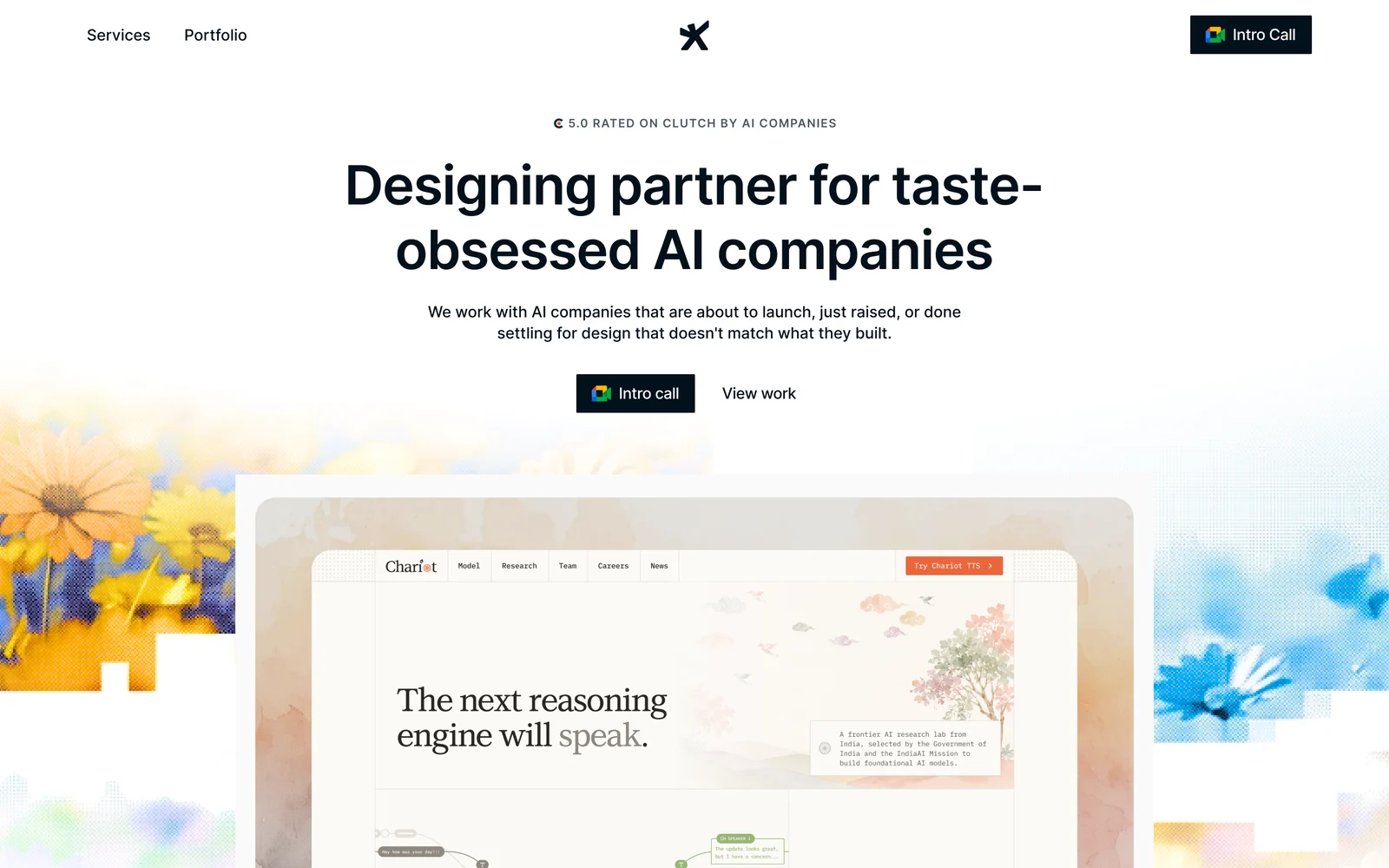
1. Studio Maydit: A Top-Rated Design Agency for AI Founders
For a proptech company the useful thing is that the engagement does not stop at the marketing site. Studio Maydit is a web and product design studio working with AI founders in the US, UK, and Europe, and the work continues into product design after the site ships. In this category that continuity matters, because the promise you make to a cautious buyer has to survive contact with the first screen they see inside the product.
The build happens in Framer, Webflow, or custom code, chosen by what the site actually has to carry rather than by preference. Fixed scope runs three to four weeks and suits a team working towards a conference or a funding announcement. Teams still shipping take a monthly retainer instead, covering new pages, campaigns, and product design, with no long lock-in. Each fixed-scope project closes with a diagnosis of what is leaking in the product rather than a handoff and goodbye.
The published outcome is Dualite, where design work supporting a repositioned ICP helped the product reach 100,000+ users in seven months. The transferable lesson for proptech is the sequencing. Choosing which customer to serve came before any screens, and that is exactly the decision a company with both institutional and individual buyers keeps postponing. Recent clients include Wave, PixelFlow, Mi-VAD, and 15 other AI and SaaS teams.
| Check | Finding |
|---|---|
| Based in | Remote, serving US / UK / EU |
| Platform depth | Framer, Webflow, and custom code |
| AI-sector proof | Yes. AI-native clients, published outcome on Dualite |
| Pricing | Fixed scope or monthly retainer, quoted per project |
| Team shape | Founder-led, small senior team |
| Best fit | Proptech teams who must pick one buyer and speak their language |
Decide which of your two buyers the homepage is for, then write it in their words. Book a 30-minute call.

2. Lazarev
Lazarev has worked from San Francisco since 2015 with fifty-one to two hundred people, publishes a starting price, holds AI-sector proof, and has shipped for Payoneer, Peel, Elva, and Mozayix. Payoneer is the relevant one. It is a regulated financial product sold to cautious users, which is structurally your situation: a technology people must trust with money before they will use it at all.
A fifty-plus team is a heavy engagement for an early proptech company, and the people who pitch are rarely the ones assigned to the work. The portfolio is also weighted towards fintech rather than property, so the industry vocabulary is something you will have to supply.
| Check | Finding |
|---|---|
| Based in | San Francisco, USA |
| Founded | 2015 |
| Team size | 51-200 |
| Primary platform | Mixed |
| AI-sector proof | Yes |
| Named clients | Payoneer, Peel, Elva, Mozayix |
| Pricing | Published minimum |
| Best fit | Proptech teams whose product handles money and needs to look safe |
3. Clay
Clay has worked from San Francisco since 2016 with fifty-one to two hundred people, publishes a starting price, holds AI-sector proof, and has shipped for Slack, Stripe, Google, Coinbase, and Amazon. Stripe and Coinbase both had to make an unfamiliar technology feel unremarkable to a nervous audience, which is the same job your site is doing for automated valuation.
The scale brings account layers and a floor set by clients far larger than you. Their work also mostly persuades technology buyers, and a property manager is a materially different reader who will not be flattered by the same signals.
| Check | Finding |
|---|---|
| Based in | San Francisco, USA |
| Founded | 2016 |
| Team size | 51-200 |
| Primary platform | Mixed |
| AI-sector proof | Yes |
| Named clients | Slack, Stripe, Google, Coinbase, Amazon |
| Pricing | Published minimum |
| Best fit | Funded proptech teams making a new technology feel ordinary |
4. Phantom
Phantom has worked from London and Auckland since 2013 with fifty-one to two hundred people in custom code, holds AI-sector proof, and has shipped for Diageo, SAP, Financial Times, and Zendesk. SAP is the useful signal here, because selling to institutions with procurement processes is its own discipline, and your institutional buyer runs one.
No starting price is published, so the budget conversation happens on a call. Custom code also means your team will need engineering time for edits, which is a poor trade in a category where your compliance language changes as the rules do.
| Check | Finding |
|---|---|
| Based in | London, UK and Auckland, NZ |
| Founded | 2013 |
| Team size | 51-200 |
| Primary platform | Custom code |
| AI-sector proof | Yes |
| Named clients | Diageo, SAP, Financial Times, Zendesk |
| Pricing | Not published |
| Best fit | Proptech teams selling to institutions with procurement teams |
5. Kvalifik
Kvalifik has worked from Copenhagen since 2015 with eleven to fifty people in Webflow, holds AI-sector proof, and has shipped for Veo and Maersk. Maersk is the reason this studio belongs on the page. Shipping and logistics is an old, physical, relationship-driven industry that software keeps trying to modernise, which is the closest analogue to property on this list.
No starting price is published and the studio is European, so the working-hours overlap with a US team is short. Webflow also limits how far an interactive valuation or map tool can go without additional development.
| Check | Finding |
|---|---|
| Based in | Copenhagen, Denmark |
| Founded | 2015 |
| Team size | 11-50 |
| Primary platform | Webflow |
| AI-sector proof | Yes |
| Named clients | Veo, Maersk, Relesys |
| Pricing | Not published |
| Best fit | Proptech teams selling into old, physical, relationship-led industries |
6. Feels Like
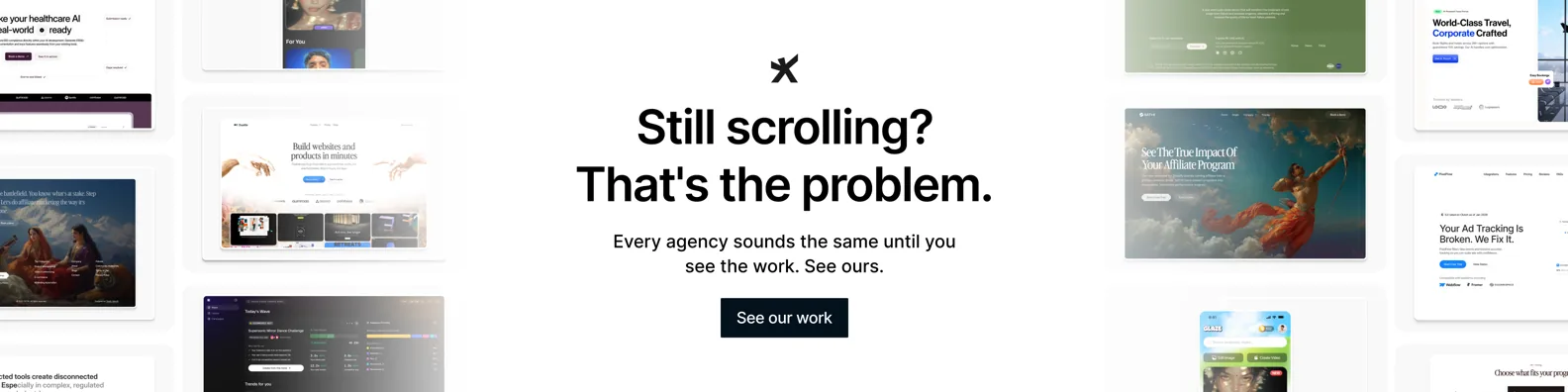
Feels Like has worked from Los Angeles since 2023 in custom code with AI-sector proof, for Google, Nike, LVMH, and Suno AI. LVMH is the entry that matters for a slice of this category, because premium residential and commercial property is sold on the same signals as luxury goods, and most B2B studios cannot produce that register at all.
The studio is young, publishes no team size and no starting price, and the client mix is brand rather than software. Custom code leaves your team unable to edit, and the polish that serves luxury property actively works against you if your buyer is an operations manager counting units.
| Check | Finding |
|---|---|
| Based in | Los Angeles, USA |
| Founded | 2023 |
| Team size | Not published |
| Primary platform | Custom code |
| AI-sector proof | Yes |
| Named clients | Google, Nike, LVMH, Suno AI |
| Pricing | Not published |
| Best fit | Proptech selling into premium residential or commercial property |
7. Fantasy
Fantasy has worked from San Francisco and New York since 1999 across platforms with AI-sector proof. Twenty-five years means they have watched several technologies move from suspicious to ordinary, and the work of making something new feel inevitable is the specific thing an AI proptech company needs.
Nothing much is checkable in advance. No clients are named publicly, no team size is given, and no starting price is published, so every question about fit has to be asked on a call. At that vintage the studio is also built for budgets well beyond an early proptech company.
| Check | Finding |
|---|---|
| Based in | San Francisco and New York, USA |
| Founded | 1999 |
| Team size | Not published |
| Primary platform | Mixed |
| AI-sector proof | Yes |
| Named clients | Not published |
| Pricing | Not published |
| Best fit | Funded proptech companies buying a category-defining position |
8. Foundey
Foundey has worked from San Francisco since 2021 with AI-sector proof, for DemandIQ, Traycer, and Sero AI. DemandIQ works in solar, which touches property directly and involves the same awkward conversation about what a model estimated versus what a human confirmed.
Foundey works in Figma only, and that is the limiting fact. You will get design and then need a separate vendor to build it, which adds a handover and a second schedule. For a proptech site with interactive elements, that seam usually lands exactly where the hardest work is.
| Check | Finding |
|---|---|
| Based in | San Francisco, USA |
| Founded | 2021 |
| Team size | Not published |
| Primary platform | Figma-only |
| AI-sector proof | Yes |
| Named clients | DemandIQ, Traycer, Sero AI |
| Pricing | Not published |
| Best fit | Proptech teams who already have engineering to build the design |
9. SuperSkills
SuperSkills is a one to ten person team in Walnut Creek with AI-sector proof, working across platforms, for The Cut. A team that size means the senior person is on your positioning question, which is the right place for them when your difficulty is choosing between an institutional and an individual buyer.
Only one client is named and no starting price is published, so there is very little to verify before a call. There is also no evidence of work with conservative or regulated industries, which is the specific experience this page weighs most heavily.
| Check | Finding |
|---|---|
| Based in | Walnut Creek, USA |
| Founded | Not published |
| Team size | 1-10 |
| Primary platform | Mixed |
| AI-sector proof | Yes |
| Named clients | The Cut |
| Pricing | Not published |
| Best fit | Early proptech teams who mainly need the positioning argued out |
10. Lighthouse Digital
Lighthouse Digital works from London in Webflow, publishes a starting price, and has shipped for HelloSelf, Freetrade, and IGN. Freetrade is a regulated financial product, so there is some experience of a cautious, rules-bound audience, and the published floor makes the studio quick to evaluate.
There is no AI-sector proof at all, which is the hardest gap to carry in this category. Your central design problem is making an automated decision feel accountable, and that is not a problem this studio has solved before. Neither founding year nor team size is published either.
| Check | Finding |
|---|---|
| Based in | London, UK |
| Founded | Not published |
| Team size | Not published |
| Primary platform | Webflow |
| AI-sector proof | No |
| Named clients | HelloSelf, Freetrade, IGN |
| Pricing | Published minimum |
| Best fit | UK proptech teams whose AI story is already written and settled |
How to choose between them
Sort by what is actually broken rather than by portfolio quality.
Your buyer does not trust an automated decision. Lazarev or Clay.
You are selling to institutions with a procurement process. Phantom.
Your industry is old, physical, and relationship-driven. Kvalifik.
The property itself is premium and the site has to look it. Feels Like.
One test before you sign. Ask a candidate to read your homepage and tell you who it is written for, a broker or a REIT. If they say both, they have found your actual problem. If they answer confidently with one and quote the sentence that decided it, they can already do the translation work this category needs, and that is worth more than a beautiful portfolio.